Kód: 44629487
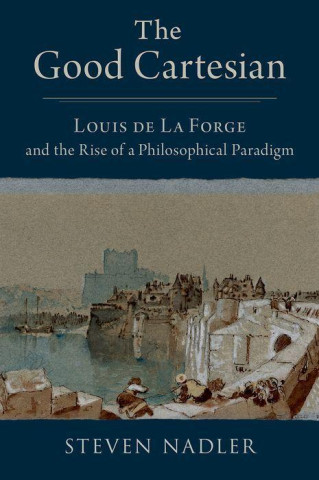
The Good Cartesian
Autor Nadler, Steven (William F. Vilas Research Professor and the William H. Hay II Professor of Philosophy, William F. Vilas Research Professor and the William H. Hay II Professor of Philosophy, University
Steven Nadler presents a biographical and philosophical study of Louis de La Forge (1632-1666), a medical doctor who was an extremely important, but for a long time relatively neglected, follower of Descartes in the seventeenth ce ... celý popis


- Jazyk:
 Angličtina
 - Väzba: Pevná
- Počet strán: 344
Nakladateľ: OXFORD UNIV PR USA, 2024
- Viac informácií o knihe


Mohlo by sa vám tiež páčiť
-

Moonwalk
14.07 € -

The Score
13.76 € -12 % -

The Deal
12.34 € -21 % -

The Mistake
14.47 € -8 % -

Jujutsu Kaisen, Vol. 30
9.61 € -22 % -

Witch Hat Atelier: Grimoire Edition 1
34.62 € -29 % -

Invincible Compendium Volume 2
42.32 € -30 % -

Berserk Deluxe Volume 1
35.63 € -25 % -

The Goal
14.57 € -7 % -

Berserk Deluxe Volume 2
33.10 € -31 % -

Invincible Compendium Volume 1
57.20 € -9 % -

Witch Hat Atelier Manga Box Set 1
51.33 € -31 % -

Lord of Mysteries, Vol. 3: The Clown, Part III
14.98 € -29 % -

Murdoku
18.12 € -25 % -

Moonwalk: A Memoir
19.94 € -31 % -

Heated Rivalry
12.55 € -7 % -

Jujutsu Kaisen, Vol. 25
9.91 € -20 % -

Legacy
11.94 € -12 % -

Berserk Deluxe Volume 3
55.08 € -

Veil Volume 1
12.04 € -25 % -

White Nights
4.75 € -11 %
Darčekový poukaz: Radosť zaručená
- Darujte poukaz v ľubovoľnej hodnote, a my sa postaráme o zvyšok.
- Poukaz sa vzťahuje na všetky produkty v našej ponuke.
- Elektronický poukaz si vytlačíte z e-mailu a môžete ho ihneď darovať.
- Platnosť poukazu je 12 mesiacov od dátumu vystavenia.
Viac informácií o knihe The Good Cartesian
Nákupom získate 230 bodov
 Anotácia knihy
Steven Nadler presents a biographical and philosophical study of Louis de La Forge (1632-1666), a medical doctor who was an extremely important, but for a long time relatively neglected, follower of Descartes in the seventeenth century. His sophisticated contributions to the metaphysics, philosophy of mind, and physiology of Cartesianism in the decades after Descartes' death in 1650 were instrumental in making that philosophy the dominant philosophical paradigm of the period; it would be supplanted by Newtonianism only in the eighteenth century. La Forge began his Cartesian career by providing wood-cut illustrations and an extensive commentary for the 1664 edition of Descartes' Traité de l'homme, the first original-language publication of part of the larger, groundbreaking treatise Le Monde that was left unpublished in Descartes' lifetime. In his commentary, La Forge is a devoted and faithful but not uncritical disciple who defends, supplements, updates and even corrects Descartes' account of the human body, which treats it as a "machine" that operates on the principles of the mechanical philosophy. In 1666, La Forge published his own Traité de l'esprit de l'homme, a treatise on the human mind. Explaining the mind and its union with the body was something that Descartes had long planned to do but never really carried out in a systematic manner. La Forge's most innovative and influential philosophical contribution in the Traité--one which goes beyond anything Descartes envisioned--is his limited version of the doctrine of occasionalism, which accords God an active and ongoing causal role in the world and reduces natural substances to being "occasions" for God's efficacious activity. La Forge thereby set the stage for later, even more unorthodox developments in Cartesianism.
Parametre knihy
Zaradenie knihy Knihy po nemecky Geisteswissenschaften, Kunst, Musik Philosophie Östliche Philosophie
95.07 €
- Celý názov: The Good Cartesian
- Autor: Nadler, Steven (William F. Vilas Research Professor and the William H. Hay II Professor of Philosophy, William F. Vilas Research Professor and the William H. Hay II Professor of Philosophy, University
- Jazyk: Angličtina
- Väzba: Pevná
- Počet strán: 344
- EAN: 9780197671719
- ISBN: 0197671713
- ID: 44629487
- Nakladateľ: OXFORD UNIV PR USA
- Hmotnosť: 634 g
- Dátum vydania: 12. April 2024
Osobný odber Bratislava a 12542 dalších
Copyright ©2008-26 najlacnejsie-knihy.sk Všetky práva vyhradenéSúkromieCookies

 24 miliónov titulov
 Vrátenie do mesiaca
 02/210 210 99 (8-15.30h)