Kód: 50099415
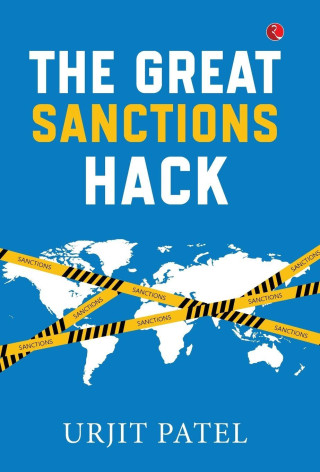
The Great Sanctions Hack
Autor Urjit Patel
In the 21st century, economic sanctions have become a widely used tool to control geopolitics,with the United States being the largest user of sanctions globally, followed by the EuropeanUnion. Yet, mounting evidence shows that th ... celý popis


- Jazyk:
 Angličtina
 - Väzba: Pevná
- Počet strán: 162
Nakladateľ: Repro India Limited, 2025
- Viac informácií o knihe

37.36 €
Bežne: 38.15 €
Ušetríte 0.79 €

Skladom u dodávateľa
Odosielame za 9 - 15 dní
Mohlo by sa vám tiež páčiť
-

Moonwalk
14.07 € -

The Score
13.76 € -12 % -

The Deal
12.34 € -21 % -

The Mistake
14.47 € -8 % -

Jujutsu Kaisen, Vol. 30
9.61 € -22 % -

Berserk Deluxe Volume 1
35.63 € -25 % -

Invincible Compendium Volume 2
42.32 € -30 % -

The Goal
14.57 € -7 % -

Witch Hat Atelier: Grimoire Edition 1
34.62 € -29 % -

Berserk Deluxe Volume 2
33.10 € -31 % -

Murdoku
18.12 € -25 % -

Lord of Mysteries, Vol. 3: The Clown, Part III
14.98 € -29 % -

Witch Hat Atelier Manga Box Set 1
51.33 € -31 % -

Jujutsu Kaisen, Vol. 25
9.71 € -25 % -

Moonwalk: A Memoir
19.94 € -31 % -

Legacy
11.94 € -12 % -

Heated Rivalry
12.55 € -7 % -

JoJo's Bizarre Adventure: Part 7--Steel Ball Run, Vol. 7
18.22 € -25 % -

Berserk Deluxe Volume 3
55.08 € -

Jujutsu Kaisen, Vol. 26
9.31 € -25 % -

White Nights
4.75 € -11 %
Darčekový poukaz: Radosť zaručená
- Darujte poukaz v ľubovoľnej hodnote, a my sa postaráme o zvyšok.
- Poukaz sa vzťahuje na všetky produkty v našej ponuke.
- Elektronický poukaz si vytlačíte z e-mailu a môžete ho ihneď darovať.
- Platnosť poukazu je 12 mesiacov od dátumu vystavenia.
Viac informácií o knihe The Great Sanctions Hack
Nákupom získate 90 bodov
 Anotácia knihy
In the 21st century, economic sanctions have become a widely used tool to control geopolitics,
with the United States being the largest user of sanctions globally, followed by the European
Union. Yet, mounting evidence shows that these measures often fall short of achieving their
intended diplomatic outcomes. While sanctions are meant to pressure governments by targeting
their economies, the actual impact tends to be slow, complex, and frequently ineffective.
In The Great Sanctions Hack, Urjit Patel, former Governor of the Reserve Bank of India, who
now serves as Chairman of the National Institute of Public Finance and Policy, evaluates why
the concept of sanctions needs a major overhaul. Their broader effects on global markets and
unintended consequences for third parties must be considered. Economic damage unfolds
gradually, not instantly, and should be tracked in more detailed stages. Moreover, the real cost to
individuals, businesses, and global stability needs clearer and more transparent measurement.
Concerns are also rising about the role of international institutions that often fail to fairly
assess the consequences of sanctions. This raises questions about their effectiveness in guiding
international economic policy.
As global uncertainty grows, a more thoughtful, data-driven, and transparent approach to
sanctions is urgently needed.
Parametre knihy
Zaradenie knihy Knihy po nemecky Sozialwissenschaften, Recht, Wirtschaft Wirtschaft Betriebswirtschaft
37.36 €
- Celý názov: The Great Sanctions Hack
- Autor: Urjit Patel
- Jazyk: Angličtina
- Väzba: Pevná
- Počet strán: 162
- EAN: 9789370032613
- ISBN: 9370032614
- ID: 50099415
- Nakladateľ: Repro India Limited
- Hmotnosť: 336 g
- Rozmery: 216 × 140 × 13 mm
- Dátum vydania: 05. November 2025
Osobný odber Bratislava a 12742 dalších
Copyright ©2008-26 najlacnejsie-knihy.sk Všetky práva vyhradenéSúkromieCookies

 24 miliónov titulov
 Vrátenie do mesiaca
 02/210 210 99 (8-15.30h)