Kód: 43321568
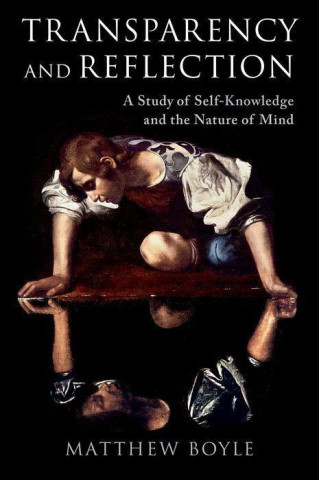
Transparency and Reflection
Autor Boyle, Matthew (Emerson and Grace Wineland Pugh Professor of Philosophy, Emerson and Grace Wineland Pugh Professor of Philosophy, University of Chicago)
The topic of self-knowledge has been central to philosophy since antiquity--but if self-knowledge deserves to be not just a goal that each of us should privately pursue, but a topic that philosophers should investigate in general ... celý popis


- Jazyk:
 Angličtina
 - Väzba: Pevná
- Počet strán: 304
Nakladateľ: OXFORD UNIV PR, 2023
- Viac informácií o knihe


Mohlo by sa vám tiež páčiť
-

Moonwalk
14.14 € -

The Deal
12.62 € -23 % -

The Score
13.63 € -13 % -

The Mistake
14.54 € -12 % -

Jujutsu Kaisen, Vol. 30
9.89 € -20 % -

Witch Hat Atelier: Grimoire Edition 1
34.55 € -29 % -

Invincible Compendium Volume 2
48.19 € -22 % -

Invincible Compendium Volume 1
45.77 € -24 % -

Berserk Deluxe Volume 1
35.56 € -25 % -

Berserk Deluxe Volume 2
33.24 € -30 % -

Heated Rivalry
12.62 € -7 % -

The Goal
14.64 € -11 % -

Witch Hat Atelier Manga Box Set 1
56.07 € -25 % -

Invincible Compendium Volume 3
45.77 € -24 % -

Jujutsu Kaisen, Vol. 25
9.89 € -20 % -

Jujutsu Kaisen, Vol. 26
9.89 € -20 % -

Jujutsu Kaisen, Vol. 29
9.89 € -20 % -

Lord of Mysteries, Vol. 3: The Clown, Part III
14.95 € -29 % -

Moonwalk: A Memoir
21.72 € -24 % -

Murdoku
17.07 € -24 % -

Berserk Deluxe Volume 3
55.16 €
Darčekový poukaz: Radosť zaručená
- Darujte poukaz v ľubovoľnej hodnote, a my sa postaráme o zvyšok.
- Poukaz sa vzťahuje na všetky produkty v našej ponuke.
- Elektronický poukaz si vytlačíte z e-mailu a môžete ho ihneď darovať.
- Platnosť poukazu je 12 mesiacov od dátumu vystavenia.
Viac informácií o knihe Transparency and Reflection
Nákupom získate 242 bodov
 Anotácia knihy
The topic of self-knowledge has been central to philosophy since antiquity--but if self-knowledge deserves to be not just a goal that each of us should privately pursue, but a topic that philosophers should investigate in general terms, on what basis does it claim our attention? Much contemporary work in philosophy and cognitive science treats human cognition and perception as processes of representation manipulation, unaffected by our capacity for self-awareness. In Transparency and Reflection Matthew Boyle challenges this paradigm by urging a reconsideration of the classical idea that the capacity for reflective self-knowledge is an essential feature of human mindedness. Boyle argues that our ability for reflective self-knowledge is a byproduct of the "first person perspective" on our own lives that all human beings possess, as rational animals, and he seeks to defend this perspective against influential forms of skepticism about its soundness. Once we appreciate the connection between having a first person perspective on our own minds and having the capacity for self-knowledge, Boyle suggests, we can see a link between debates about how we know our own minds and the dark but intriguing idea that Jean-Paul Sartre expressed in his remark that, for a human being, "to exist is always to assume its being" in a way that implies "an understanding of human reality by itself."
Parametre knihy
Zaradenie knihy Knihy po nemecky Sozialwissenschaften, Recht, Wirtschaft Soziologie Soziologische Theorien
100.03 €
- Celý názov: Transparency and Reflection
- Autor: Boyle, Matthew (Emerson and Grace Wineland Pugh Professor of Philosophy, Emerson and Grace Wineland Pugh Professor of Philosophy, University of Chicago)
- Jazyk: Angličtina
- Väzba: Pevná
- Počet strán: 304
- EAN: 9780199926299
- ISBN: 0199926298
- ID: 43321568
- Nakladateľ: OXFORD UNIV PR
- Hmotnosť: 576 g
- Dátum vydania: 01. September 2023
Osobný odber Bratislava a 12820 dalších
Copyright ©2008-26 najlacnejsie-knihy.sk Všetky práva vyhradenéSúkromieCookies

 24 miliónov titulov
 Vrátenie do mesiaca
 02/210 210 99 (8-15.30h)