Kód: 16363762
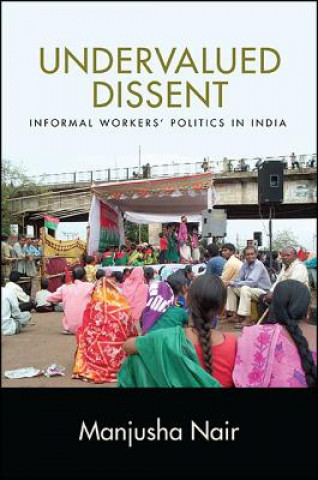
Undervalued Dissent: Informal Workers' Politics in India
Autor Manjusha Nair
Uses two case studies to demonstrate how neoliberal reforms in India have de-democratized labor politics.Honorable Mention, 2018 Global Division Book Award presented by the Global Division of the Society for the Study of Social Pr ... celý popis


- Jazyk:
 Angličtina
 - Väzba: Brožovaná
- Počet strán: 248
Nakladateľ: ST UNIV OF NEW YORK PR, 2017
- Viac informácií o knihe

36.17 €

Skladom u dodávateľa v malom množstve
Odosielame za 9 - 15 dní
Potrebujete viac kusov?Ak máte záujem o viac kusov, preverte, prosím, najprv dostupnosť titulu na našej zákazníckej podpore.
Pridať medzi želanie
Mohlo by sa vám tiež páčiť
-

Kolumbijský Bordel
11.71 € -33 % -

Story of a Soul
16.16 € -24 % -

I Love Russian
45.06 € -11 % -

Dragon Ball Super - Tome 20
10.90 € -

Treatment
10.70 € -

Lacan for Beginners
13.83 € -22 % -

Lucky Luke Vol. 75: Rin Tin Can's Inheritance
8.68 € -25 % -

Crushing YouTube
19.39 € -

Sex and the Teenager
27.88 € -

Biology of the Springtails
198.46 € -

Rosa's Big Sunflower Experiment
7.67 € -25 % -

Όλα Εξαιτίας σου
12.42 € -24 % -

End of Diabetes
20.30 € -24 % -

The Lalibela Churches: The History and Legacy of the Medieval Cave Churches in Ethiopia
10.80 € -6 % -

Norman Foster : arquitectura y vida
27.48 € -

Soar
25.96 € -

Le Tyran (Ed.1870)
15.65 € -3 % -

Land and Property Research
42.23 € -25 % -

The Annealing Algorithm
154.20 € -7 % -

Hypercrime
254.14 € -

Veinte días sin ti
12.32 € -7 % -

Design patterns. Schemi di progettazione del software orientato agli oggetti
17.17 € -

Imaginary Europes
199.57 € -

Prayers from the Holy Family
14.04 € -6 % -

Women of All Nations V1: A Record of Their Characteristics, Habits, Manners, Customs and Influence (1908)
40.01 € -1 % -

The Forest Surprise
6.96 € -26 % -

Cry for Mother
7.67 € -1 % -

Letters Of Percy Bysshe Shelley, Containing Material Never Before Collected. Edited By Roger Ingpen; Vol II
38.49 € -10 %
Darčekový poukaz: Radosť zaručená
- Darujte poukaz v ľubovoľnej hodnote, a my sa postaráme o zvyšok.
- Poukaz sa vzťahuje na všetky produkty v našej ponuke.
- Elektronický poukaz si vytlačíte z e-mailu a môžete ho ihneď darovať.
- Platnosť poukazu je 12 mesiacov od dátumu vystavenia.
Viac informácií o knihe Undervalued Dissent: Informal Workers' Politics in India
Nákupom získate 88 bodov
 Anotácia knihy
Uses two case studies to demonstrate how neoliberal reforms in India have de-democratized labor politics.
Honorable Mention, 2018 Global Division Book Award presented by the Global Division of the Society for the Study of Social Problems
Historically, the Indian state has not offered welfare and social rights to all of its citizens, yet a remarkable characteristic of its polity has been the ability of citizens to dissent in a democratic way. In Undervalued Dissent, Manjusha Nair argues that this democratic space has been vanishing slowly. Based on extensive fieldwork in Chhattisgarh, a regional state in central India, this book examines two different informal workers' movements. Informal workers are not part of organized labor unions and make up eighty-five percent of the Indian workforce. The first movement started in 1977 and was a success, while the other movement began in 1989 and still continues today, without success. The workers in both movements had similar backgrounds, skills, demands, and strategies. Nair maintains that the first movement succeeded because the workers contended within a labor regime that allowed space for democratic dissent, and the second movement failed because they contested within a widely altered labor regime following neoliberal reforms, where these spaces of democratic dissent were preempted. The key difference between the two regimes, Nair suggests, is not in the withdrawal of a prolabor state from its protective and regulatory role, as has been argued by many, but rather in the rise of a new kind of state that became functionally decentralized, economically predatory, and politically communalized. These changes, Nair concludes, successfully de-democratized labor politics in India.
Parametre knihy
36.17 €
- Celý názov: Undervalued Dissent: Informal Workers' Politics in India
- Autor: Manjusha Nair
- Jazyk: Angličtina
- Väzba: Brožovaná
- Počet strán: 248
- EAN: 9781438462462
- ISBN: 1438462468
- ID: 16363762
- Nakladateľ: ST UNIV OF NEW YORK PR
- Hmotnosť: 362 g
- Rozmery: 226 × 152 × 20 mm
- Dátum vydania: 02. July 2017
Obľúbené z iného súdka
-

Moonwalk
14.14 € -

The Deal
12.62 € -23 % -

The Score
13.63 € -13 % -

The Mistake
14.54 € -12 % -

Jujutsu Kaisen, Vol. 30
9.89 € -20 % -

Witch Hat Atelier: Grimoire Edition 1
34.55 € -29 % -

Invincible Compendium Volume 2
48.19 € -22 % -

Invincible Compendium Volume 1
45.77 € -24 % -

Berserk Deluxe Volume 1
35.56 € -25 % -

Berserk Deluxe Volume 2
33.24 € -30 % -

Heated Rivalry
12.62 € -7 % -

The Goal
14.64 € -11 % -

Witch Hat Atelier Manga Box Set 1
56.07 € -25 % -

Invincible Compendium Volume 3
45.77 € -24 % -

Jujutsu Kaisen, Vol. 25
9.89 € -20 % -

Jujutsu Kaisen, Vol. 26
9.89 € -20 % -

Jujutsu Kaisen, Vol. 29
9.89 € -20 % -

Lord of Mysteries, Vol. 3: The Clown, Part III
14.95 € -29 % -

Moonwalk: A Memoir
21.72 € -24 % -

Murdoku
17.07 € -24 % -

Berserk Deluxe Volume 3
55.16 € -

King of Gluttony
10.20 € -33 % -

White Nights
4.74 € -11 % -

Invincible Volume 1
15.96 € -

Veil Volume 1
12.02 € -25 % -

The Long Game
13.23 € -2 % -

The Deal
14.04 € -25 % -

Starside (Deluxe Limited Edition)
24.04 € -27 % -

Legacy
11.91 € -24 % -

Project Hail Mary
10.50 € -14 % -

JoJo's Bizarre Adventure: Part 7--Steel Ball Run, Vol. 7
18.38 € -24 % -

Jojo's Bizarre Adventure: Part 7--Steel Ball Run, Vol. 1
18.28 € -24 % -

Berserk Deluxe Volume 5
54.86 € -

Jojo's Bizarre Adventure: Part 7--Steel Ball Run, Vol. 2
18.28 € -24 % -

Murdoku
13.73 € -29 % -

Berserk Deluxe Volume 4
43.64 € -17 % -

Jujutsu Kaisen, Vol. 28
9.89 € -20 % -

Chainsaw Man, Vol. 20
9.89 € -20 % -

Project Hail Mary
15.96 € -25 % -

Boys Omnibus Vol. 1 TPB
23.64 € -30 % -

The Summer Hikaru Died, Vol. 7
11.91 € -21 % -

Dancing The Dream
26.77 € -18 % -

Jujutsu Kaisen, Vol. 1
12.62 € -

The Ballad of Falling Dragons
14.44 € -12 % -

The Score
14.04 € -25 % -

Invincible Volume 2 (New Edition)
11.31 € -25 % -

Veil Volume 2
16.06 € -24 % -

Designing Data-Intensive Applications
49 € -25 % -

Lord of Mysteries, Vol. 1: The Clown, Part I
14.84 € -24 %
Osobný odber Bratislava a 12820 dalších
Copyright ©2008-26 najlacnejsie-knihy.sk Všetky práva vyhradenéSúkromieCookies

 24 miliónov titulov
 Vrátenie do mesiaca
 02/210 210 99 (8-15.30h)