Kód: 11071078
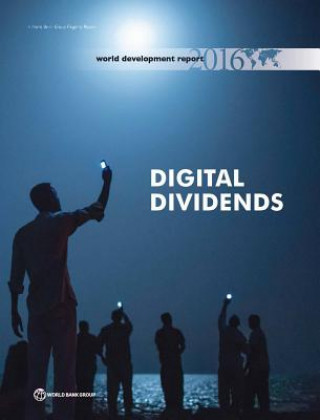
World development report 2016
Autor International Bank for Reconstruction and Development, The World Bank
Digital technologies are spreading rapidly, but digital dividends--the broader benefits of faster growth, more jobs, and better services--are not. If more than 40 percent of adults in East Africa pay their utility bills using a mo ... celý popis


- Jazyk:
 Angličtina
 - Väzba: Brožovaná
- Počet strán: 353
Nakladateľ: World Bank Publications, 2015
- Viac informácií o knihe

36.41 €

Skladom u dodávateľa v malom množstve
Odosielame za 11 - 15 dní
Potrebujete viac kusov?Ak máte záujem o viac kusov, preverte, prosím, najprv dostupnosť titulu na našej zákazníckej podpore.
Pridať medzi želanie
Mohlo by sa vám tiež páčiť
-

The Disney Villains Cookbook
20.22 € -

My First Disney Classics Bedtime Storybook
11.72 € -

Grammatica illustrata della cucina italiana. Storia e ricette di 250 piatti simbolo
22.55 € -

Modeling Clay With 3 Basic Shapes
12.53 € -9 % -

Alias the Saint
11.83 € -25 % -

Trollsang
22.04 € -

2009-2010
178.63 € -4 % -

The Tabernacle of Moses
16.88 € -24 % -

It's You I Like!
8.79 € -28 % -

IGN Karte, Serie Bleue Villedieu-Les-Poëles.Gavray
19.61 € -

ECPE Michigan Proficiency Essay Test Success
16.88 € -24 % -

Chameleons
46.83 € -

Shadow Play
10.61 € -20 % -

Kant's Conception of Moral Character
111.67 € -

Römische Geschichte
47.13 € -6 % -

Echocardiographic Atlas of Adult Congenital Heart Disease
179.95 € -

Official Condo Buyers Guide To Sunny Isles Beach: 2010 - The Definitive Reference Guide to Sunny Isles Beach's Condominium Market
65.34 € -6 % -

Reading Decision Test
36.41 € -

Understanding Students with Additional Needs as Learners
154.36 € -7 % -

Fearless Women in the Mexican Revolution and the Spanish Civil War
51.07 € -

Weller, Reville, and Related Zanesville Art Pottery and Tiles
21.94 € -26 % -

The Abenaki Indians: Their Treaties Of 1713 And 1717, And A Vocabulary (1859)
22.85 € -2 % -

Works of G.J. Whyte-Melville Volume 6
34.59 € -2 % -

Progress of Astronomy
11.83 € -25 % -

Die Sibylle Der Religion Aus Der Welt Und Menschengeschichte (1813)
39.14 € -1 % -

From Bunker Hill to Manila Bay
34.38 € -14 % -

How Green are Electric or Hydrogen-Powered Cars?
51.68 € -7 % -

Anleitung zur Singkunst
55.73 € -

Traite Complet d'Anatomie Chirurgicale, Generale Et Topographique Du Corps Humain. Tome 2
46.12 € -

Mr. Lonely Again
31.65 € -

Dictionary of Literary Biography, Vol 241: American Sportswriters & Writers on Sports
587.01 € -

Beyond the Screen
34.99 € -5 % -

Tundra-Taiga Biology
106.21 € -

Contributo all'analisi batteriologica dell'acqua REGIDESO
35.70 € -14 % -

Faith's Power Binds What Love's Glue Seals
9.80 € -6 %
Darčekový poukaz: Radosť zaručená
- Darujte poukaz v ľubovoľnej hodnote, a my sa postaráme o zvyšok.
- Poukaz sa vzťahuje na všetky produkty v našej ponuke.
- Elektronický poukaz si vytlačíte z e-mailu a môžete ho ihneď darovať.
- Platnosť poukazu je 12 mesiacov od dátumu vystavenia.
Viac informácií o knihe World development report 2016
Nákupom získate 88 bodov
 Anotácia knihy
Digital technologies are spreading rapidly, but digital dividends--the broader benefits of faster growth, more jobs, and better services--are not. If more than 40 percent of adults in East Africa pay their utility bills using a mobile phone, why can’t others around the world do the same? If 8 million entrepreneurs in China--one third of them women--can use an e-commerce platform to export goods to 120 countries, why can’t entrepreneurs elsewhere achieve the same global reach? And if India can provide unique digital identification to 1 billion people in five years, and thereby reduce corruption by billions of dollars, why can’t other countries replicate its success? Indeed, what’s holding back countries from realizing the profound and transformational effects that digital technologies are supposed to deliver?Two main reasons. First, nearly 60 percent of the world’s population are still offline and can’t participate in the digital economy in any meaningful way. Second, and more important, the benefits of digital technologies can be offset by growing risks. Startups can disrupt incumbents, but not when vested interests and regulatory uncertainty obstruct competition and the entry of new firms. Employment opportunities may be greater, but not when the labor market is polarized. The internet can be a platform for universal empowerment, but not when it becomes a tool for state control and elite capture. The World Development Report 2016 shows that while the digital revolution has forged ahead, its 'analog complements'--the regulations that promote entry and competition, the skills that enable workers to access and then leverage the new economy, and the institutions that are accountable to citizens--have not kept pace. And when these analog complements to digital investments are absent, the development impact can be disappointing. What, then, should countries do? They should formulate digital development strategies that are much broader than current information and communication technology (ICT) strategies. They should create a policy and institutional environment for technology that fosters the greatest benefits. In short, they need to build a strong analog foundation to deliver digital dividends to everyone, everywhere.
Parametre knihy
Zaradenie knihy Knihy po anglicky Economics, finance, business & management Economics International economics
36.41 €
- Celý názov: World development report 2016
- Podnázov: digital dividends
- Autor: International Bank for Reconstruction and Development, The World Bank
- Jazyk: Angličtina
- Väzba: Brožovaná
- Počet strán: 353
- EAN: 9781464806711
- ISBN: 1464806713
- ID: 11071078
- Nakladateľ: World Bank Publications
- Hmotnosť: 880 g
- Rozmery: 207 × 303 × 24 mm
- Dátum vydania: 31. December 2015
Obľúbené z iného súdka
-

Bad Samaritans
12.43 € -27 % -

New Confessions of an Economic Hit Man
14.15 € -29 % -

Merchants of Grain
18.20 € -25 % -

Soros on Soros - Staying Ahead of the Curve
33.47 € -24 % -

Is the American Century Over?
10.41 € -25 % -

Splendid Exchange
21.23 € -25 % -

Making of an Atlantic Ruling Class
31.15 € -18 % -

Quest for the Perfect Strawberry
21.64 € -25 % -

Technical Analysis
83.65 € -25 % -

Doing Business in Europe
148.59 € -

International Trade
55.83 € -

New Foreign Policy
16.78 € -25 % -

Treasure Islands
11.72 € -32 % -

Has the West Lost It?
12.23 € -24 % -

Forex for Ambitious Beginners
18.30 € -7 % -

Crisis of Global Capitalism
20.73 € -17 % -

Red Capitalism
21.64 € -25 % -

Almighty Dollar
11.83 € -25 % -
Fault Lines
13.34 € -25 % -

Travels of a T-Shirt in the Global Economy
17.19 € -26 % -

False Economy
12.84 € -25 % -

Between Debt and the Devil
39.54 € -

Superpower
26.70 € -

Between Silver and Guano
37.42 € -

Two Centuries of Overseas Trading
55.83 € -

Great Rebalancing
14.76 € -25 % -

The Road to Ruin
17.49 € -18 % -

International Economics: Theory and Policy, Global Edition
90.12 € -

SuperHubs
11.62 € -21 % -

The Competitive Advantage of Nations
40.25 € -9 % -

China Shakes The World
13.95 € -24 % -

Competition Policy
83.44 € -

False Dawn
11.83 € -25 % -

Japanese Business Culture and Practices
10.61 € -25 % -

Import/Export Kit For Dummies 3e
21.74 € -24 % -

No Ordinary Disruption
17.09 € -20 % -

Cracking the China Conundrum
50.26 € -

Concise History of International Finance
36.41 € -

Pillaging the World
18.10 € -4 % -

EuroTragedy
38.33 € -12 % -

Oxford Handbook on The World Trade Organization
48.55 € -

Age of Turbulence
16.88 € -30 % -

Natural Capitalism
17.19 € -26 % -

Handbook of International Trade and Finance
62.81 € -

International Trade
79.30 € -

International Economic Institutions
51.68 € -7 % -

Making Globalization Work
11.83 € -25 % -

International Trade Finance
85.37 € -

Essay on the Nature of Trade in General
12.84 € -12 %
Osobný odber Bratislava a 12825 dalších
Copyright ©2008-26 najlacnejsie-knihy.sk Všetky práva vyhradenéSúkromieCookies

 24 miliónov titulov
 Vrátenie do mesiaca
 02/210 210 99 (8-15.30h)