Kód: 50069183
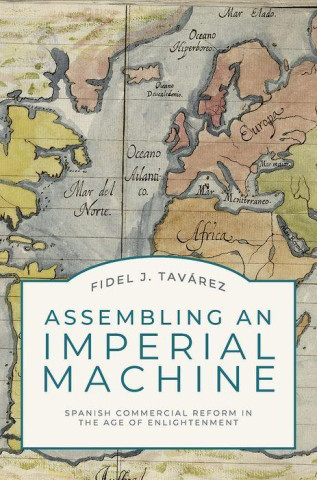
Assembling an Imperial Machine
Autor Tavarez, Fidel J. (Assistant Professor of History, Assistant Professor of History, Queens College, CUNY)
During the eighteenth century, Spanish statesmen pursued a set of ambitious imperial reforms that thoroughly remade conceptualizations of empire. They compared well-ordered empires to harmonious machines and devised a comprehensiv ... celý popis


- Jazyk:
 Angličtina
 - Väzba: Pevná
- Počet strán: 344
Nakladateľ: Oxford University Press, 2026
- Viac informácií o knihe


Mohlo by sa vám tiež páčiť
-

Sakamoto Days, Vol. 3
10.31 € -21 % -

Expecting Better
13.95 € -24 % -

Espanol en marcha - Nueva edicion (2021 ed.)
19.82 € -

Metody dramatické výchovy v mateřské škole
7.68 € -18 % -

Beste Freunde A1+A2
6.26 € -22 % -

Směju se, abych nebrečel
13.14 € -16 % -

Moderní analýza biologických dat 3
9.60 € -21 % -

Smrt boha smrti
5.65 € -30 % -

Samolepková zvířátka V noci
2.72 € -33 % -

BEST OF DARK ART
13.44 € -24 % -

100 Children's Crosswords: Travel
5.86 € -25 % -

Art of Indian Asia
104.59 € -

Assembly of God Evangelical Church
57.85 € -14 % -

Alice's Adventures in Wonderland
19.72 € -30 %
Darujte túto knihu ešte dnes
- Objednajte knihu a vyberte Zaslať ako darček.
- Obratom obdržíte darovací poukaz na knihu, ktorý môžete ihneď odovzdať obdarovanému.
- Knihu zašleme na adresu obdarovaného, o nič sa nestaráte.
Viac informácií o knihe Assembling an Imperial Machine
Nákupom získate 142 bodov
 Anotácia knihy
During the eighteenth century, Spanish statesmen pursued a set of ambitious imperial reforms that thoroughly remade conceptualizations of empire. They compared well-ordered empires to harmonious machines and devised a comprehensive plan to liberalize and integrate the imperial economy. The main initiative to emerge from this economic plan was a commercial policy that contemporaries called comercio libre, which entailed replacing the traditional fleets and galleons with a new system of free trade within the empire. The men who designed this new imperial vision became convinced that the pursuit of markets, rather than military power alone, was the key to succeeding in a modern commercial society. Unlike their European counterparts, who remained keenly interested in international trade, Spanish ministers focused on integrating Spain's vast imperial economy. In their minds, the Hispanic world could become an integrated and self-sufficient microcosm of the global economy, which would enable the empire to partake in the world's trade without the rivalry and warfare that came from international commerce. Moving seamlessly between developments in Spain and Spanish America, Fidel J. Tavárez demonstrates how the imperial machine was projected to reap the benefits of economic growth by synergizing millions of people across Spain's dominions, including Indigenous and Afro-descendant colonial subjects. He traces the evolution of the empire's economy from extractive measures intended to drain colonial possessions of their resources for the metropole's gain to notions of a mutually beneficial and equal conglomeration of transoceanic territories. By bringing this effort to light, Tavárez shows that, rather than a mercantilist throwback, the Hispanic world's commercial reforms represented a genuine attempt to solve the dilemmas of early modern globalization, an endeavor that, in turn, inaugurated the enduring fascination with erecting trade blocs in Latin America. Combining economic, intellectual, and political history, Assembling an Imperial Machine provides an innovative interpretation of this momentous period in the history of the Hispanic world.
Parametre knihy
Zaradenie knihy Knihy po nemecky Geisteswissenschaften, Kunst, Musik Geschichte Kulturgeschichte einzelne Themen und Gegenstände
58.56 €
- Celý názov: Assembling an Imperial Machine
- Autor: Tavarez, Fidel J. (Assistant Professor of History, Assistant Professor of History, Queens College, CUNY)
- Jazyk: Angličtina
- Väzba: Pevná
- Počet strán: 344
- EAN: 9780197755051
- ISBN: 0197755054
- ID: 50069183
- Nakladateľ: Oxford University Press
- Hmotnosť: 689 g
- Dátum vydania: 22. April 2026
Obľúbené z iného súdka
-

Junkers Ju 88c Day and Nightfighters
18.10 € -25 % -

The Jakarta Method
14.76 € -25 % -

King of Kings
12.03 € -26 % -

Start With Why
12.74 € -22 % -

The Coming Storm
20.32 € -24 % -

Reminiscences of the Cuban Revolutionary War
12.23 € -30 % -

Japanese Myths
17.59 € -17 % -

River of Darkness
15.97 € -22 % -

The Earth Transformed
14.56 € -29 % -

Panther Medium Tank
18.10 € -25 % -

Unwell Women
13.54 € -22 % -

Spice
13.54 € -21 % -

Die Deutschen im Osten Europas. Die Geschichte der deutschen Ostgebiete: Ostpreußen, Westpreußen, Schlesien, Baltikum und Sudetenland
8.59 € -15 % -

Iran and the Revolution
24.87 € -25 % -

Stug IV Assault Gun German Army and Waffen-SS Units
21.23 € -25 % -

Women's Work: The First 20,000 Years
14.76 € -25 % -

Inside the Britannic
27.20 € -25 % -

Destiny Disrupted
16.18 € -25 % -

Cuba: An American History
15.47 € -25 % -

Grenada 1983
18.10 € -25 % -

Breakneck
12.23 € -30 % -

Submarines of the Russian and Soviet Navies
31.96 € -25 % -

Ungrounding
26.29 € -20 % -

The Library of Lost Maps
34.99 € -10 % -

Byzantine Cavalryman Vs Vandal Warrior: North Africa Ad 533-36
17.19 € -26 % -

STURMZUG
27 € -9 % -

The Return of the Great Powers
24.67 € -28 % -

General Seydlitz
16.58 € -1 % -

Aircraft Carriers
28.11 € -20 % -

American History for Kids: A Captivating Guide to Major Events in US History
15.67 € -6 % -

Culture of Critique
37.32 € -1 % -

F-35 Joint Strike Fighter
32.06 € -24 % -

America, America
19.11 € -24 % -

Surviving Rome
43.29 € -11 % -

A Moon Will Rise from the Darkness
14.76 € -25 % -

11th Waffen-SS Freiwilligen Panzergrenadier Division "Nordland": An Illustrated History
32.06 € -24 % -

Mikoyan-Gurevich MiG-1 & MiG-3 In Profile & Scale
21.94 € -2 % -

Red Star Versus Rising Sun: Volume 1 - The Conquest of Manchuria 1931-1938
23.15 € -21 % -

War: How Conflict Shaped Us
16.88 € -24 % -

Night of Power
12.43 € -28 % -

Multidomain Operations
28.31 € -2 % -

Ocean
15.87 € -25 % -

The Light of Asia
13.75 € -20 % -

Lavochkin La-5 Family In Profile & Scale
20.22 € -1 % -

Nuclear Weapons
27.20 € -25 % -

Marshal Ney's Military Studies
15.06 € -1 % -

South Pacific Air War Volume 5
19.51 € -22 % -

Tanks at the Iron Curtain 1975-90: The Ultimate Generation of Cold War Heavy Armor
15.16 € -26 % -

Lavochkin La-7 In Profile & Scale
21.94 € -2 %
Osobný odber Bratislava a 12825 dalších
Copyright ©2008-26 najlacnejsie-knihy.sk Všetky práva vyhradenéSúkromieCookies

 24 miliónov titulov
 Vrátenie do mesiaca
 02/210 210 99 (8-15.30h)