Kód: 21341904
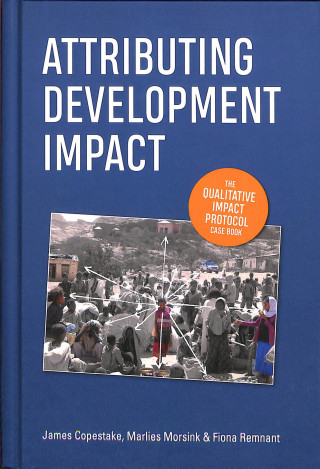
Attributing Development Impact
Autor James Copestake, Marlies Morsink, Fiona Remnant
Substantiating cause and effect is one of the great conundrums for those aiming to have a social impact, be they an NGO, social impact investment fund, or multinational corporation. All face the same quandary: how do you know whet ... celý popis


- Jazyk:
 Angličtina
 - Väzba: Pevná
- Počet strán: 192
Nakladateľ: Practical Action Publishing, 2019
- Viac informácií o knihe

77.96 €
Bežne: 86.59 €
Ušetríte 8.63 €

Skladom u dodávateľa
Odosielame za 10 - 18 dní
Mohlo by sa vám tiež páčiť
-

Moonwalk
14.07 € -

The Score
13.76 € -12 % -

The Deal
12.34 € -21 % -

The Mistake
14.47 € -8 % -

Jujutsu Kaisen, Vol. 30
9.61 € -22 % -

Witch Hat Atelier: Grimoire Edition 1
34.62 € -29 % -

Invincible Compendium Volume 2
42.32 € -30 % -

Berserk Deluxe Volume 1
35.63 € -25 % -

The Goal
14.57 € -7 % -

Berserk Deluxe Volume 2
33.20 € -30 % -

Invincible Compendium Volume 1
57.20 € -9 % -

Witch Hat Atelier Manga Box Set 1
51.33 € -31 % -

Lord of Mysteries, Vol. 3: The Clown, Part III
14.98 € -29 % -

Murdoku
18.12 € -25 % -

Moonwalk: A Memoir
19.94 € -31 % -

Heated Rivalry
12.55 € -7 % -

Jujutsu Kaisen, Vol. 25
9.91 € -20 % -

Legacy
11.94 € -12 % -

Berserk Deluxe Volume 3
55.08 € -

Veil Volume 1
12.04 € -25 % -

White Nights
4.75 € -11 %
Darujte túto knihu ešte dnes
- Objednajte knihu a vyberte Zaslať ako darček.
- Obratom obdržíte darovací poukaz na knihu, ktorý môžete ihneď odovzdať obdarovanému.
- Knihu zašleme na adresu obdarovaného, o nič sa nestaráte.
Viac informácií o knihe Attributing Development Impact
Nákupom získate 188 bodov
 Anotácia knihy
Substantiating cause and effect is one of the great conundrums for those aiming to have a social impact, be they an NGO, social impact investment fund, or multinational corporation. All face the same quandary: how do you know whether, or how, you contributed to an observed social change? A wide range of impact evaluation methodologies exist to address this need, ranging from informal feedback loops to highly elaborate surveys. But generating useful and credible information in a timely and cost-effective way remains an elusive goal, particularly for organizations working in complex, rapidly evolving and diverse contexts.Attributing Development Impact brings together responses to this challenge using an innovative impact evaluation approach called the Qualitative Impact Protocol (QuIP). This is a transparent, flexible and relatively simple set of guidelines for collecting, analysing and sharing feedback from intended beneficiaries about significant drivers of change in their lives. Innovative features include the use of ‘blindfolded’ interviewing to mitigate pro-project bias, and the application of a flexible coding system to make analysis and reporting faster and more transparent.The QuIP has now been used in many countries, and this book uses case studies from seven countries (Ethiopia, India, Malawi, Mexico, Tanzania, Uganda and UK) assessing a range of activities, including food security, rural livelihoods, factory working conditions, medical training, community empowerment and microcredit for house improvement. It includes comprehensive ‘how to’ QuIP guidelines and practical insights based on these case studies into how to address the numerous methodological challenges thrown up by impact evaluation.Essential reading for evaluation specialists within NGOs, governments and donor agencies; social impact investors; community development practitioners; and researchers and students interested in evaluation methodologies.
Parametre knihy
Zaradenie knihy Knihy po anglicky Reference, information & interdisciplinary subjects Interdisciplinary studies Development studies
77.96 €
- Celý názov: Attributing Development Impact
- Podnázov: The qualitative impact protocol case book
- Autor: James Copestake, Marlies Morsink, Fiona Remnant
- Jazyk: Angličtina
- Väzba: Pevná
- Počet strán: 192
- EAN: 9781788530231
- ISBN: 1788530233
- ID: 21341904
- Nakladateľ: Practical Action Publishing
- Hmotnosť: 570 g
- Rozmery: 234 × 156 × 18 mm
- Dátum vydania: 15. March 2019
Osobný odber Bratislava a 12882 dalších
Copyright ©2008-26 najlacnejsie-knihy.sk Všetky práva vyhradenéSúkromieCookies

 24 miliónov titulov
 Vrátenie do mesiaca
 02/210 210 99 (8-15.30h)