Kód: 05282700
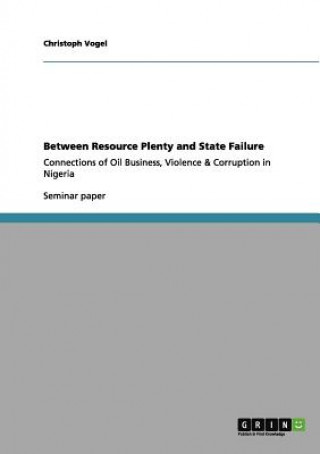
Between Resource Plenty and State Failure
Autor Christoph Vogel
Seminar paper from the year 2009 in the subject Politics - International Politics - Region: Africa, grade: 2,0, University of Cologne (Institut für Afrikanistik), course: Konfliktherd Nigeria, language: English, abstract: Mineral ... celý popis


- Jazyk:
 Angličtina
 - Väzba: Brožovaná
- Počet strán: 88
Nakladateľ: Grin Publishing, 2011
- Viac informácií o knihe

17.10 €
Bežne: 20.07 €
Ušetríte 2.96 €

Skladom u dodávateľa
Odosielame za 5 - 8 dní
Mohlo by sa vám tiež páčiť
-
Nine Doors of Midgard
22.77 € -2 % -

Lola Lago, detective
14.88 € -

Tradiční slavnostní dorty s krémy, náplněmi a zdobením
3.64 € -28 % -

Maisy's Christmas Tree
16.80 € -
GDP
12.75 € -24 % -

Z archiwum Jerzego Wroblewskiego Tom 8 Zemsta Faraona
7.08 € -

Whisper Marketing: The Secret Restaurant Formula
9.81 € -6 % -
Machine Learning and Knowledge Discovery in Databases
51.73 € -7 % -

Importing the First Amendment
185.81 € -

Computer Aided Verification
51.73 € -7 % -

Conversations De Goethe Pendant Les Derni?res Années De Sa Vie: 1822-1832, Volume 1...
25.61 € -2 % -

Unfolding The Mysteries Of Revelation
19.84 € -1 % -

Swimming at Night
12.04 € -25 % -

Hechtfieber
14.98 € -9 % -

Hamburg - Deine Morde. Die Moral eines Killers
17.20 € -10 % -
Qui Elja, mi sentite? Otto donne sul Pik Lenin
20.55 € -
Das Vetorecht eines einwilligungsunfähigen Patienten
53.15 € -
Seyh Bedreddin ve Varidat
23.08 € -4 % -

Introduction to Microelectronics to Nanoelectronics
165.25 € -

Murder at the House of Rooster Happiness
17.71 € -17 % -
Businessplan als Voraussetzung zur Finanzierung von Existenzgrundern
25.10 € -11 %
Darujte túto knihu ešte dnes
- Objednajte knihu a vyberte Zaslať ako darček.
- Obratom obdržíte darovací poukaz na knihu, ktorý môžete ihneď odovzdať obdarovanému.
- Knihu zašleme na adresu obdarovaného, o nič sa nestaráte.
Viac informácií o knihe Between Resource Plenty and State Failure
Nákupom získate 41 bodov
 Anotácia knihy
Seminar paper from the year 2009 in the subject Politics - International Politics - Region: Africa, grade: 2,0, University of Cologne (Institut für Afrikanistik), course: Konfliktherd Nigeria, language: English, abstract: Mineral wealth and concomitant phenomena of violence state weakness and corruptionhave been widely brought into contact by numerous scholars, as a considerable numberof empirical cases seem to give evidence to this. Particularly in Sub-Saharan Africa theexamples of Sierra Leone, Nigeria, Democratic Republic of Congo and Angola just tomention some of the most striking ones led to various hypotheses about the influence ofresource plenty on governance issues. Due to several specific characteristics, the case ofNigeria is different to many others. First of all, the Federal Republic of Nigeria turned outto be Africa s most populous state with about 140 million citizens. In addition the socialsituation is rather unique, as Nigeria consists of more than 250 ethnic groups. The morethan 500 spoken languages spoken in the country further illustrate the socio-culturaldiversity. Nevertheless the three major communities include more than two thirds of thecountry s total population.On the socio-economic dimension a key feature is the overwhelming importance ofoil as almost single export good and major contributor of the country s GDP. The strong dependence on oil has been challenging Nigeria s economyconsiderably and can be seen as a major reason for socio-economic disparities throughoutthe country, not to forget that it has been the origin for its (political) Dutch disease .Contrarily to other so-called crisis-states the main issues threatening statehood andstability in Nigeria can be rather seen as domestic problems. Transnational issues like therelations with Cameroon do not have the same structuring quality as in other states.Although Nigeria improved in TI's CPI of 2008 the country still faces institutionalized clientelism andrent-seeking at almost each political and social level as poor performance in group grievance , delegitimization of the state or factionalized elites may illustrate. Secondlymanifold forms of institutional and informal violence are destabilizing the socio-politicalarchitecture. Various attempts to counter those phenomena have been ineffective orimplemented insufficiently, sometimes not at all. The result is a current situation ofdisorder, human insecurity, economic inequality fed by a prosperous environment forindividual enrichment provided by a state which is rather effective in facilitating illicitpolitical and economic behaviours, be they plundering of public goods, drug or weapontrade or other.
Parametre knihy
Zaradenie knihy Knihy po anglicky Society & social sciences Politics & government
17.10 €
- Celý názov: Between Resource Plenty and State Failure
- Podnázov: Connections of Oil Business, Violence & Corruption in Nigeria
- Autor: Christoph Vogel
- Jazyk: Angličtina
- Väzba: Brožovaná
- Počet strán: 88
- EAN: 9783656047216
- ISBN: 3656047219
- ID: 05282700
- Nakladateľ: Grin Publishing
- Hmotnosť: 127 g
- Rozmery: 210 × 148 × 5 mm
- Dátum vydania: 11. November 2011
Obľúbené z iného súdka
-

The Wretched of the Earth
10.42 € -30 % -

Flash Boys - A Wall Street Revolt
12.55 € -29 % -

Every Man A King
19.94 € -18 % -
Children of the Matrix
14.27 € -33 % -

The Trigger
21.46 € -27 % -
State and Revolution
7.28 € -24 % -

Xi Jinping: The Governance of China
25.20 € -15 % -
Master of the Senate
18.32 € -24 % -
Politically Incorrect Guide to Islam (And the Crusades)
16.19 € -25 % -

Palestine Peace Not Apartheid. Palästina, Frieden, nicht Apartheid, English Edition
13.46 € -24 % -

Case Against the Sexual Revolution
14.77 € -25 % -

Sandworm
23.38 € -25 % -

City of Quartz
15.79 € -15 % -

Time for a Turning Point
21.05 € -24 % -

Maestro
15.38 € -18 % -
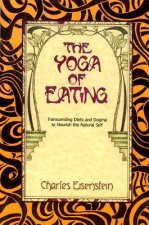
Yoga of Eating
10.62 € -25 % -

STRANGE DEATH OF EUROPE
14.88 € -24 % -
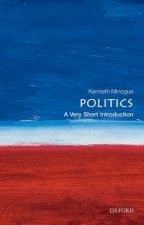
Politics: A Very Short Introduction
10.01 € -24 % -
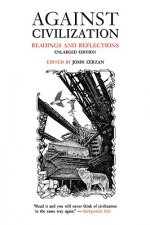
Against Civilization
12.04 € -25 % -

My Autobiography
11.33 € -24 % -

Devil's Knot
14.07 € -25 % -

The Lords of Poverty: The Power, Prestige, and Corruption of the International Aid Business
12.75 € -25 % -
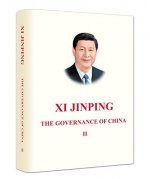
Xi Jinping: The Governance of China II
25.20 € -15 % -

No Turning Back
11.03 € -30 % -
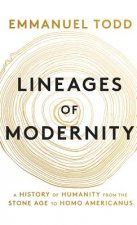
Lineages of Modernity - A History of Humanity from the Stone Age to Homo Americanus
72.59 € -4 % -
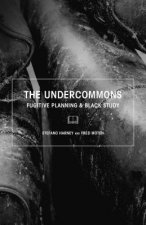
Undercommons
19.23 € -24 % -

Force of Law
47.18 € -
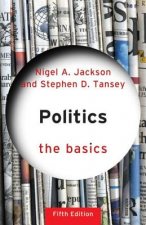
Politics: The Basics
30.27 € -
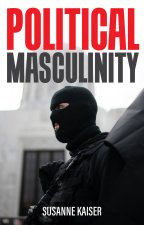
Political Masculinity: How Incels, Fundamentalists and Authoritarians Mobilise for Patriarchy
17.20 € -26 % -
International Relations Since 1945
55.58 € -

Down With The Law
12.85 € -25 % -
Frontline Ukraine
25.20 € -12 % -

Reflected Glory
28.95 € -18 % -
Political Writings
42.72 € -

The Red Army Faction: a Documentary History
25.10 € -25 % -

FM 3-21.8
18.22 € -2 % -

Control of Air Pollution from Aircraft and Aircraft Engines
15.48 € -2 % -

Mice;Int Pol Science Afric Pr
11.53 € -10 % -
Lee Kuan Yew
17.41 € -19 % -
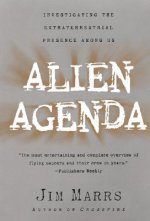
Alien Agenda
14.07 € -28 % -
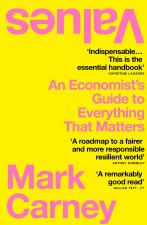
Values
16.19 € -7 % -
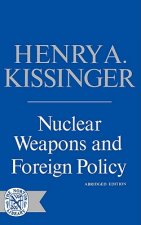
Nuclear Weapons and Foreign Policy
18.42 € -18 % -
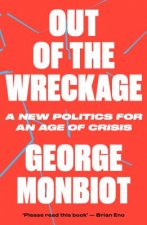
Out of the Wreckage
11.53 € -20 % -

Strangers In Their Own Land
24.60 € -19 % -
Political Brain
16.09 € -24 % -
Report From Iron Mountain
11.64 € -18 % -
Thomas Sowell Reader
25.10 € -25 % -
Weapons of the Weak
20.44 € -23 % -
Authoritarian Dynamic
25.10 € -25 %
Osobný odber Bratislava a 12593 dalších
Copyright ©2008-26 najlacnejsie-knihy.sk Všetky práva vyhradenéSúkromieCookies

 24 miliónov titulov
 Vrátenie do mesiaca
 02/210 210 99 (8-15.30h)