
Code: 06620857
Complement
by P. A. Miescher, H. J. Müller-Eberhard
Activation of the complement system gives rise to a number of molecular species which can interact with host-derived cells and regulate their function. This interaction is mediated through distinct cell surface complement receptor ... more


- Language:
 English
 - Binding: Paperback
- Number of pages: 474
Publisher: Springer-Verlag Berlin and Heidelberg GmbH & Co. KG, 1985
- More about this

102.88 €
RRP: 111.50 €
You save 8.62 €

In stock at our supplier
Shipping in 5 - 8 days
You might also like
-

Grim Tales Tarot
19.60 € -25 % -

Dokuza Kadar On
10.20 € -4 % -

Rubens
9.59 € -

La fortificación de España en los siglos XIII y XIV
45.17 € -

童年观与中国当代儿童文学 Childhood View And Contemporary Chinese Children's Literature
28.29 € -2 % -

El tarot y la cábala : un camino para mejorar tu vida
15.96 € -

Les Fetes Des Enfants
12.42 € -9 % -

Ovind
18.79 € -14 % -

Erwerbssicherung beim Grundstuckskauf
157.97 € -

Geometry
54.67 € -

Stonies
8.58 € -24 % -

Worked Examples in Mass Transfer
12.62 € -10 % -

Enhancing Human Performance
191.12 € -

Anarchy Alive!
17.48 €
Give this book as a present today
- Order book and choose Gift Order.
- We will send you book gift voucher at once. You can give it out to anyone.
- Book will be send to donee, nothing more to care about.
More about Complement
You get 249 loyalty points
 Book synopsis
Activation of the complement system gives rise to a number of molecular species which can interact with host-derived cells and regulate their function. This interaction is mediated through distinct cell surface complement receptors, and receptor engagement produces biologic responses which can either modulate host defense reactions or enhance inflammation. Although the first complement receptor was recognized more than 30 years ago [80J, detailed biochemical information concerning the receptors has only recently become available. Currently, eight distinct complement receptors are recognized. Five receptors (CRl, CR2, CR3, C3a receptor, and C3e receptor) react with various regions on C3 while the other receptors display specificity for Clq, C5a, or Factor H. This chapter focusses on the chemistry of the various ligands and receptors and discusses the biologic activities which arise as a result of receptor-ligand interaction. II. CIQ Receptor A. The Ligand Clq is the recognition molecule of the classical complement pathway [reviewed in 20, 130]. In serum, it is part of a calcium-dependent penta molecular complex containing one molecule ofClq and two molecules each of the pro enzymes Clr and CIs. During classical pathway activation, the macromolecular complex becomes associated with the activator through the Clq subcomponent. Bound Clq undergoes a conformational change and induces the proteolytic autoactivation of Clr which in turn effects the proteolytic activation of CIs. This process is controlled by the Cl inhibitor (ClINH) which binds irreversibly to activated Clr and CIs, and inhibits their enzymatic activities.
Book details
Book category Knihy po anglicky Medicine Clinical & internal medicine Diseases & disorders
102.88 €
- Full title: Complement
- Author: P. A. Miescher, H. J. Müller-Eberhard
- Language: English
- Binding: Paperback
- Number of pages: 474
- EAN: 9783540150756
- ISBN: 9783540150756
- ID: 06620857
- Publisher: Springer-Verlag Berlin and Heidelberg GmbH & Co. KG
- Weight: 865 g
- Dimensions: 244 × 170 × 27 mm
- Date of publishing: 01. April 1985
Trending among others
-

Healing Add
15.45 € -25 % -

Medical Microbiology
98.64 € -8 % -
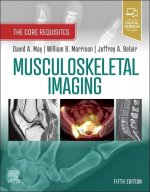
Musculoskeletal Imaging
92.67 € -4 % -

New Paradigms in Lyme Disease Treatment
28.49 € -25 % -

Comprehensive Review of Infectious Diseases
159.18 € -5 % -

Congenital and Perinatal Infections
136.34 € -
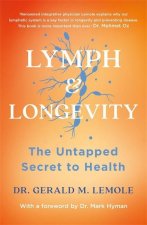
LYMPH & LONGEVITY
18.08 € -24 % -

Insights Into Lyme Disease Treatment
35.37 € -25 % -

Radical Remission
14.04 € -25 % -

Spillover
11.51 € -19 % -
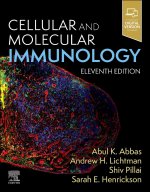
Cellular and Molecular Immunology
89.95 € -6 % -

How to Starve Cancer
23.94 € -15 % -

Breast Ultrasound
74.68 € -5 % -

Oxford Handbook of Clinical Immunology and Allergy
51.94 € -
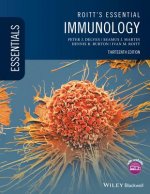
Roitt's Essential Immunology 13e
70.03 € -

Netter's Infectious Diseases
92.67 € -4 % -

Allergy Essentials
122.19 € -5 % -

Cancer as a Metabolic Disease - On the Origin, Management, and Prevention of Cancer
140.48 € -9 % -

Cardiac Pacing, Defibrillation and Resynchronization - A Clinical Approach, 4th Edition
102.07 € -4 % -

Mandell, Douglas, and Bennett's Principles and Practice of Infectious Diseases
420.56 € -14 % -
Psychosomatic Medicine
19.19 € -17 % -
Lyme Brain
35.37 € -25 % -

Psychopharmacology in Oncology and Palliative Care
85.60 € -9 % -

Oncology Nutrition for Clinical Practice
113.50 € -

Eyelid, Conjunctival, and Orbital Tumors: An Atlas and Textbook
428.24 € -4 % -

Personalized Therapy for Multiple Myeloma
50.53 € -9 % -

Cancer Is Not a Disease - It's a Healing Mechanism
19.90 € -25 % -

Cancer-Fighting Kitchen, Second Edition
24.65 € -28 % -

Natural Treatments for Lyme Coinfections
16.87 € -24 % -

Cancer and the New Biology of Water
18.18 € -25 % -

Everyday Mindfulness for OCD
12.73 € -24 % -

Peanut Allergy Epidemic
14.04 € -44 % -

Bethesda Handbook of Clinical Oncology
78.12 € -9 % -

Healing Lyme Disease Coinfections
16.47 € -26 % -

Great Influenza
14.14 € -24 % -
Breast Ultrasound
90.55 € -9 % -
CT Anatomy for Radiotherapy
80.04 € -11 % -

Manual of Clinical Oncology
69.12 € -10 % -
Immune System: A Very Short Introduction
12.52 € -9 % -

Healing Songs
36.17 € -
Cardio-Oncology Practice Manual: A Companion to Braunwald's Heart Disease
128.56 € -5 % -

Illustrated Anatomical Segmentectomy for Lung Cancer
160.90 € -9 % -

Target Volume Delineation for Conformal and Intensity-Modulated Radiation Therapy
175.45 € -10 % -

Stereotactic Radiosurgery and Stereotactic Body Radiation Therapy (SBRT)
324.13 € -

Drug Allergy Testing
92.67 € -4 % -

Radiobiology and Radiation Hormesis
120.77 € -9 % -
Plotkin's Vaccines
349.30 € -5 % -
Khan's The Physics of Radiation Therapy
268.14 € -10 % -

Illustrated Anatomical Segmentectomy for Lung Cancer
115.72 € -9 %
Osobný odber Bratislava a 13312 dalších
Copyright ©2008-26 najlacnejsie-knihy.sk Všetky práva vyhradenéSúkromieCookies

 25 miliónov titulov
 Vrátenie do mesiaca
 02/210 210 99 (8-15.30h)