Kód: 09016498
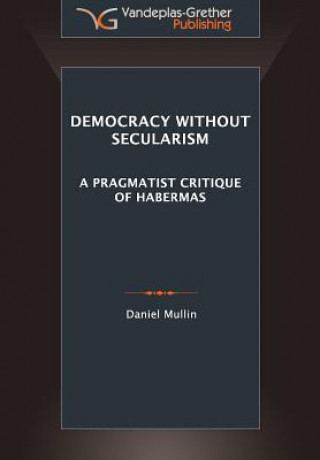
Democracy Without Secularism
Autor Daniel Michael Mullin
Jürgen Habermas has argued that democracy depends on all citizens recognizing the legitimacy of the law. Therefore, political argument must appeal only to public reason which is secular. Religious citizens must translate their rea ... celý popis


- Jazyk:
 Angličtina
 - Väzba: Brožovaná
- Počet strán: 284
Nakladateľ: Vandeplas-Grether Publishing Bv, 2013
- Viac informácií o knihe


Mohlo by sa vám tiež páčiť
-

Kill the Dog: The First Book on Screenwriting to Tell You the Truth
19.33 € -2 % -

Introduction To Computer Organization
42.42 € -25 % -

Complete Knight's Cross
37.96 € -25 % -

Biology After the Sociobiology Debate
87.28 € -9 % -
Derrida, Kristeva, and the Dividing Line
53.05 € -

Single State of Mind
12.75 € -25 % -

Genetics, Genomics and Breeding of Sunflower
289.40 € -

Vivid
13.46 € -6 % -

Commonwealth Caribbean Civil Procedure
224.89 € -

Essential Studies in English, Volume 1
22.88 € -2 % -

Corporate Entrepreneurship
105.91 € -3 % -

Simon Bolivar's Quest for Glory
45.46 € -

The Toddler's Handbook: Bilingual (English / Korean) (영어 / 한국어) Numbers, Colors, Shapes, Sizes, ABC Animals
23.89 € -1 % -

Promenades Dans Les Champs, Ou Visites A La Ferme Et A l'Exploitation de M. Dumont
20.24 € -2 %
Darujte túto knihu ešte dnes
- Objednajte knihu a vyberte Zaslať ako darček.
- Obratom obdržíte darovací poukaz na knihu, ktorý môžete ihneď odovzdať obdarovanému.
- Knihu zašleme na adresu obdarovaného, o nič sa nestaráte.
Viac informácií o knihe Democracy Without Secularism
Nákupom získate 109 bodov
 Anotácia knihy
Jürgen Habermas has argued that democracy depends on all citizens recognizing the legitimacy of the law. Therefore, political argument must appeal only to public reason which is secular. Religious citizens must translate their reasons into a secular language accessible to the public. This dissertation argues that religious arguments are justified in public discourse if they refrain from dogmatism. Moreover, there is nothing inherent in secular reasons that make them publicly accessible or likely to generate consensus among members of a pluralistic society. If we treat religious arguments as simply arguments with controversial premises, it becomes less clear why religious arguments are singled out as particularly problematic for liberal democracies, since many secular political arguments share this feature. Granted, religious reasons are unlikely to secure consensus, but this does not count against them if consensus is not the goal of democratic discourse. This dissertation makes the case that Habermas, and other liberal theorists such as Rawls, have placed too much emphasis on consensus as the goal of democracy. Moreover, what they refer to is not practical consensus achieved pragmatically through compromise, but an idealized consensus that is the achievement of secular reason. This is problematic for two main reasons: there is no normative reason to think we ought to attain such consensus and such consensus is unlikely to be achieved in practice. Thus, there seems to be no normative force to the claim that religious citizens ought to translate their arguments into secular language.
Parametre knihy
Zaradenie knihy Knihy po anglicky Humanities Religion & beliefs Religion: general
45.05 €
- Celý názov: Democracy Without Secularism
- Podnázov: A Pragmatist Critique of Habermas
- Autor: Daniel Michael Mullin
- Jazyk: Angličtina
- Väzba: Brožovaná
- Počet strán: 284
- EAN: 9789491533006
- ISBN: 9789491533006
- ID: 09016498
- Nakladateľ: Vandeplas-Grether Publishing Bv
- Hmotnosť: 454 g
- Rozmery: 244 × 170 × 15 mm
- Dátum vydania: 04. December 2013
Obľúbené z iného súdka
-

The Righteous Mind
16.09 € -24 % -

Secular Age
18.93 € -25 % -

History of Christianity
20.24 € -24 % -
The Perennial Philosophy
14.07 € -25 % -

The Psychology of Selling
17.61 € -10 % -

Courage of Hopelessness
13.26 € -24 % -

Down the Witches' Way
10.32 € -2 % -
Pensees
10.01 € -24 % -

Handbook Of Psychic Cold Reading
10.82 € -
Rites of Passage, Second Edition
33.51 € -1 % -

Symbols of Sacred Science
24.70 € -2 % -

Mythic & Magickal Folklore Of Plants
15.58 € -

Simulations of God
13.36 € -25 % -

Padre Candido Amantini, CP
9.51 € -

Kingship and the Gods
43.94 € -

Perfect Heresy
13.96 € -24 % -
Sacred Numerology of Thoth
17 € -

Jotunbok
29.56 € -1 % -

Qur'an and the Bible
53.15 € -20 % -

Foxe's Book of Martyrs
16.19 € -24 % -

Bhagavad Gita
7.18 € -25 % -

The Happiness Hypothesis: Finding Modern Truth in Ancient Wisdom
14.77 € -25 % -

Screwtape Letters
12.24 € -22 % -

Living Goddesses
38.47 € -

Knowing God
11.84 € -25 % -

Wisdom Of Insecurity
13.96 € -24 % -

Tao Te Ching
6.07 € -30 % -

History of Religious Ideas, Volume 1
23.79 € -17 % -
Return of the God Hypothesis
24.09 € -24 % -
Sacred and the Profane
13.46 € -24 % -

Conversations With God
11.84 € -25 % -

The Courage to Be
14.57 € -22 % -
Seeking Allah, Finding Jesus
19.23 € -24 % -

Early History of God
27.94 € -24 % -

More Than Allegory - On religious myth, truth and belief
15.79 € -15 % -

Story of Christianity Volume 1
20.65 € -25 % -

Dialogues Concerning Natural Religion, and The Natural History of Religion
7.89 € -24 % -

Hekate Tarot
9.41 € -2 % -

History of God
13.96 € -24 % -
Evolution of God
14.07 € -25 % -

Alchemical Keys To Masonic Ritual
14.88 € -1 % -

Comfortable with Uncertainty
13.36 € -25 % -

Slave Species of the Gods
18.32 € -24 % -

Minoan Kingship and the Solar Goddess
31.38 € -5 % -

God And The Afterlife
12.04 € -25 % -

ADVERSARIAL LIGHT - Magick of the Nephilim
22.88 € -1 % -

Christianity: A Very Short Introduction
10.01 € -24 % -

Art of Worldly Wisdom
8.50 € -2 % -

Apotheosis - The Ultimate Beginner's Guide to Luciferianism & the Left-Hand Path
23.48 € -1 %
Osobný odber Bratislava a 12742 dalších
Copyright ©2008-26 najlacnejsie-knihy.sk Všetky práva vyhradenéSúkromieCookies

 24 miliónov titulov
 Vrátenie do mesiaca
 02/210 210 99 (8-15.30h)