Kód: 44490741
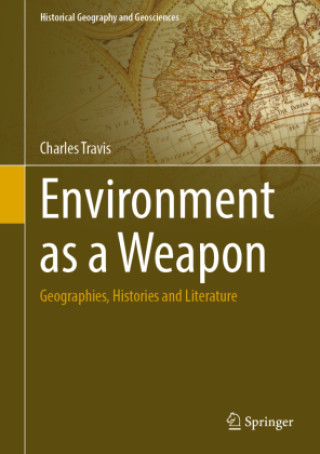
Environment as a Weapon
Autor Charles Travis
Environment as a Weapon explores, discusses and maps out how environment and warfare have been perceived in works of history, geography and literature starting with the period of the Agricultural Revolution (10,000 BCE) and endi ... celý popis


- Jazyk:
 Angličtina
 - Väzba: Pevná
- Počet strán: 164
Nakladateľ: Springer, Berlin, 2024
- Viac informácií o knihe

205.96 €
Bežne: 223.09 €
Ušetríte 17.13 €

Skladom u dodávateľa
Odosielame za 10 - 13 dní
Mohlo by sa vám tiež páčiť
-

Moonwalk
14.17 € -

The Score
13.76 € -12 % -

The Deal
12.34 € -21 % -

The Mistake
14.57 € -7 % -

Jujutsu Kaisen, Vol. 30
9.61 € -22 % -

Witch Hat Atelier: Grimoire Edition 1
34.62 € -29 % -

Invincible Compendium Volume 2
46.47 € -23 % -

Berserk Deluxe Volume 1
35.74 € -25 % -

The Goal
14.67 € -10 % -

Berserk Deluxe Volume 2
33.20 € -30 % -

Invincible Compendium Volume 1
57.20 € -9 % -

Witch Hat Atelier Manga Box Set 1
51.33 € -31 % -

Heated Rivalry
12.65 € -7 % -

Moonwalk: A Memoir
19.94 € -31 % -

Murdoku
18.12 € -25 % -

Lord of Mysteries, Vol. 3: The Clown, Part III
14.98 € -29 % -

Jujutsu Kaisen, Vol. 25
9.91 € -20 % -

White Nights
4.75 € -11 % -

Veil Volume 1
13.56 € -30 % -

Jujutsu Kaisen, Vol. 26
9.91 € -20 % -

Legacy
13.56 € -21 %
Darujte túto knihu ešte dnes
- Objednajte knihu a vyberte Zaslať ako darček.
- Obratom obdržíte darovací poukaz na knihu, ktorý môžete ihneď odovzdať obdarovanému.
- Knihu zašleme na adresu obdarovaného, o nič sa nestaráte.
Viac informácií o knihe Environment as a Weapon
Nákupom získate 498 bodov
 Anotácia knihy
Environment as a Weapon explores, discusses and maps out how environment and warfare have been perceived in works of history, geography and literature starting with the period of the Agricultural Revolution (10,000 BCE) and ending in our present day. The volume commences with ancient, medieval age and early modern perspectives on relations between warfare, nature, climate, geology, landscape, rivers wetlands and the sea in the Epic of Gilgamesh, the books of Genesis, and Exodus, Greco-Roman myths, the Táin, and Beowulf, before discussing the equestrian and steppe land environments of Pax Mongolica followed by the wreck of the Spanish Armada in 1588 in the middle of the Little Ice Age. The volume then examines how the impact of winter, severe weather and terrain during the early years of the American Revolution was reflected in rebel and redcoat pamphlets, diaries and weather logs, before surveying the birth of Total War in the early nineteenth centuries through the prisms of Mary Shelley's Frankenstein, Leo Tolstoy's War and Peace, and Charles Minard's Carte figurative carto-graph of Napoleon's disastrous 1812 invasion of Russia. Next, the volume frames the U.S. Civil War as the first Anthropocene War parsing its organic-industrial assemblages through the lens of Emily Dickinson's poetry. Writings on Seapower, Geopolitik and the Heartland contextualize the emergence of Global War in the twentieth century with journalistic pieces and the works of Samuel Beckett, Kurt Vonnegut and James Dickey depicting the impacts of flood and fire as geo-hazard weapons of mass destruction. The volume then examines drawing on veterans' accounts and pieces of journalism how North Vietnam's Environmental Military Complex, stalled the American Military Industrial Complex in the jungles and monsoon climates in which the Vietnam War was fought. Concluding with a discussion of Robert J. Oppenheimer' deployment of sub-atomic environments at Hiroshima and Nagasaki, the volume contextualizes James Lovelock's concept of 'Gaia at War,' with David Mitchell's Cloud-Atlas and discourse framing global warming and climate change as national security threats to the United States. Indeed, in his most recent report, United Nations (U.N.) Secretary General António Guterres declared war as a benchmark of human history: "seventy-five years ago, the world emerged from a series of cataclysmic events: two successive world wars, genocide, a devastating influenza pandemic and a worldwide economic depression. Our founders gathered in San Francisco promising to save succeeding generations from the scourge of war." A 2016 U.N. resolution called for special attention to "be given to countries in situations of conflict, as well as countries and territories under foreign occupation, post-conflict countries, and countries affected by natural and human-made disasters." Furthermore, the U.N. recognizes that "sustainable development cannot be realized without peace and security; and peace and security will be at risk without sustainable development." Thus, a holistic approach to studying and mitigating the human and environmental impacts of warfare, must integrate methods from the arts, humanities and sciences. This involves recognizing and understanding how the Earth's planetary environments and systems have been historically perceived, deployed and emerged as agents of warfare. Arguably within the context of climate change, the Earth possesses such environmental agencies, with its lithosphere, hydrosphere, cryosphere, biosphere and atmosphere acting as arsenals against human induced global warming. This book will be of interest to geographers, historians, and scholars in environmental, climate change, literary and military studies, and the environmental humanities.
Parametre knihy
Zaradenie knihy Knihy po anglicky Earth sciences, geography, environment, planning Geography
205.96 €
- Celý názov: Environment as a Weapon
- Podnázov: Geographies, Histories and Literature
- Autor: Charles Travis
- Jazyk: Angličtina
- Väzba: Pevná
- Počet strán: 164
- EAN: 9783031508554
- ID: 44490741
- Nakladateľ: Springer, Berlin
- Hmotnosť: 484 g
- Rozmery: 254 × 178 mm
- Dátum vydania: 16. August 2024
Osobný odber Bratislava a 12882 dalších
Copyright ©2008-26 najlacnejsie-knihy.sk Všetky práva vyhradenéSúkromieCookies

 24 miliónov titulov
 Vrátenie do mesiaca
 02/210 210 99 (8-15.30h)