Kód: 09293160
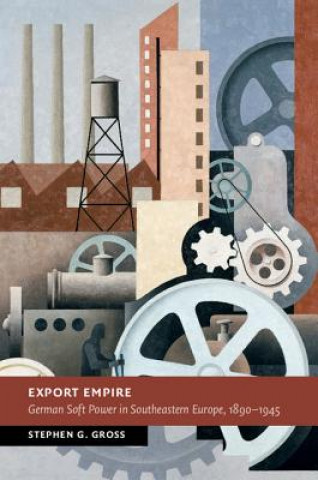
Export Empire
Autor Stephen G. Gross
German imperialism in Europe evokes images of military aggression and ethnic cleansing. Yet, even under the Third Reich, Germans deployed more subtle forms of influence that can be called soft power or informal imperialism. Stephe ... celý popis


- Jazyk:
 Angličtina
 - Väzba: Pevná
- Počet strán: 398
Nakladateľ: Cambridge University Press, 2016
- Viac informácií o knihe


Mohlo by sa vám tiež páčiť
-

La cantina de medianoche 1
27.43 € -

Plejádská světelná zasvěcení 2. díl
12.65 € -16 % -

Capital - In Manga!
31.25 € -
Picatrix - The Goal of the Wise
39.79 € -10 % -

VOCES EN LA OSCURIDAD, VOL.2
12.96 € -

Frances
10.64 € -25 % -

All the Women of the Bible
13.96 € -25 % -

Walk This Road
17.78 € -

Kwiatki sw. Teresy od Jezusa
6.02 € -

Vintage Woodworking Machinery
17.48 € -18 % -

Manual de Coloproctologia
86.63 € -14 % -
Play Dead
6.42 € -4 % -

Alien Effect
17.68 € -

Spirit Speaks Through Me
17.88 € -1 % -

Fire in the Sky
18.38 € -

Przybyszewski und Japan. Bez ge und Ann herungen
46.03 € -2 % -
Fadial 4 : Totem et Calumet
12.96 € -

Beauty and the Beast, and Tales of Home
13.26 € -2 % -
Statist
48.64 € -14 % -

Vegan Diet
12.96 € -2 % -

Chasing Normal
35.27 € -

Open Access und die Zukunft der wissenschaftlichen Zeitschriften
13.46 € -10 % -

Le siege de Strasbourg, 1870
18.08 € -10 % -

La Cancérologie En Orl: Fondée Sur Les Preuves Et L experience Tome 1
61.10 € -11 % -

Old Testament in Scots
22.20 € -9 % -

Enchanted Island
12.35 € -1 % -

Memoria de migrantes
68.04 € -14 % -

Proektirovanie obrazovatel'nyh sistem
73.26 € -14 % -

Machtkonstruktion eines Schiedsrichters im Sport am Beispiel Basketball erklart anhand des symbolischen Interaktionismus
38.08 € -11 % -

Importance stratégique de l'évolution du schéma logistique
31.85 € -11 % -
Demokratie heute - Ausgabe 2016 für Nordrhein-Westfalen, m. 1 Buch, m. 1 Online-Zugang
29.84 € -

If You Can Count to Four
11.25 € -24 % -

Leslie Tyrrell. Vol. I
20.70 € -25 % -

Exame de Sufici?ncia do CFC - Teoria e Prática com mais de de 200 quest?es de provas anteriores resolvidas e comentadas.
13.96 € -6 % -

Dress and Care of the Feet
16.07 € -10 %
Darujte túto knihu ešte dnes
- Objednajte knihu a vyberte Zaslať ako darček.
- Obratom obdržíte darovací poukaz na knihu, ktorý môžete ihneď odovzdať obdarovanému.
- Knihu zašleme na adresu obdarovaného, o nič sa nestaráte.
Viac informácií o knihe Export Empire
Nákupom získate 347 bodov
 Anotácia knihy
German imperialism in Europe evokes images of military aggression and ethnic cleansing. Yet, even under the Third Reich, Germans deployed more subtle forms of influence that can be called soft power or informal imperialism. Stephen G. Gross examines how, between 1918 and 1941, German businessmen and academics turned their nation - an economic wreck after World War I - into the single largest trading partner with the Balkan states, their primary source for development aid and their diplomatic patron. Building on traditions from the 1890s and working through transnational trade fairs, chambers of commerce, educational exchange programmes and development projects, Germans collaborated with Croatians, Serbians and Romanians to create a continental bloc, and to exclude Jews from commerce. By gaining access to critical resources during a global depression, the proponents of soft power enabled Hitler to militarise the German economy and helped make the Third Reich's territorial conquests after 1939 economically possible.
Parametre knihy
Zaradenie knihy Knihy po anglicky Humanities History Regional & national history
142.42 €
- Celý názov: Export Empire
- Podnázov: German Soft Power in Southeastern Europe, 1890-1945
- Autor: Stephen G. Gross
- Jazyk: Angličtina
- Väzba: Pevná
- Počet strán: 398
- EAN: 9781107112254
- ISBN: 1107112257
- ID: 09293160
- Nakladateľ: Cambridge University Press
- Hmotnosť: 702 g
- Rozmery: 163 × 236 × 30 mm
- Dátum vydania: 05. January 2016
Obľúbené z iného súdka
-

Hundred Years' War on Palestine
13.36 € -18 % -

The Fourth Turning
19.89 € -7 % -

Bury My Heart At Wounded Knee
11.65 € -32 % -

Ethnic Cleansing of Palestine
15.67 € -15 % -
History of the Peloponnesian War
15.07 € -28 % -

Genghis Khan
17.38 € -22 % -

Benjamin Franklin
18.79 € -11 % -

Rise And Fall Of The Third Reich
20.49 € -27 % -

Arab of the Future
21.20 € -24 % -

Rubicon
15.07 € -24 % -

How to be a Victorian
12.96 € -29 % -

Reconstruction of Nations
28.03 € -

Age Of Revolution
15.47 € -27 % -

Polish Saber
55.47 € -

In The Garden of Beasts
11.35 € -34 % -

Tamerlane
15.87 € -25 % -
Muqaddimah
12.76 € -6 % -

How to Listen to Jazz
17.08 € -12 % -
On Sparta
13.76 € -25 % -
Struggle Against the State and Other Essays
11.25 € -25 % -

Biggest Prison on Earth
16.78 € -11 % -

Death Traps
7.53 € -33 % -

China's Cosmopolitan Empire
23.31 € -7 % -
Civil War
12.96 € -13 % -

China's Last Empire
30.75 € -

Oxford History of the Biblical World
18.18 € -24 % -

Middle East
15.87 € -25 % -

Making of Europe
13.76 € -25 % -
North Korea
18.28 € -

On China
18.89 € -26 % -
Osman's Dream
16.78 € -24 % -

Persian Fire
15.07 € -28 % -

Israel: A Concise History of a Nation Reborn
17.48 € -24 % -
Estonian Textbook
27.43 € -

Roman Revolution
39.69 € -

Babylon
12.96 € -29 % -

Acre 1291
20.39 € -14 % -

Christ Stopped at Eboli
10.74 € -24 % -

History of the Renaissance World
28.44 € -24 % -

Operation Barbarossa and Germany's Defeat in the East
27.73 € -24 % -
Rising Sun
17.98 € -28 % -
Nations and Nationalism since 1780
15.37 € -25 % -

1948
26.53 € -1 % -

Letters of the Younger Pliny
13.76 € -25 % -

Japanese Castles AD 250-1540
15.67 € -26 % -

Prince Who Would Be King
13.16 € -20 % -

Finishing School
16.07 € -18 % -

Open Empire
52.76 € -
Middle East
21.10 € -24 %
Osobný odber Bratislava a 13416 dalších
Copyright ©2008-26 najlacnejsie-knihy.sk Všetky práva vyhradenéSúkromieCookies

 25 miliónov titulov
 Vrátenie do mesiaca
 02/210 210 99 (8-15.30h)