Kód: 02520625
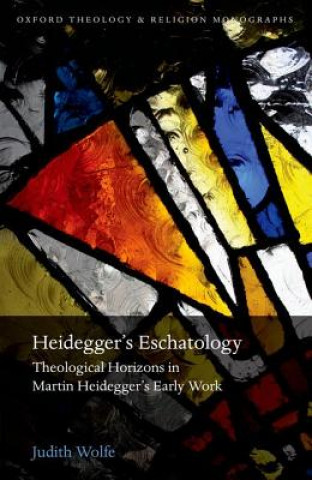
Heidegger's Eschatology
Autor Judith (Tutor in Theology at St John's College in the University of Oxford) Wolfe
Heidegger's Eschatology is a ground-breaking account of Heidegger's early engagement with theology, from his beginnings as an anti-Modernist Catholic to his turn towards an undogmatic Protestantism and finally to a resolutely a-th ... celý popis


- Jazyk:
 Angličtina
 - Väzba: Pevná
- Počet strán: 208
Nakladateľ: Oxford University Press, 2013
- Viac informácií o knihe


Mohlo by sa vám tiež páčiť
-

Toppi Gallery
24.39 € -24 % -

Very Special Ships
31.68 € -25 % -

13 Things Mentally Strong Parents Don't Do
13.96 € -24 % -

King Will Come
4.45 € -70 % -

Because You Are Here
32.19 € -

La vida infinita : el despertar de la consciencia en una sociedad terminal
22.57 € -

Nova express
20.55 € -

Analyse de l'accès au crédit
72.90 € -

Social Work, Health, and International Development
306.81 € -

Im Nebel der Zeiten
35.13 € -
Handbook of Lexicography
165.96 € -
Learning from the Impacts of Superstorm Sandy
74.21 € -9 % -
Oeuvres Completes: Anatomie, Physiologie, Chirurgie
37.36 € -

Nalley, a Southern Family Story
36.44 €
Darčekový poukaz: Radosť zaručená
- Darujte poukaz v ľubovoľnej hodnote, a my sa postaráme o zvyšok.
- Poukaz sa vzťahuje na všetky produkty v našej ponuke.
- Elektronický poukaz si vytlačíte z e-mailu a môžete ho ihneď darovať.
- Platnosť poukazu je 12 mesiacov od dátumu vystavenia.
Informovať o naskladnení knihy
Zadajte do formulára e-mailovú adresu a akonáhle knihu naskladníme, zašleme vám o tom správu. Postrážime všetko za vás.
Viac informácií o knihe Heidegger's Eschatology
Nákupom získate 348 bodov
 Anotácia knihy
Heidegger's Eschatology is a ground-breaking account of Heidegger's early engagement with theology, from his beginnings as an anti-Modernist Catholic to his turn towards an undogmatic Protestantism and finally to a resolutely a-theistic philosophical method. The book centres on Heidegger's developing commitment to an eschatological vision, derived from theological sources but reshaped into a central resource for the development of an atheistic phenomenological account of human existence. This vision originated in Heidegger's attempt, in the late 1910s, to formulate a phenomenology of religious life that would take seriously the inherent temporality of human existence. In this endeavour, Heidegger turned to two trends in Protestant scholarship: the discovery of eschatology as a central preoccupation of the Early Church by A. Schweitzer and the 'History of Doctrine' School, and the 'existential' eschatology of Karl Barth and Eduard Thurneysen, indebted to Kierkegaard, Dostoevsky, and Franz Overbeck. His synthesis of such trends within a phenomenological framework (elaborated primarily via readings of Paul and Augustine in his lecture courses of 1921-2) led Heidegger to postulate an existential sense of eschatological unrest as the central characteristic of authentic Christian existence. His description of this expectant restlessness, however, was now inescapably at odds with its Christian sources, since Heidegger's commitment to a phenomenological description of the human situation led him to abstract the 'existential' experience of expectation from its traditional object: the 'blessed hope' for the Kingdom of God. Christian hope thus for Heidegger no longer constitutes, but rather negates 'eschatological' unrest, because such hope projects an end to that unrest, and thus to authentic existence itself. Against the Christian vision, Heidegger therefore develops a systematic 'eschatology without eschaton', paradigmatically expressed as 'being-unto-death'. Judith Wolfe tells the story of his re-conception of eschatology, using a wealth of primary and newly available original-language sources, and offering in-depth analysis of Heidegger's relationship to theological tradition and the theology of his time.
Parametre knihy
Zaradenie knihy Knihy po anglicky Humanities Philosophy History of Western philosophy
143.78 €
- Celý názov: Heidegger's Eschatology
- Autor: Judith (Tutor in Theology at St John's College in the University of Oxford) Wolfe
- Jazyk: Angličtina
- Väzba: Pevná
- Počet strán: 208
- EAN: 9780199680511
- ISBN: 0199680515
- ID: 02520625
- Nakladateľ: Oxford University Press
- Hmotnosť: 382 g
- Rozmery: 219 × 144 × 17 mm
- Dátum vydania: 25. July 2013
Obľúbené z iného súdka
-

Meditations
8.09 € -31 % -
Why I Am so Clever
2.52 € -31 % -

The Myth of Sisyphus
10.01 € -11 % -
Nausea
11.64 € -26 % -

Ride the Tiger
18.32 € -24 % -

Beyond Good and Evil
10.62 € -20 % -
The Republic
10.62 € -20 % -
Thus Spoke Zarathustra: A Book for Everyone and No One
10.82 € -27 % -

On the Shortness of Life
7.89 € -29 % -
Letters from a Stoic
10.93 € -24 % -

Either/Or
15.38 € -28 % -
Aphorisms on Love and Hate
4.04 € -17 % -

Existentialism Is a Humanism
10.22 € -22 % -

Discourses and Selected Writings
11.23 € -24 % -
Anti-Oedipus
16.90 € -24 % -
City of God
14.07 € -25 % -

Fear and Trembling
11.23 € -28 % -
On the Genealogy of Morals
9.71 € -34 % -

The Sickness Unto Death
11.84 € -25 % -
Critique of Pure Reason
16.19 € -25 % -
Think
12.95 € -27 % -
Letters from a Stoic
14.17 € -29 % -
Phenomenology of Spirit
16.90 € -24 % -
The Symposium
8.60 € -25 % -
Nicomachean Ethics
6.67 € -24 % -
Meditations
14.77 € -34 % -
New History of Western Philosophy
22.27 € -25 % -

Less Than Nothing
61.66 € -19 % -

Myth of Sisyphus
12.75 € -19 % -
Beyond Good and Evil
15.99 € -29 % -
Great Dialogues Of Plato
2.83 € -31 % -
History of Western Philosophy
21.76 € -24 % -

Enquiry concerning Human Understanding
11.23 € -24 % -
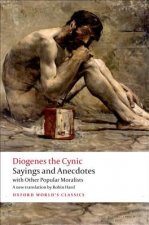
Sayings and Anecdotes
12.04 € -24 % -
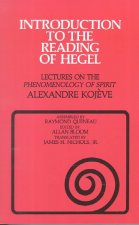
Introduction to the Reading of Hegel
30.87 € -5 % -
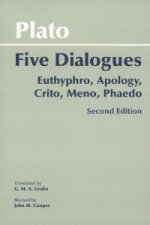
Plato: Five Dialogues
16.70 € -10 % -

On Liberty, Utilitarianism and Other Essays
9.91 € -25 % -

Discourse on Political Economy and The Social Contract
7.89 € -24 % -
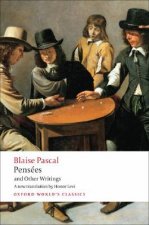
Pensees and Other Writings
9.31 € -24 % -
Alienation
25.10 € -25 % -

Aquinas
11.03 € -30 % -
Existentialism: A Very Short Introduction
10.01 € -24 % -

Sex, Ecology, Spirituality
42.32 € -25 % -
Art of Rhetoric
13.76 € -26 % -

Libidinal Economy
34.62 € -5 % -
Nietzsche
19.94 € -26 % -
Hegel's Science of Logic
35.74 € -18 % -
Transparency of Evil
19.94 € -18 % -

To the Other
23.28 €
Osobný odber Bratislava a 12542 dalších
Copyright ©2008-26 najlacnejsie-knihy.sk Všetky práva vyhradenéSúkromieCookies

 24 miliónov titulov
 Vrátenie do mesiaca
 02/210 210 99 (8-15.30h)