Kód: 04750182
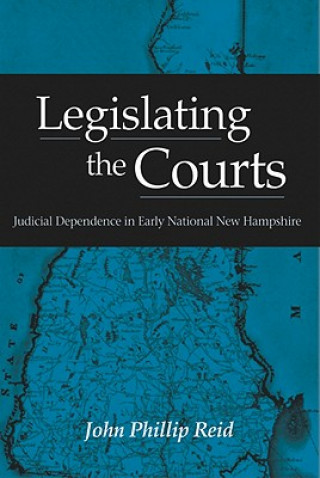
Legislating the Courts
Autor John Phillip Reid
Reid concentrates on generally unknown events and policies to demonstrate judicial dependence and legislative supremacy over the judiciary.In the first decades of the 19th century, legal reformers in the United States strove to st ... celý popis


- Jazyk:
 Angličtina
 - Väzba: Pevná
- Počet strán: 232
Nakladateľ: Cornell University Press, 2008
- Viac informácií o knihe


Mohlo by sa vám tiež páčiť
-

The Once and Future Fling
14.46 € -26 %
Darujte túto knihu ešte dnes
- Objednajte knihu a vyberte Zaslať ako darček.
- Obratom obdržíte darovací poukaz na knihu, ktorý môžete ihneď odovzdať obdarovanému.
- Knihu zašleme na adresu obdarovaného, o nič sa nestaráte.
Viac informácií o knihe Legislating the Courts
Nákupom získate 93 bodov
 Anotácia knihy
Reid concentrates on generally unknown events and policies to demonstrate judicial dependence and legislative supremacy over the judiciary.In the first decades of the 19th century, legal reformers in the United States strove to standardize courtroom procedures and expand judges' power at the expense of jurors while simultaneously imposing uniformity upon judicial decision making. Reid's previous book, "Controlling the Law", offered a case study of this process, focusing on New Hampshire Chief Justice Jeremiah Smith and Governor William Plumer. Now in "Legislating the Courts", Reid returns to the careers of Smith and Plumer to continue the story of judicial authority in the early republic.Many American constitutional historians, judges, and lawyers generally assume that the current doctrine of judicial supremacy not only has always been the rule of constitutional law but was the original intent of the framers of both the federal and state constitutions. This study disproves the validity of that assumption for state constitutionalism by concentrating on the law of New Hampshire - representative of the law in other jurisdictions - between the years 1789 and 1818. Legislating the Courts does not argue that judicial independence was not the desired rule among the framers of the constitutions; instead, by looking at both practice and constitutional theory, this study shows that the reality for the early republic was both judicial dependence and legislative supremacy.To illustrate his points, Reid refers to three government practices that together with other matters altered judicial salaries - mandated by the constitution to be "permanent" and "honorable" - and that tended to create a dependent judicial system. The first practice, "restoring litigants to their law," gave litigants who had lost a jury trial and had judgments pronounced against them the option to petition the legislature to be relieved from the judgment and to be granted a new jury trial. In the second practice the legislature acted on the premise that it had the authority to investigate the conduct of judges and require them to explain why they behaved in certain ways. Finally, in the third practice, the legislature exercised the authority to remove judges from their tenure at "good behavior" by both "legislating" them out of office and then appointing a new bench, or by "addressing" from the bench individual judged.Despite an attempt to subordinate the judiciary to the will of the citizenry, as represented by the state legislature, Reid finds that judges managed to maintain their autonomy, subject only to the dictates of the law.
Parametre knihy
Zaradenie knihy Knihy po anglicky Law Laws of Specific jurisdictions Legal system: general
38.43 €
- Celý názov: Legislating the Courts
- Podnázov: Judicial Dependence in Early National New Hampshire
- Autor: John Phillip Reid
- Jazyk: Angličtina
- Väzba: Pevná
- Počet strán: 232
- EAN: 9780875803876
- ISBN: 0875803873
- ID: 04750182
- Nakladateľ: Cornell University Press
- Hmotnosť: 28 g
- Rozmery: 229 × 152 × 23 mm
- Dátum vydania: 08. September 2008
Obľúbené z iného súdka
-
Supreme Court
17.69 € -17 % -

Beyond Winning
23.76 € -25 % -

My Life in Court
18.30 € -

3,000 Deep-Sky Objects
56.13 € -25 % -

Law Express Question and Answer: Evidence Law
19.31 € -15 % -

European Civil Procedure
140.30 € -9 % -

Devil's Advocate
25.48 € -
How Judges Think
30.84 € -

End of Lawyers?
41.57 € -

Principles and Practice of International Commercial Arbitration
49.15 € -
Disorder in the Court
13.14 € -22 % -

My Beloved World
6.46 € -65 % -

U. S. Spacesuits
56.13 € -25 % -

Redfern and Hunter on International Arbitration
113.29 € -
English Legal System Eighth Edition
46.42 € -

Living Constitution
18.91 € -25 % -

Business of Judging
53.30 € -5 % -

Law and Disorder
11.32 € -24 % -

Out of Order
13.14 € -26 % -

Amateur Astronomer's Guide to the Deep-Sky Catalogs
32.06 € -24 % -

Judge in a Democracy
37.32 € -1 % -
Southern Judicial Tradition
38.13 € -

Storytelling for Lawyers
34.38 € -

Court and the World
13.14 € -26 % -
Least Dangerous Branch
36.20 € -5 % -

Digital Justice
37.22 € -

Tolerant Society
81.42 € -

First Steps in the Law
28.52 € -10 % -
Rape of Justice
25.58 € -2 % -

Inside Out
54.21 € -

Evolution of International Arbitration
57.55 € -

Punitive Damages
45 € -

Mediator's Approach
14.05 € -6 % -
Professional Legal Ethics
175.90 € -
Legal Method
54.41 € -
Doctrine of Res Judicata Before International Commercial Arbitral Tribunals
292.64 € -

Pequeno Libro De La Justicia Restaurativa
8.69 € -10 % -

Magistrates' Court
32.77 € -2 % -
Valuation for Arbitration
220.51 € -
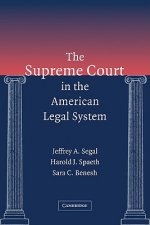
Supreme Court in the American Legal System
43.99 € -
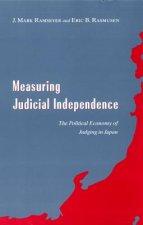
Measuring Judicial Independence
72.52 € -

Law in Everyday Japan
39.54 € -
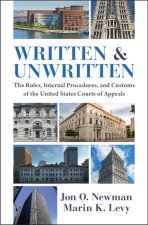
Written and Unwritten
34.79 € -

digest of the law of evidence
29.22 € -18 % -

Return of Cultural Artefacts
123.50 € -7 % -

Alternative Dispute Resolution in European Administrative Law
174.89 € -7 % -

EU Law and Integration
47.94 € -
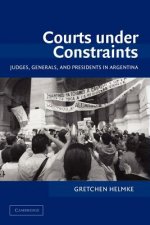
Courts under Constraints
45.92 € -
Law, Politics, and the Judicial Process in Canada, 4th Edition
65.94 €
Osobný odber Bratislava a 12825 dalších
Copyright ©2008-26 najlacnejsie-knihy.sk Všetky práva vyhradenéSúkromieCookies

 24 miliónov titulov
 Vrátenie do mesiaca
 02/210 210 99 (8-15.30h)