Kód: 18100293
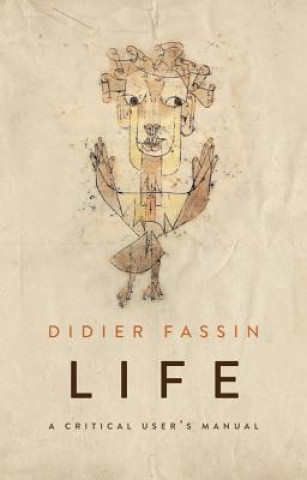
Life - A Critical User's Manual
Autor Didier Fassin
How can we think of life in its dual expression, matter and experience, the living and the lived? Philosophers and, more recently, social scientists have offered multiple answers to this question, often privileging one expression ... celý popis


- Jazyk:
 Angličtina
 - Väzba: Brožovaná
- Počet strán: 150
Nakladateľ: Wiley-Blackwell, 2018
- Viac informácií o knihe


Mohlo by sa vám tiež páčiť
-

Pocket Rough Guide British Breaks Edinburgh (Travel Guide with Free Ebook)
10.82 € -25 % -

Elsa Beskow Calendar
12.85 € -24 % -

Who Paid the Pipers of Western Marxism?
32.70 € -

Oxford Handbook of Clinical Diagnosis
43.74 € -4 % -

NIV NVI BILINGUAL BIBLE HARDCOVER
26.72 € -27 % -

Hawker Hunter
15.79 € -26 % -

Cataclysms of the Earth
13.36 € -25 % -

Obrázky z Holandska
22.57 € -31 % -

Selling Short - Risks Rewards & Strategies for Selling Stocks Options & Futures
56.19 € -25 % -

The Art of the Native American Flute
38.06 € -

Pandora
19.63 € -14 % -

KEN PARKER NUM. 35
15.48 € -

International Human Right to Conscientious Objection to Military Service and Individual Duties to Disobey Manifestly Illegal Orders
109.45 € -

VAMOS PAPA
16.70 € -

Fernell Franco, Cali clair-obscur - [exposition, Paris, Fondation Cartier pour l'art contemporain, 6 février-5 juin 2016, Mexico, Centr
50.92 € -

Ethylene
167.88 € -

Remapping an Ableist World
33.81 € -

España
13.15 € -

TAPSOFT '89: Proceedings of the International Joint Conference on Theory and Practice of Software Development, Barcelona, Spain, March 13-17, 1989
55.89 € -

Тут всё не так
15.28 € -14 % -

Religia. Szkoła ponadpodstawowa. Klasa 3 i 4 technikum. Szczęśliwi, którzy żyją pełnią życia. Podręcznik. Jedność 2022
5.66 € -4 % -

Verfassungsrechtliche Anforderungen an das Schulfach Ethik/Philosophie.
85.96 € -

Thespian Playworks 2010
16.50 € -12 % -

The Goose Girl (Traditional Chinese): 02 Zhuyin Fuhao (Bopomofo) Paperback Color
31.99 € -7 % -

Le temps de la spirale
7.89 € -

Journal du deratiseur
13.26 € -

uomo nero. La scomparsa di Sonia Marra
17.31 € -
Hatha Yoga et Kundalini
35.74 € -

In Plain Sight
14.88 € -1 % -

Nachhilfe für die Liebe - Love in Aruba
18.52 € -

Asabiyya and State
15.79 € -

Partners
21.96 € -2 % -

Share the Good News Outreach New Testament-ESV
43.53 € -9 % -

Crimson Hill
19.74 € -

6000 Days of Us
12.55 € -7 %
Darujte túto knihu ešte dnes
- Objednajte knihu a vyberte Zaslať ako darček.
- Obratom obdržíte darovací poukaz na knihu, ktorý môžete ihneď odovzdať obdarovanému.
- Knihu zašleme na adresu obdarovaného, o nič sa nestaráte.
Viac informácií o knihe Life - A Critical User's Manual
Nákupom získate 61 bodov
 Anotácia knihy
How can we think of life in its dual expression, matter and experience, the living and the lived? Philosophers and, more recently, social scientists have offered multiple answers to this question, often privileging one expression or the other - the biological or the biographical. But is it possible to conceive of them together and thus reconcile naturalist and humanist approaches? Using research conducted on three continents and drawing on the ideas of Wittgenstein, Benjamin and Foucault, Didier Fassin attempts to do so by developing three concepts: forms of life, ethics of life and politics of life. In the conditions of refugees and asylum-seekers, through humanitarian gestures and sacrifices for a cause, in light of mortality statistics and death benefits, and via a genealogical and ethnographical inquiry, the moral economy of life reveals troubling tensions in the way contemporary societies treat human beings. Once the pieces of this anthropological composition are assembled, like in Georges Perec's jigsaw puzzle, an image appears: that of unequal lives. Emerging from the prestigious Adorno Lectures delivered by Fassin in 2016, this profound investigation of life in contemporary societies, enriched by ethnographic fieldwork and written by one of the most distinguished anthropologists today, will be of great interest to readers across the humanities and social sciences.
Parametre knihy
Zaradenie knihy Knihy po anglicky Society & social sciences Society & culture: general Social issues & processes
25.41 €
- Celý názov: Life - A Critical User's Manual
- Autor: Didier Fassin
- Jazyk: Angličtina
- Väzba: Brožovaná
- Počet strán: 150
- EAN: 9781509526659
- ISBN: 9781509526659
- ID: 18100293
- Nakladateľ: Wiley-Blackwell
- Hmotnosť: 234 g
- Rozmery: 220 × 154 × 14 mm
- Dátum vydania: 18. May 2018
Obľúbené z iného súdka
-

Pedagogy of the Oppressed
10.42 € -30 % -

The Second Sex
7.48 € -33 % -

Women & Power
8.60 € -30 % -

Female Eunuch
14.17 € -26 % -

Where Is Ana Mendieta?
18.93 € -25 % -

Golden Cage
35.23 € -

We Should All Be Feminists
8.29 € -29 % -

Psychedelic Gospels
14.77 € -25 % -

Bonds of Love
23.58 € -

Power Manual
18.32 € -24 % -

Conversations with Susan Sontag
32.09 € -

Feminism, Media, and the Law
51.23 € -

What Do Women Want?
16.09 € -24 % -

Stonewall Riots: Coming Out in the Streets
14.77 € -25 % -

Regarding the Pain of Others
12.85 € -25 % -

Leisure: The Basis of Culture
14.07 € -25 % -

The Feminine Mystique
10.42 € -30 % -

Second Sex
22.88 € -14 % -

Staying with the Trouble
29.15 € -2 % -

Pleasure Activism
16.90 € -24 % -

Blitzed
12.24 € -30 % -

Miami
11.84 € -25 % -

Shock Doctrine
15.99 € -29 % -

Superforecasting
11.13 € -25 % -

Master's Tools Will Never Dismantle the Master's House
4.24 € -30 % -

Alone Together
16.19 € -25 % -

Psychopath Free
14.88 € -24 % -

Toxic Parents
16.90 € -23 % -

Zeros and Ones
10.22 € -17 % -

Alcoholics Anonymous Big Book
26.01 € -

Everyday Sexism
12.75 € -11 % -

Soft Power
14.07 € -25 % -

Chronology of Water
11.03 € -25 % -

Manifestly Haraway
14.77 € -25 % -

Down and Out in Paris and London
9.71 € -25 % -

Rebel Witch
18.12 € -25 % -

Singularity Is Near
18.93 € -25 % -

The Beauty Myth
8.70 € -10 % -

Violence
10.72 € -34 % -

Vindication of the Rights of Woman
6.77 € -30 % -

Room of One's Own and Three Guineas (Vintage Classics Woolf Series)
10.52 € -24 % -

Bananas, Beaches and Bases
31.48 € -4 % -

Not God
14.07 € -25 % -

Garden Party And Other Stories
11.33 € -28 % -
Rational Optimist
14.77 € -25 % -

Bodies That Matter
29.46 € -6 % -

The Lucifer Effect
15.69 € -30 % -

The Next 100 Years
14.88 € -20 % -

The Divide
11.53 € -29 %
Osobný odber Bratislava a 12742 dalších
Copyright ©2008-26 najlacnejsie-knihy.sk Všetky práva vyhradenéSúkromieCookies

 24 miliónov titulov
 Vrátenie do mesiaca
 02/210 210 99 (8-15.30h)