Kód: 52096705
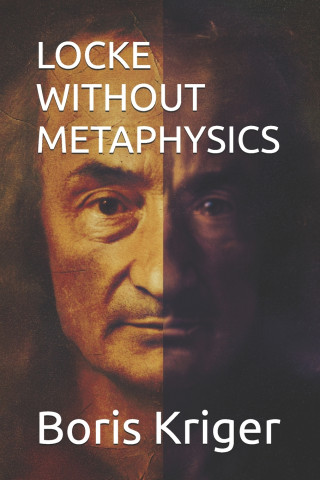
LOCKE WITHOUT METAPHYSICS
Autor Boris Kriger
Classical epistemology asked "how does the mind acquire knowledge of the world?" and spent three and a half centuries unable to answer, because the question was badly posed. It presupposed a division between mind and world, betwee ... celý popis


- Jazyk:
 Angličtina
 - Väzba: Brožovaná
- Počet strán: 204
Nakladateľ: Independently published, 2026
- Viac informácií o knihe

20.04 €
Bežne: 21.60 €
Ušetríte 1.56 €

Skladom u dodávateľa
Odosielame za 9 - 15 dní
Mohlo by sa vám tiež páčiť
-

Moonwalk
14.07 € -

The Score
13.76 € -12 % -

The Deal
12.34 € -21 % -

The Mistake
14.47 € -8 % -

Jujutsu Kaisen, Vol. 30
9.61 € -22 % -

Witch Hat Atelier: Grimoire Edition 1
34.62 € -29 % -
Invincible Compendium Volume 2
46.47 € -23 % -

Berserk Deluxe Volume 1
35.63 € -25 % -

The Goal
14.57 € -7 % -

Berserk Deluxe Volume 2
33.10 € -31 % -

Invincible Compendium Volume 1
57.20 € -9 % -

Witch Hat Atelier Manga Box Set 1
51.33 € -31 % -

Lord of Mysteries, Vol. 3: The Clown, Part III
14.98 € -29 % -

Murdoku
18.12 € -25 % -

Moonwalk: A Memoir
19.94 € -31 % -

Heated Rivalry
12.55 € -7 % -

Jujutsu Kaisen, Vol. 25
9.91 € -20 % -

Legacy
11.94 € -12 % -

Berserk Deluxe Volume 3
55.08 € -

Veil Volume 1
12.04 € -25 % -
White Nights
4.75 € -11 %
Darujte túto knihu ešte dnes
- Objednajte knihu a vyberte Zaslať ako darček.
- Obratom obdržíte darovací poukaz na knihu, ktorý môžete ihneď odovzdať obdarovanému.
- Knihu zašleme na adresu obdarovaného, o nič sa nestaráte.
Viac informácií o knihe LOCKE WITHOUT METAPHYSICS
Nákupom získate 48 bodov
 Anotácia knihy
Classical epistemology asked "how does the mind acquire knowledge of the world?" and spent three and a half centuries unable to answer, because the question was badly posed. It presupposed a division between mind and world, between subject and object, between inner representation and outer reality - a division that does not exist in nature.
This monograph replaces the question. Not "how does the mind know?" but "what constraints must any persistent complex system satisfy in an environment with finite resources?" The answer is a theorem, not a hypothesis. Two logically independent physical facts - finite signal speed (temporal latency) and finite channel capacity (informational complexity) - each independently force any viable adaptive system to maintain internal states carrying information about the future beyond what present observation provides. This is prediction. Not an evolutionary adaptation. Not a property of biological brains. A structural inevitability - a consequence of physical law that would hold in any universe with finite signal speed and finite channel capacity.
Keywords: epistemology; predictive processing; complex systems; Bayesian inference; John Locke; viability constraints; structural inevitability; Dual-Pressure Convergence Theorem; philosophy of mind; naturalized epistemology; free energy principle; generative models; atemporality of memory; philosophy of science
Parametre knihy
20.04 €
- Celý názov: LOCKE WITHOUT METAPHYSICS
- Autor: Boris Kriger
- Jazyk: Angličtina
- Väzba: Brožovaná
- Počet strán: 204
- EAN: 9798257975479
- ID: 52096705
- Nakladateľ: Independently published
- Hmotnosť: 281 g
- Rozmery: 229 × 152 × 11 mm
- Dátum vydania: 19. April 2026
Osobný odber Bratislava a 12542 dalších
Copyright ©2008-26 najlacnejsie-knihy.sk Všetky práva vyhradenéSúkromieCookies

 24 miliónov titulov
 Vrátenie do mesiaca
 02/210 210 99 (8-15.30h)