Kód: 46985203
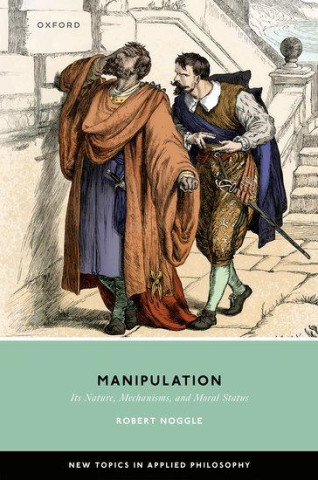
Manipulation
Autor Noggle, Robert (Professor of Philosophy, Central Michigan University)
Gaslighting, flattery, misdirection, nagging, emotional blackmail, charm offensives, playing on emotions. These are all examples of ordinary manipulation. Such manipulation is common in everyday life, which is unfortunate, since m ... celý popis


- Jazyk:
 Angličtina
 - Väzba: Pevná
- Počet strán: 288
Nakladateľ: Oxford University Press, 2025
- Viac informácií o knihe


Mohlo by sa vám tiež páčiť
-

Tons of Logic Puzzles: 1000 Hard Variety Puzzles
11.74 € -6 % -

Diario de Greg 1. Un pringao total
15.89 € -10 % -

Das Quartett-Spiel
24.30 € -

Hindi Teacher for English Speaking People, Advanced Level
19.94 € -18 % -

Improve your Skills: Listening & Speaking for Advanced Student's Book without key & MPO Pack
24.91 € -8 % -

Murderabilia: A History of Crime in 100 Objects
21.77 € -24 % -

Sustainable and Dynamic Graduate Employability
59.04 € -

Rynek uslug transportowych w Polsce
18.83 € -

Proposito Alternativo
12.45 € -25 % -

Paroles de Balzac
20.25 € -1 % -

Electional Astrology
23.79 € -2 % -

Second Innings
22.88 € -9 % -

The Rise and Fall of the American Empire Book Three Tent Revival of Love
24.70 € -2 % -

Testimony Taken Before the Senate Committee on Banks and the Senate of the State of New York, in Reference to Charges Preferred by William J. Best, Re
31.89 € -2 % -

Harbrace Essentials with Resources for Writing in the Disciplines (with 2016 MLA Update Card)
53.77 € -

Reformateurs Et Publicistes de l'Europe: Xviiie Siecle
27.84 € -

Now You Can Play Guitar
18.42 € -

Sindrome da congestione pelvica - Dolore pelvico cronico e disturbi venosi pelvici
16.20 € -17 % -

Winter Apocalypse: Zombie Crusade V
11.54 € -7 % -

Alices Adventures under Ground
13.56 € -14 % -

Richard Strauss
44.55 € -11 % -

Recht der Handelsgesellschaften und wirtschaftlichen Interessenvertretungen
81.93 € -11 % -

Beast Quest (Band 54) - Torpix, Biss des Verderbens
8.19 € -9 % -
An Atlas of Human Anatomy for Students and Physicians; Volume 1
31.89 € -2 % -

Demystifying Success
17.82 € -

Bal Arisi
13.16 € -5 % -

Zend-Avesta - über die Dinge des Himmels und des Jenseits
34.12 € -9 % -
Computer Graphics and Mathematics
123.66 € -7 %
Darujte túto knihu ešte dnes
- Objednajte knihu a vyberte Zaslať ako darček.
- Obratom obdržíte darovací poukaz na knihu, ktorý môžete ihneď odovzdať obdarovanému.
- Knihu zašleme na adresu obdarovaného, o nič sa nestaráte.
Viac informácií o knihe Manipulation
Nákupom získate 292 bodov
 Anotácia knihy
Gaslighting, flattery, misdirection, nagging, emotional blackmail, charm offensives, playing on emotions. These are all examples of ordinary manipulation. Such manipulation is common in everyday life, which is unfortunate, since manipulation seems like a bad thing. Manipulation: Its Nature, Mechanisms, and Moral Status answers three questions about manipulation: what is it, how does it work, and why is it bad? Addressing the first question requires us to find something that all forms of manipulation have in common, but which is not shared by other forms of influence. Robert Noggle argues that the common feature of all forms of ordinary manipulation is that they are mistake-inducing. This idea is the basis for the Mistake Account of manipulation, which defines manipulation as a kind of influence that operates by introducing a mistake into the mental states or processes of the person being influenced. To explain how manipulation works, this book explores the psychological levers that manipulators use to get us to make the mistakes that will get us to do what they want. These include various cognitive and decision-making biases, our tendency to choose the lesser good over the greater good when the lesser good is immediately available, and the simple fact that human reason is an imperfect thing. To explain why manipulation seems like a bad thing, Noggle first argues that, while manipulation is always presumptively immoral, it can be justified in extreme situations. He then shows that manipulation''s presumptive immorality derives from the fact that it involves getting someone to make a mistake, and making a mistake is a bad thing. However, the most morally egregious instances of manipulation also have bad effects on well-being and autonomy. This book concludes by applying the Mistake Account to various influences, including priming, conditioning, nudges, advertising, sales, and online influences.
Parametre knihy
121.02 €
- Celý názov: Manipulation
- Podnázov: Its Nature, Mechanisms, and Moral Status
- Autor: Noggle, Robert (Professor of Philosophy, Central Michigan University)
- Jazyk: Angličtina
- Väzba: Pevná
- Počet strán: 288
- EAN: 9780198924890
- ID: 46985203
- Nakladateľ: Oxford University Press
- Hmotnosť: 590 g
- Rozmery: 234 × 156 mm
- Dátum vydania: 27. March 2025
Obľúbené z iného súdka
-

Moonwalk
14.17 € -17 % -

The Score
13.97 € -19 % -

The Deal
12.45 € -24 % -

The Mistake
14.57 € -11 % -

Jujutsu Kaisen, Vol. 30
9.92 € -20 % -

Witch Hat Atelier: Grimoire Edition 1
34.63 € -29 % -

Berserk Deluxe Volume 1
35.54 € -26 % -
Invincible Compendium Volume 2
48.30 € -22 % -

Invincible Compendium Volume 1
45.87 € -24 % -

The Goal
14.68 € -10 % -

Berserk Deluxe Volume 2
33.31 € -30 % -
Witch Hat Atelier Manga Box Set 1
56.20 € -25 % -

Heated Rivalry
12.65 € -7 % -
Lord of Mysteries, Vol. 3: The Clown, Part III
14.98 € -29 % -

Jujutsu Kaisen, Vol. 25
9.92 € -20 % -

Moonwalk: A Memoir
21.77 € -24 % -

Jujutsu Kaisen, Vol. 26
9.92 € -20 % -
Murdoku
17.21 € -28 % -

Jujutsu Kaisen, Vol. 29
9.92 € -20 % -

Berserk Deluxe Volume 3
55.19 € -

Veil Volume 1
12.04 € -25 % -

White Nights
4.75 € -11 % -

Invincible Compendium Volume 3
45.87 € -24 % -

King of Gluttony
10.22 € -24 % -

The Deal
14.07 € -25 % -

The Long Game
13.16 € -3 % -

JoJo's Bizarre Adventure: Part 7--Steel Ball Run, Vol. 7
18.32 € -24 % -

Legacy
11.94 € -24 % -

Invincible Volume 1
10.02 € -24 % -

Starside (Deluxe Limited Edition)
24.10 € -27 % -

Berserk Deluxe Volume 5
54.89 € -

Project Hail Mary
10.52 € -14 % -

Dancing The Dream
26.73 € -19 % -

Berserk Deluxe Volume 4
43.64 € -17 % -

Jojo's Bizarre Adventure: Part 7--Steel Ball Run, Vol. 1
18.32 € -24 % -

The Summer Hikaru Died, Vol. 7
11.94 € -21 % -

Jojo's Bizarre Adventure: Part 7--Steel Ball Run, Vol. 2
18.32 € -24 % -

Jujutsu Kaisen, Vol. 28
10.02 € -23 % -

Boys Omnibus Vol. 1 TPB
28.65 € -24 % -

Yesteryear
15.89 € -14 % -

Veil Volume 2
16.09 € -24 % -

The Ballad of Falling Dragons
14.47 € -12 % -

The Score
14.07 € -25 % -

Murdoku
13.76 € -29 % -

Chainsaw Man, Vol. 20
7.69 € -30 % -

The Courage To Be Disliked
10.73 € -13 % -

Lord of Mysteries, Vol. 1: The Clown, Part I
14.88 € -24 % -

Jujutsu Kaisen, Vol. 1
12.65 € -

Project Hail Mary
15.89 € -26 %
Osobný odber Bratislava a 12840 dalších
Copyright ©2008-26 najlacnejsie-knihy.sk Všetky práva vyhradenéSúkromieCookies

 24 miliónov titulov
 Vrátenie do mesiaca
 02/210 210 99 (8-15.30h)