Kód: 33377231
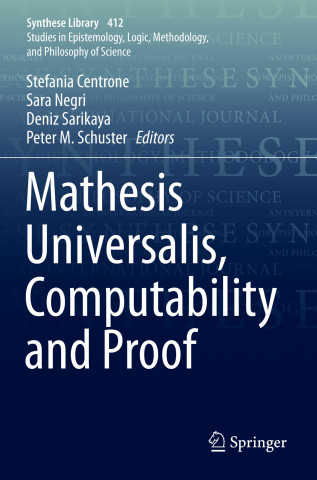
Mathesis Universalis, Computability and Proof
Autor Peter M. Schuster, Deniz Sarikaya, Sara Negri
In a fragment entitled Elementa Nova Matheseos Universalis (1683?) Leibniz writes "the mathesis [...] shall deliver the method through which things that are conceivable can be exactly determined"; in another fragment he takes the ... celý popis


- Jazyk:
 Angličtina
 - Väzba: Brožovaná
- Počet strán: 374
Nakladateľ: Springer Nature Switzerland AG, 2020
- Viac informácií o knihe

123.38 €
Bežne: 133.69 €
Ušetríte 10.32 €

Skladom u dodávateľa
Odosielame za 5 - 8 dní
Mohlo by sa vám tiež páčiť
-

Osudy dobrého vojáka Švejka za světové války
12.52 € -23 % -

Potraty
8.38 € -28 % -

LEGO EV3 Robotics: A Guide for Educators
35.36 € -7 % -

The Ultimate Guide to Sugarcraft: The International School of Sugarcraft
17.57 € -10 % -

L'Arte del Pane e del Lievito Madre
16.97 € -7 % -

Everyday Play
18.18 € -25 % -

The Three Distinct Knocks along with Jachin and Boaz
12.72 € -24 % -

Spickzettel
5.55 € -

Descenders (Nintendo Switch)
44.66 € -

Caught in the Middle
11.31 € -24 % -
MICHELE REVERDY: 3 X 2 (FLUTE & PIANO)
20.60 € -

A Brief History of Economics
73.76 € -

Irish and British Wars, 1637-1654
58.90 € -

Estatutos de autonomía y normas complementarias : comentadas y anotadas
103.06 € -

Journaling for Women
14.74 € -25 % -

Lettre au président de la République sur les citoyens en situation de handicap,
23.23 € -

Terra X: Der 30jährige Krieg, 1 Blu-ray
24.44 € -

Technology Integration in the Elementary Music Classroom
31.82 € -

Natura
22.93 € -

Die Feier des Stundengebetes - Lektionar. Erste Jahresreihe
27.58 € -

Linksliberalismus in Der Bundesrepublik Um 1969
83.96 € -4 % -
![Enoch's Ghost [With Free Poster]](https://media.libris.to/jacket/12351850t.jpg "Enoch's Ghost [With Free Poster]")
Enoch's Ghost [With Free Poster]
11 € -27 % -

Mémoire de l'ombre
38.49 € -

THE GRAPES OF WRATH SOLO ARIA COLLECTION CHANT
49.10 € -

Learn-A-Stitch Crochet Dishcloths
8.88 € -21 % -
Nouveau tour du monde en 80 jours
9.99 € -

Sachet de senteur Chakra Collection - Fougère - Chakra du coeur
3.43 € -
Guide De La Peinture
26.47 € -1 % -

Drocoft
8.98 € -6 % -

Protections for Stratospheric Ozone - Adjustments to the Allowance System for Controlling HCFC Production, Import and Export, 2015-2019 (US Environmen
18.28 € -6 % -
Clytemnestra: And Poems Lyrical And Descriptive (1867)
28.69 € -

Dernier arrêt avant l'automne
11.51 € -

Megan's Phone Call
18.38 € -

My Best Teachers
27.38 € -2 % -

Die Katzen Von Wickham - Silbermord
7.87 € -6 %
Darujte túto knihu ešte dnes
- Objednajte knihu a vyberte Zaslať ako darček.
- Obratom obdržíte darovací poukaz na knihu, ktorý môžete ihneď odovzdať obdarovanému.
- Knihu zašleme na adresu obdarovaného, o nič sa nestaráte.
Viac informácií o knihe Mathesis Universalis, Computability and Proof
Nákupom získate 299 bodov
 Anotácia knihy
In a fragment entitled Elementa Nova Matheseos Universalis (1683?) Leibniz writes "the mathesis [...] shall deliver the method through which things that are conceivable can be exactly determined"; in another fragment he takes the mathesis to be "the science of all things that are conceivable." Leibniz considers all mathematical disciplines as branches of the mathesis and conceives the mathesis as a general science of forms applicable not only to magnitudes but to every object that exists in our imagination, i.e. that is possible at least in principle. As a general science of forms the mathesis investigates possible relations between "arbitrary objects" ("objets quelconques"). It is an abstract theory of combinations and relations among objects whatsoever. In 1810 the mathematician and philosopher Bernard Bolzano published a booklet entitled Contributions to a Better-Grounded Presentation of Mathematics. There is, according to him, a certain objective connection among the truths that are germane to a certain homogeneous field of objects: some truths are the "reasons" ("Gründe") of others, and the latter are "consequences" ("Folgen") of the former. The reason-consequence relation seems to be the counterpart of causality at the level of a relation between true propositions. Arigorous proof is characterized in this context as a proof that shows the reason of the proposition that is to be proven. Requirements imposed on rigorous proofs seem to anticipate normalization results in current proof theory. The contributors of Mathesis Universalis, Computability and Proof, leading experts in the fields of computer science, mathematics, logic and philosophy, show the evolution of these and related ideas exploring topics in proof theory, computability theory, intuitionistic logic, constructivism and reverse mathematics, delving deeply into a contextual examination of the relationship between mathematical rigor and demands for simplification.
Parametre knihy
Zaradenie knihy Knihy po nemecky Geisteswissenschaften, Kunst, Musik Philosophie Antike
123.38 €
- Celý názov: Mathesis Universalis, Computability and Proof
- Autor: Peter M. Schuster, Deniz Sarikaya, Sara Negri
- Jazyk: Angličtina
- Väzba: Brožovaná
- Počet strán: 374
- EAN: 9783030204495
- ISBN: 3030204499
- ID: 33377231
- Nakladateľ: Springer Nature Switzerland AG
- Hmotnosť: 587 g
- Rozmery: 235 × 155 × 21 mm
- Dátum vydania: 06. November 2020
Obľúbené z iného súdka
-

The Philosophy of Redemption
14.84 € -24 % -

On the Shortness of Life
6.26 € -2 % -

Immortal Souls
28.28 € -9 % -

Determined: A Science of Life Without Free Will
24.65 € -28 % -

This Is Vegan Propaganda
12.92 € -25 % -

The Edge of Sentience
43.04 € -
The Great Philosophers Collection
42.33 € -24 % -

Ibn Gabirol. El pensamiento judio andalusí
27.48 € -

Meditations by Marcus Aurelius
7.87 € -25 % -

Four Thousand Weeks: Time Management for Mortals
13.73 € -29 % -
The God Delusion
11.11 € -29 % -

How to Live
9.29 € -25 % -

My Big TOE Awakening Discovery Inner Workings
41.93 € -25 % -

The Right to Sex: Feminism in the Twenty-First Century
14.04 € -25 % -
Hermes Trismegistus
14.74 € -2 % -

The Gateway Experience
18.28 € -7 % -

Marcus Aurelius - Meditations
14.84 € -1 % -

Then I Am Myself the World: What Consciousness Is and How to Expand It
21.41 € -27 % -

Ludwig Wittgenstein
20.30 € -24 % -

Animal Liberation Now
12.92 € -25 % -

Jenseits von Gut und Böse
6.96 € -13 % -

Master Critical Thinking for Teens
17.67 € -

Quotations from Chairman Mao Tse-tung
13.94 € -1 % -

Relativity: The Special and the General Theory
11 € -30 % -

The Roots of Moral Evil
17.57 € -24 % -

The Language Animal
20.30 € -24 % -
The Practicing Stoic
16.97 € -14 % -

Hospicing Modernity
15.55 € -29 % -

Exit the Cave
14.64 € -17 % -

Against Interpretation
15.35 € -22 % -

The Fallacy Detective
27.48 € -17 % -

Useful Not True
9.29 € -25 % -

Focus on What Matters
10.60 € -25 % -
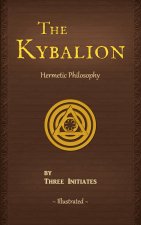
The Kybalion
9.39 € -1 % -
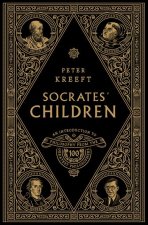
Socrates' Children Box Set
56.07 € -24 % -

Combining
27.17 € -25 % -

The Thinking Toolbox
27.48 € -17 % -

Moral Ambition
21.21 € -25 % -

Open Socrates
13.43 € -24 % -

The Boy, the Mole, the Fox and the Horse Fifth Anniversary Limited Edition
21.41 € -27 % -
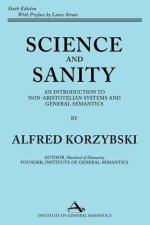
Science and Sanity
37.28 € -2 % -

The Daimon and the Soul of the West
12.02 € -24 % -

Unqualified Reservations: Volume 1
28.49 € -25 % -

How to Know a Person: The Art of Seeing Others Deeply and Being Deeply Seen
21.01 € -29 % -

After
10.40 € -30 % -
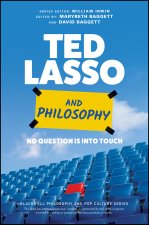
Ted Lasso and Philosophy: No Question Is Into Touch
16.87 € -29 % -
Plato's Allegory of the Cave
7.77 € -
Archetypal Psychology
18.38 € -6 % -

On the Genealogy of Morals (Collector's Edition) (Laminated Hardback with Jacket)
37.28 € -2 %
Osobný odber Bratislava a 12820 dalších
Copyright ©2008-26 najlacnejsie-knihy.sk Všetky práva vyhradenéSúkromieCookies

 24 miliónov titulov
 Vrátenie do mesiaca
 02/210 210 99 (8-15.30h)