Kód: 21086664
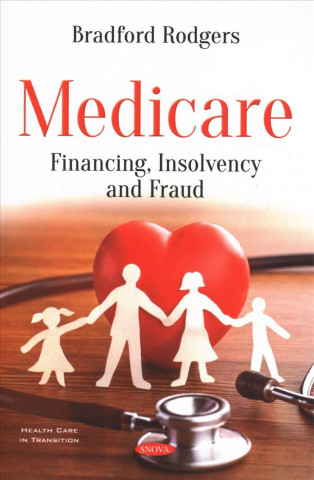
Medicare
Autor Bradford Rodgers
Medicare is the nations health insurance program for persons aged 65 and older and certain disabled persons. Medicare consists of four distinct parts: Part A (Hospital Insurance, or HI); Part B (Supplementary Medical Insurance, or ... celý popis


- Jazyk:
 Angličtina
 - Väzba: Brožovaná
- Počet strán: 180
Nakladateľ: Nova Science Publishers Inc, 2019
- Viac informácií o knihe

107.02 €
Bežne: 118.87 €
Ušetríte 11.84 €
Dostupnosť:
50 % šanca Máme informáciu, že by titul mohol byť dostupný. Na základe vašej objednávky sa ho pokúsime do 6 týždňov zabezpečiť.
Prehľadáme celý svet
Mohlo by sa vám tiež páčiť
-

Der inoffizielle Adventskalender für Fans von Michael Jackson
22.47 € -11 % -

¿Tiene autismo tu bebé?
14.77 € -
Measure What Matters - Online Tools For Understanding Customers, Social Media, Engagement and Key Relationships
20.34 € -24 % -

Fireflies and Shores (The Andrew and Emma Series 5)
6.07 € -7 % -

Layout
25.10 € -25 % -

Copperfield Review Quarterly Winter 2022
10.01 € -24 % -

Die Orthographie in den Schulen Deutschlands
23.99 € -9 %
Darčekový poukaz: Radosť zaručená
- Darujte poukaz v ľubovoľnej hodnote, a my sa postaráme o zvyšok.
- Poukaz sa vzťahuje na všetky produkty v našej ponuke.
- Elektronický poukaz si vytlačíte z e-mailu a môžete ho ihneď darovať.
- Platnosť poukazu je 12 mesiacov od dátumu vystavenia.
Informovať o naskladnení knihy
Zadajte do formulára e-mailovú adresu a akonáhle knihu naskladníme, zašleme vám o tom správu. Postrážime všetko za vás.
Viac informácií o knihe Medicare
Nákupom získate 259 bodov
 Anotácia knihy
Medicare is the nations health insurance program for persons aged 65 and older and certain disabled persons. Medicare consists of four distinct parts: Part A (Hospital Insurance, or HI); Part B (Supplementary Medical Insurance, or SMI); Part C (Medicare Advantage, or MA); and Part D (the outpatient prescription drug benefit). Medicare covered over 58 million people in 2017 and has wide-ranging impact on the health-care sector and the overall U.S. economy. The Part A program is financed primarily through payroll taxes levied on current workers and their employers; these taxes are credited to the HI Trust Fund. From its inception, the HI Trust Fund has faced a projected shortfall. The 2018 Medicare Trustees Report projects that, under intermediate assumptions, the HI Trust Fund will become insolvent in 2026, three years earlier than estimated in the prior years report as discussed in chapter 1. As reported in the next 2 chapters, spending under the program (except for a portion of administrative costs) is considered mandatory spending and is not subject to the appropriations process. Thus, there generally are no limits on annual Medicare spending. Medicare is most acutely impacted by the sequestration of mandatory funds, since Medicare benefit payments are considered mandatory spending. Special sequestration rules limit the extent to which Medicare can be reduced in a given fiscal year. Chapter 4 focuses on reducing expenditures, unnecessary utilization, and improper payments through prior authorization. The Centers for Medicare & Medicaid Services (CMS) has begun using prior authorization in Medicare through a series of fixed-length demonstrations designed to measure their effectiveness, and one permanent program. The billions of dollars in Medicare outlays as well as program complexity make it susceptible to improper payments, including fraud. Although there are no reliable estimates of fraud in Medicare, in fiscal year 2017 improper payments for Medicare were estimated at about $52 billion. The last 2 chapters address ways to prevent and manage Medicare fraud.
Parametre knihy
107.02 €
- Celý názov: Medicare
- Autor: Bradford Rodgers
- Jazyk: Angličtina
- Väzba: Brožovaná
- Počet strán: 180
- EAN: 9781536148114
- ISBN: 1536148113
- ID: 21086664
- Nakladateľ: Nova Science Publishers Inc
- Hmotnosť: 294 g
- Rozmery: 230 × 155 mm
- Dátum vydania: 22. January 2019
Obľúbené z iného súdka
-

Moonwalk
14.07 € -

The Score
13.76 € -12 % -

The Deal
12.34 € -21 % -

The Mistake
14.47 € -8 % -

Jujutsu Kaisen, Vol. 30
11.23 € -14 % -

Berserk Deluxe Volume 1
35.63 € -25 % -

Invincible Compendium Volume 2
42.32 € -30 % -

The Goal
14.57 € -7 % -

Witch Hat Atelier: Grimoire Edition 1
34.62 € -29 % -

Berserk Deluxe Volume 2
33.10 € -31 % -
Murdoku
18.12 € -25 % -

Lord of Mysteries, Vol. 3: The Clown, Part III
14.98 € -24 % -

Witch Hat Atelier Manga Box Set 1
51.33 € -31 % -

Jujutsu Kaisen, Vol. 25
9.71 € -25 % -

Moonwalk: A Memoir
19.94 € -31 % -

Legacy
11.94 € -12 % -

Heated Rivalry
12.55 € -7 % -

JoJo's Bizarre Adventure: Part 7--Steel Ball Run, Vol. 7
18.22 € -25 % -

Berserk Deluxe Volume 3
55.08 € -

Jujutsu Kaisen, Vol. 26
9.31 € -25 % -

White Nights
4.75 € -11 % -

Jujutsu Kaisen, Vol. 29
9.91 € -20 % -

Veil Volume 1
12.04 € -25 % -

The Deal
13.76 € -26 % -

Invincible Compendium Volume 3
46.47 € -23 % -

Dancing The Dream
23.28 € -29 % -

The Long Game
13.05 € -4 % -

Berserk Deluxe Volume 5
54.77 € -

Yesteryear
15.99 € -13 % -

Jujutsu Kaisen, Vol. 28
7.69 € -30 % -

The Summer Hikaru Died, Vol. 7
11.94 € -21 % -

Invincible Volume 1
10.42 € -21 % -

Chainsaw Man, Vol. 21
9.31 € -25 % -

Berserk Deluxe Volume 4
43.53 € -17 % -

Murdoku
14.67 € -22 % -

Starside (Deluxe Limited Edition)
24.09 € -27 % -

King of Gluttony
10.22 € -33 % -

Boys Omnibus Vol. 1 TPB
26.32 € -38 % -

Project Hail Mary
10.52 € -24 % -

The Ballad of Falling Dragons
14.17 € -14 % -

Jojo's Bizarre Adventure: Part 7--Steel Ball Run, Vol. 1
18.32 € -24 % -

The Mistake
13.76 € -26 % -

The Courage To Be Disliked
10.62 € -26 % -

The Score
14.67 € -22 % -

Lord of Mysteries, Vol. 1: The Clown, Part I
14.88 € -24 % -

Veil Volume 2
12.04 € -25 % -

Jujutsu Kaisen, Vol. 1
12.65 € -4 % -

Jojo's Bizarre Adventure: Part 7--Steel Ball Run, Vol. 2
18.93 € -22 % -

The Score (Collector's Edition)
22.17 € -29 %
Osobný odber Bratislava a 12742 dalších
Copyright ©2008-26 najlacnejsie-knihy.sk Všetky práva vyhradenéSúkromieCookies

 24 miliónov titulov
 Vrátenie do mesiaca
 02/210 210 99 (8-15.30h)