Kód: 04521846
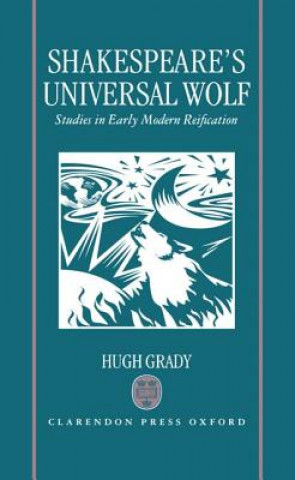
Shakespeare's Universal Wolf
Autor Hugh Grady
Shakespeare was neither a Royalist defender of order and hierarchy nor a consistently radical champion of social equality, but rather simultaneously radical and conservative as a critic of emerging forms of modernity. Hugh Grady a ... celý popis


- Jazyk:
 Angličtina
 - Väzba: Pevná
- Počet strán: 252
Nakladateľ: Oxford University Press, 1996
- Viac informácií o knihe


Mohlo by sa vám tiež páčiť
-

Steerswoman
11.53 € -7 % -

Bellagrand
17.20 € -9 % -

POEMES I CANÇONS. BESTIARI
24.90 € -

Singer Resumes the Tale
116.54 € -

Petita Història de la Llengua Catalana
9.20 € -

Path to Prosperity
11.33 €
Darujte túto knihu ešte dnes
- Objednajte knihu a vyberte Zaslať ako darček.
- Obratom obdržíte darovací poukaz na knihu, ktorý môžete ihneď odovzdať obdarovanému.
- Knihu zašleme na adresu obdarovaného, o nič sa nestaráte.
Viac informácií o knihe Shakespeare's Universal Wolf
Nákupom získate 267 bodov
 Anotácia knihy
Shakespeare was neither a Royalist defender of order and hierarchy nor a consistently radical champion of social equality, but rather simultaneously radical and conservative as a critic of emerging forms of modernity. Hugh Grady argues that Shakespeare's social criticism in fact often parallels that of critics of modernity from our own Postmodernist era, that the broad analysis of modernity produced by Marx, Horkheimer and Adorno, Foucault, and others can serve as a productive enabling representation and critique of the emerging modernity represented by the image in Troilus and Cressida of 'an universal wolf' of appetite, power, and will. The readings of Troilus and Cressida, Othello, King Lear, and As You Like It in Shakespeare's Universal Wolf demonstrate Shakespeare's keen interest in what twentieth-century theory has called 'reification' - a term which designates social systems created by human societies but which confronts those societies as operating beyond human control, according to an autonomous 'systems' logic - in nascent mercantile capitalism, in power-oriented Machiavellian politics, and in the scientistic, value-free rationality which Horkheimer and Adorno call 'instrumental reason'.
Parametre knihy
Zaradenie knihy Knihy po anglicky Literature & literary studies Literature: history & criticism Literary studies: plays & playwrights
110.67 €
- Celý názov: Shakespeare's Universal Wolf
- Podnázov: Studies in Early Modern Reification
- Autor: Hugh Grady
- Jazyk: Angličtina
- Väzba: Pevná
- Počet strán: 252
- EAN: 9780198130048
- ISBN: 019813004X
- ID: 04521846
- Nakladateľ: Oxford University Press
- Hmotnosť: 462 g
- Rozmery: 223 × 142 × 23 mm
- Dátum vydania: 24. October 1996
Obľúbené z iného súdka
-

Midsummer Night's Dream: The Oxford Shakespeare
8.50 € -24 % -

King Richard III
12.65 € -15 % -

Timon Of Athens
14.07 € -6 % -

Yerma
14.88 € -7 % -

Hamlet
7.69 € -30 % -

Romeo and Juliet (No Fear Shakespeare)
6.47 € -29 % -

Complete Sonnets and Poems: The Oxford Shakespeare
9.71 € -25 % -

Sonnets and a Lover's Complaint
15.99 € -29 % -

Julius Caesar
11.84 € -14 % -
Anthony and Cleopatra: The Oxford Shakespeare
8.60 € -24 % -

Complete Pelican Shakespeare
57.51 € -25 % -

Streetcar Named Desire
9.61 € -30 % -
Othello
11.84 € -14 % -

All My Sons
10.52 € -27 % -
Shakespeare: the Invention of the Human
22.67 € -28 % -

Hamlet (No Fear Shakespeare)
6.07 € -29 % -

Romeo and Juliet
11.84 € -14 % -

Shakespeare's Use of the Arts of Language
20.04 € -

View from the Bridge
8.60 € -30 % -

1599: A Year in the Life of William Shakespeare
16.09 € -24 % -

Shakespeare's Words
21.76 € -24 % -

Titus Andronicus
6.77 € -31 % -

Winter's Tale
12.65 € -15 % -

Julius Caesar: The Oxford Shakespeare
10.62 € -9 % -
Three Sisters
14.07 € -6 % -

Disowning Knowledge
21.76 € -24 % -

Incident at Vichy
10.82 € -25 % -

Think on my Words
16.19 € -25 % -

Glass Menagerie
11.43 € -6 % -

Taste Of Honey
15.28 € -4 % -

Japanese No Dramas
14.47 € -26 % -

Cat on a Hot Tin Roof
10.82 € -25 % -

Othello: The Oxford Shakespeare
8.70 € -25 % -

Macbeth (No Fear Shakespeare)
6.57 € -24 % -

Twelfth Night, or What You Will: The Oxford Shakespeare
8.50 € -24 % -

Twelfth Night
11.84 € -14 % -

Tempest (No Fear Shakespeare)
6.47 € -29 % -

Shakespeare
21.25 € -25 % -

Hamlet
8.60 € -25 % -

Shakespeare's Sisters
23.28 € -

Price
10.82 € -25 % -

Merchant Of Venice
12.65 € -15 % -

Shakespeare's Sonnets
12.65 € -15 % -

King Lear (No Fear Shakespeare)
6.07 € -29 % -

Troilus and Cressida: The Oxford Shakespeare
9.71 € -25 % -

New Cambridge Companion to Shakespeare
38.37 € -

Oleanna
15.69 € -9 % -
Hamlet in Purgatory
16.80 € -25 % -

From Ritual to Theatre
23.28 €
Osobný odber Bratislava a 12882 dalších
Copyright ©2008-26 najlacnejsie-knihy.sk Všetky práva vyhradenéSúkromieCookies

 24 miliónov titulov
 Vrátenie do mesiaca
 02/210 210 99 (8-15.30h)