Kód: 02357231
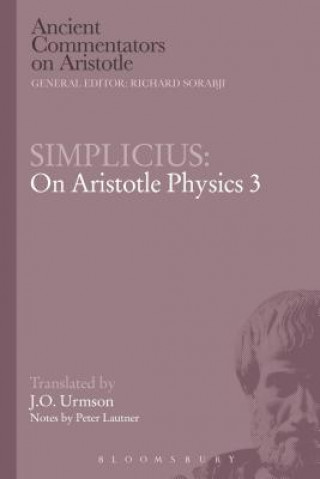
Simplicius: On Aristotle Physics 3
Autor Peter Lautner Simplicius
Aristotle's Physics Book 3 covers two subjects: the definition of change and the finitude of the universe. Change enters into the very definition of nature as an internal source of change. Change receives two definitions in chapte ... celý popis


- Jazyk:
 Angličtina
 - Väzba: Brožovaná
- Počet strán: 240
Nakladateľ: Bloomsbury Publishing, 2014
- Viac informácií o knihe

55.70 €
Bežne: 55.74 €
Ušetríte 0.05 €

Skladom u dodávateľa
Odosielame za 10 - 18 dní
Mohlo by sa vám tiež páčiť
-

Zaklínač IX.- Rozcestí krkavců
9.81 € -20 % -

Black Clover, Vol. 9
9.92 € -20 % -

Great Alone
11.64 € -14 % -

In Search of Lost Time: Volume 1
13.06 € -29 % -

Cracco in Galleria
45.77 € -25 % -

Tilly and the Buttons: Learn to Sew
16.90 € -24 % -

Face Of The Third Reich
19.94 € -18 % -

Veselí
13.16 € -20 % -

333 Origami - Boho Nature-Style
10.32 € -15 % -
Čemeřice
4.65 € -16 % -

Introduction to Text Linguistics
90.84 € -

Rehabilitation of Sports Injuries
123.66 € -7 % -

Fight Club 2 - Tyler Durden lebt. Bd.1. Bd.1
19.23 € -16 % -
DeLee, Drez and Miller's Orthopaedic Sports Medicine
415.86 € -4 % -

Le Turban, l'identité des Sikhs
24.40 € -

Wasn't Expecting This
26.53 € -1 % -

Die Rose von Asturien
13.56 € -10 % -

Frösche
9.71 € -9 % -

Tradições discursivas em jornais paulistas de 1854 a 1901: Gêneros entre a história da língua e a história dos textos
47.29 € -14 % -

Tom Clancy Act of Defiance
23.08 € -25 % -

Die Wiener Hofburg 1705-1835
94.69 € -
Ortograffiti. Język polski. Szkoła podstawowa. Klasa 8. Zeszyt ćwiczeń część 2. Wyd. 2018
14.37 € -

Vorläufige Risikoanalyse in der Textilindustrie
35.74 € -11 % -

Die Entwicklung der Freizeitparks
16.20 € -10 % -

Stop Beliefs That Stop Your Life
18.42 € -

Women in Architecture Berlin
31.39 € -11 % -

Biblical History: Book of Joshua
36.35 € -6 % -

DREI STUCKE FUR CELLO UND KLAVIER (1891) VIOLONCELLE
24.91 € -

Florida
10.93 € -22 % -

Ray Flacke
15.99 € -22 % -

Optimisation Du Plan D Exploitation d'Une Carri re de Cimenterie
58.84 € -14 % -

Reading the Way to Heaven
46.07 € -

Cyber-Physical Systems and Industry 4.0
99.75 € -

Prisons and Prisoners in Victorian Britain
19.23 € -24 % -

The Narrow Path: 8 - August
18.32 € -7 % -

Life and Correspondence, Comprising His Letters, Private and Official, His Public Documents and His Speeches; Volume 3
30.07 € -2 % -
Silhouette
11.74 € -
crime du nouvel an
18.02 € -14 % -

Franz Overbeck: Werke und Nachla
84.26 € -

Disney Songs for Easy Guitar
37.97 € -

La souris qui portait sa maison sur son dos
21.06 € -

El origen del pensamiento
10.83 € -7 % -
The Gift of Leadership: How to Coach Your Team to More Productive and Efficient Outcomes
16.80 € -7 % -

Haus am Hradschin
10.02 € -10 % -

Gedichte
20.55 € -11 % -

Contrastive Analysis of Discourse-pragmatic Aspects of Linguistic Genres
123.66 € -7 % -

Die G8-Reform in Deutschland
43.54 € -7 % -

Praxis E-Learning
70.48 € -11 % -

The Lost Boy
11.84 € -25 % -
Critique of the Arguments for Scientific Realism
19.33 € -2 % -

The Great Revolt in India: Its Effects Upon the Missions of the Presbyterian Board
12.55 € -25 % -

Recherches Sur Les Etablissements Hospitaliers Du Loudunais
15.69 € -3 % -

Dotty Dimple At Her Grandmother's
38.48 € -

Babylonian Queen
14.88 € -2 % -

De Vitae Humanae Prorogatione Diss...
13.87 € -2 % -

Flügel des Lebens - Luft, Tee-Aufgussbeutel
4.75 €
Darujte túto knihu ešte dnes
- Objednajte knihu a vyberte Zaslať ako darček.
- Obratom obdržíte darovací poukaz na knihu, ktorý môžete ihneď odovzdať obdarovanému.
- Knihu zašleme na adresu obdarovaného, o nič sa nestaráte.
Viac informácií o knihe Simplicius: On Aristotle Physics 3
Nákupom získate 135 bodov
 Anotácia knihy
Aristotle's Physics Book 3 covers two subjects: the definition of change and the finitude of the universe. Change enters into the very definition of nature as an internal source of change. Change receives two definitions in chapters 1 and 2, as involving the actualisation of the potential or of the changeable. Alexander of Aphrodisias is reported as thinking that the second version is designed to show that Book 3, like Book 5, means to disqualify change in relations from being genuine change. Aristotle's successor Theophrastus, we are told, and Simplicius himself, prefer to admit relational change. Chapter 3 introduces a general causal principle that the activity of the agent causing change is in the patient undergoing change, and that the causing and undergoing are to be counted as only one activity, however different in definition. Simplicius points out that this paves the way for Aristotle's God who moves the heavens, while admitting no motion in himself. It is also the basis of Aristotle's doctrine, central to Neoplatonism, that intellect is one with the objects it contemplates.In defending Aristotle's claim that the universe is spatially finite, Simplicius has to meet Archytas' question, "What happens at the edge? ". He replies that, given Aristotle's definition of place, there is nothing, rather than an empty place, beyond the furthest stars, and one cannot stretch one's hand into nothing, nor be prevented by nothing. But why is Aristotle's beginningless universe not temporally infinite? Simplicius answers that the past years no longer exist, so one never has an infinite collection.
Parametre knihy
Zaradenie knihy Knihy po anglicky Literature & literary studies Literature: history & criticism Literary studies: general
55.70 €
- Celý názov: Simplicius: On Aristotle Physics 3
- Autor: Peter Lautner Simplicius
- Jazyk: Angličtina
- Väzba: Brožovaná
- Počet strán: 240
- EAN: 9781472557353
- ISBN: 1472557352
- ID: 02357231
- Nakladateľ: Bloomsbury Publishing
- Hmotnosť: 306 g
- Rozmery: 235 × 158 × 12 mm
- Dátum vydania: 10. April 2014
Obľúbené z iného súdka
-

How to Read a Book
14.68 € -7 % -
Art of Rhetoric
4.55 € -7 % -

Zofloya
10.12 € -29 % -

Dubliners
9 € -29 % -

Weird and the Eerie
11.33 € -13 % -

Karamazov Brothers
9.71 € -32 % -

The Picture of Dorian Gray
7.08 € -31 % -

Saga of Tanya the Evil, Vol. 3
10.02 € -24 % -
Odyssey
9.41 € -34 % -

Moby-Dick
27.54 € -

The Poetic Edda
29.26 € -10 % -

Persuasion
5.05 € -26 % -

Great Expectations
8.60 € -16 % -

Germinal
7.18 € -25 % -

Selected Poems
9.92 € -25 % -

Life of Samuel Johnson
17.92 € -26 % -

Edda
7.89 € -24 % -

Dream Story
10.83 € -25 % -
Iliad
10.83 € -25 % -

Selected Poems
13.87 € -21 % -

Complete Short Stories of Ambrose Bierce
21.66 € -25 % -

Annotated Alice
11.13 € -25 % -

Hildegard Of Bingen
10.22 € -17 % -
Metamorphoses
11.64 € -

Wide Sargasso Sea
10.12 € -7 % -
SEOUL University Korean 1B Workbook (QR), m. 1 Audio
34.12 € -
SEOUL University Korean 1B Student's Book (QR), m. 1 Audio
50.12 € -

Sir Gawain and The Green Knight
10.32 € -9 % -

Analysis of Donna Haraway's A Cyborg Manifesto
8.60 € -6 % -

The Heroes of Tolkien
16.90 € -30 % -
Complete Euripides Volume I Trojan Women and Other Plays
12.04 € -25 % -

Complete Euripides Volume II Electra and Other Plays
12.04 € -25 % -

Selected Poetry
9.71 € -25 % -

Dead Souls
10.62 € -25 % -

Libertine
130.54 € -9 % -

Willa Cather
31.19 € -

Go
17.71 € -17 % -

Iliad
4.55 € -13 % -

Two Treatises of Government
7.89 € -24 % -

Twenty Years After
12.04 € -30 % -
Odyssey (Deckle Edge)
18.12 € -25 % -

Anna Karenina
7.38 € -29 % -

Memoirs of a Dutiful Daughter
13.06 € -29 % -

Essential Writings of Ralph Waldo Emerson
18.32 € -24 % -
Great God Pan and Other Horror Stories
16.80 € -25 % -

Education of a Wandering Man
7.48 € -28 % -

Mysteries of Udolpho
10.22 € -35 % -

Three Theban Plays
11.43 € -34 % -
Consolation of Philosophy
11.94 € -24 %
Osobný odber Bratislava a 12792 dalších
Copyright ©2008-26 najlacnejsie-knihy.sk Všetky práva vyhradenéSúkromieCookies

 24 miliónov titulov
 Vrátenie do mesiaca
 02/210 210 99 (8-15.30h)