Kód: 04616838
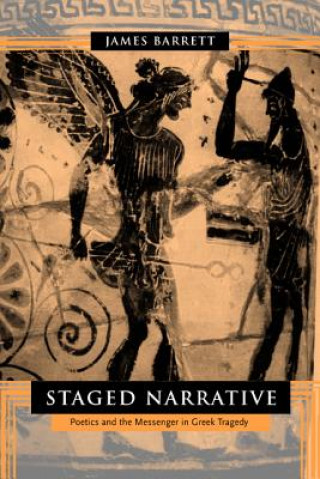
Staged Narrative
Autor James Barrett
The messenger who reports important action that has occurred offstage is a familiar inhabitant of Greek tragedy. A messenger informs us about the death of Jocasta and the blinding of Oedipus, the madness of Heracles, the slaughter ... celý popis


- Jazyk:
 Angličtina
 - Väzba: Pevná
- Počet strán: 274
Nakladateľ: University of California Press, 2002
- Viac informácií o knihe


Mohlo by sa vám tiež páčiť
-

Pussey!
12.54 € -9 % -

HARRY POTTER FLORAL FANTASY MAGNETIC BKM
6.26 € -39 % -
BIOQUÍMICA MÈDICA
101.47 € -

105 Ways to Celebrate Menstruation
9.70 € -7 % -

String Connection With Clarinet
42.38 € -

Enough IS Enough: What's In Your S.H.O.E.?
18.30 € -7 % -

Renee's Pocket Posh Journal, Polka Dot
7.27 € -24 %
Darujte túto knihu ešte dnes
- Objednajte knihu a vyberte Zaslať ako darček.
- Obratom obdržíte darovací poukaz na knihu, ktorý môžete ihneď odovzdať obdarovanému.
- Knihu zašleme na adresu obdarovaného, o nič sa nestaráte.
Viac informácií o knihe Staged Narrative
Nákupom získate 169 bodov
 Anotácia knihy
The messenger who reports important action that has occurred offstage is a familiar inhabitant of Greek tragedy. A messenger informs us about the death of Jocasta and the blinding of Oedipus, the madness of Heracles, the slaughter of Aigisthos, and the death of Hippolytus, among other important events. Despite its prevalence, this conventional figure remains only little understood. Combining several critical approaches--narrative theory, genre study, and rhetorical analysis--this lucid study develops a synthetic view of the messenger of Greek tragedy, showing how this role illuminates some of the genre's most persistent concerns, especially those relating to language, knowledge, and the workings of tragic theater itself. James Barrett gives close readings of several plays including Aeschylus's Persians, Sophocles' Electra and Oedipus Tyrannus, and Euripides' Bacchae and Rhesos. He traces the literary ancestry of the tragic messenger, showing that the messenger's narrative constitutes an unexplored site of engagement with Homeric epic, and that the role illuminates fifth-century b.c. experimentation with modes of speech. Breaking new ground in the study of Athenian tragedy, Barrett deepens our understanding of many central texts and of a form of theater that highlights the fragility and limits of human knowledge, a theme explored by its use of the messenger.
Parametre knihy
Zaradenie knihy Knihy po anglicky Literature & literary studies Literature: history & criticism Literary studies: general
69.90 €
- Celý názov: Staged Narrative
- Podnázov: Poetics and the Messenger in Greek Tragedy
- Autor: James Barrett
- Jazyk: Angličtina
- Väzba: Pevná
- Počet strán: 274
- EAN: 9780520231801
- ISBN: 0520231805
- ID: 04616838
- Nakladateľ: University of California Press
- Hmotnosť: 602 g
- Rozmery: 166 × 240 × 24 mm
- Dátum vydania: 13. August 2002
Obľúbené z iného súdka
-

How to Read a Book
14.66 € -7 % -
Art of Rhetoric
4.54 € -25 % -

Weird and the Eerie
11.32 € -13 % -
Dubliners
9.30 € -25 % -

Moby-Dick
27.51 € -
Odyssey
9.40 € -34 % -

Great Expectations
8.59 € -16 % -
Great God Pan and Other Horror Stories
16.79 € -25 % -

Karamazov Brothers
9.70 € -32 % -

The Picture of Dorian Gray
7.07 € -31 % -

Mysteries of Udolpho
10.21 € -35 % -

The Poetic Edda
29.23 € -10 % -

Selected Poems
12.74 € -24 % -

Dream Story
10.82 € -25 % -
Iliad
10.82 € -25 % -
Complete Short Stories of Ambrose Bierce
21.64 € -25 % -

Germinal
7.17 € -25 % -

Hildegard Of Bingen
10.21 € -17 % -
Metamorphoses
11.63 € -

Analysis of Donna Haraway's A Cyborg Manifesto
8.59 € -6 % -

The Heroes of Tolkien
16.89 € -30 % -
Complete Euripides Volume I Trojan Women and Other Plays
12.03 € -25 % -
Complete Euripides Volume II Electra and Other Plays
12.03 € -25 % -

Allegory of Love
24.47 € -24 % -

Biopunk Dystopias Genetic Engineering, Society and Science Fiction
66.67 € -

Dead Souls
10.61 € -25 % -

Willa Cather
31.15 € -

Go
17.70 € -17 % -

Libertine
130.41 € -9 % -

Zofloya
10.11 € -29 % -
Iliad
4.54 € -13 % -
Three Theban Plays
11.42 € -34 % -

Two Treatises of Government
7.88 € -24 % -

Twenty Years After
12.03 € -30 % -
Odyssey (Deckle Edge)
18.10 € -25 % -

Saga of Tanya the Evil, Vol. 3
10.01 € -24 % -

Anna Karenina
7.38 € -29 % -

Memoirs of a Dutiful Daughter
13.04 € -29 % -

Essential Writings of Ralph Waldo Emerson
18.30 € -24 % -

Education of a Wandering Man
7.48 € -28 % -
Consolation of Philosophy
11.93 € -24 % -
Poetics
10.31 € -16 % -

Tenant of Wildfell Hall
9.10 € -30 % -

Macbeth
11.83 € -14 % -

Persuasion
5.05 € -26 % -

Splintered Light
21.44 € -

Plainwater
14.05 € -25 % -

Ivanhoe
8.59 € -24 % -

Simple Passion
7.48 € -30 %
Osobný odber Bratislava a 12744 dalších
Copyright ©2008-26 najlacnejsie-knihy.sk Všetky práva vyhradenéSúkromieCookies

 24 miliónov titulov
 Vrátenie do mesiaca
 02/210 210 99 (8-15.30h)