Kód: 02046153
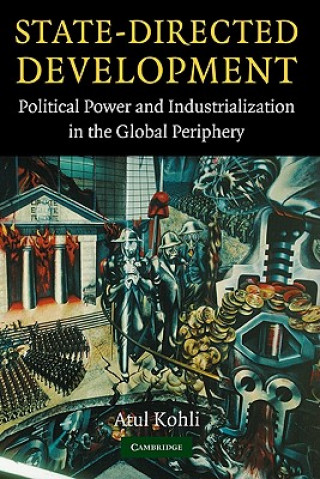
State-Directed Development
Autor Atul Kohli
Why have some developing country states been more successful at facilitating industrialization than others? An answer to this question is developed by focusing both on patterns of state construction and intervention aimed at promo ... celý popis


- Jazyk:
 Angličtina
 - Väzba: Pevná
- Počet strán: 480
Nakladateľ: Cambridge University Press, 2004
- Viac informácií o knihe


Mohlo by sa vám tiež páčiť
-

Twin Flame
14.04 € -25 % -

Verliebt in mehr als dein Gesicht 01
7.87 € -

Дерсу Узала
9.69 € -12 % -

Power Play
22.83 € -

Daniel Tiger Friends Help Each Other
11.51 € -27 % -

Corporate Governance and Sustainable Value Creation Models
164.40 € -7 % -

Engineering Mathematics with Examples and Applications
105.99 € -

Skolien, oder Fragmente der Philosophie und der Kritik
18.79 € -11 % -

Welcome to the Tribe!
8.88 € -

Quatermain
38.90 € -

LA REVOLUCION RUSA CONTADA PARA ESCEPTICOS
33.64 € -

Mystery in Suffering
18.28 € -7 % -

Johannes de Hauvilla: Architrenius
120.65 € -

Trace Amines
102.86 € -7 % -

Personalpolitik Im Mittelstand
53.04 € -7 % -

Mathe.Logo Regelschule Thüringen AH 7, m. 1 Buch
11.71 € -

Ritter Ferdi rettet die entführte Prinzessin
13.53 € -10 % -

Educating the Neglected Majority
158.85 € -

Higher Richer Sleazier: How Drugs and Money Are Changing Sport Forever
16.76 € -25 % -

Luca will weg - Lesestufe 3
7.87 € -

Non-Universal Superconducting Gap Structure in Iron-Pnictides Revealed by Magnetic Penetration Depth Measurements
102.86 € -7 % -

Kreativitat und Wahrheit - Moeglichkeiten und Grenzen kreativer Zugange beim Erschliessen von erkenntnistheoretischen Texten
25.05 € -11 % -

Avengers
18.08 € -9 % -

Lernen im Spiel - mit neuen Medien
20.60 € -11 % -

Untersuchungen an Baumwollkarden Zwecks Ermittlung Der Fehlerursachen Fur Dickeschwankungen
53.04 € -7 % -

Un Mot Sur La Crise Actuelle
14.74 € -2 % -

Der Forex-Millionär
10.90 € -5 % -

Pioneering on the Congo
56.38 €
Darujte túto knihu ešte dnes
- Objednajte knihu a vyberte Zaslať ako darček.
- Obratom obdržíte darovací poukaz na knihu, ktorý môžete ihneď odovzdať obdarovanému.
- Knihu zašleme na adresu obdarovaného, o nič sa nestaráte.
Viac informácií o knihe State-Directed Development
Nákupom získate 330 bodov
 Anotácia knihy
Why have some developing country states been more successful at facilitating industrialization than others? An answer to this question is developed by focusing both on patterns of state construction and intervention aimed at promoting industrialization. Four countries are analyzed in detail - South Korea, Brazil, India, and Nigeria - over the twentieth century. The states in these countries varied from cohesive-capitalist (mainly in Korea), through fragmented-multiclass (mainly in India), to neo-patrimonial (mainly in Nigeria). It is argued that cohesive-capitalist states have been most effective at promoting industrialization and neo-patrimonial states the least. The performance of fragmented-multiclass states falls somewhere in the middle. After explaining in detail as to why this should be so, the study traces the origins of these different state types historically, emphasizing the role of different types of colonialisms in the process of state construction in the developing world.
Parametre knihy
Zaradenie knihy Knihy po anglicky Reference, information & interdisciplinary subjects Interdisciplinary studies Development studies
136.11 €
- Celý názov: State-Directed Development
- Podnázov: Political Power and Industrialization in the Global Periphery
- Autor: Atul Kohli
- Jazyk: Angličtina
- Väzba: Pevná
- Počet strán: 480
- EAN: 9780521836708
- ISBN: 0521836700
- ID: 02046153
- Nakladateľ: Cambridge University Press
- Hmotnosť: 770 g
- Rozmery: 229 × 152 × 30 mm
- Dátum vydania: 13. September 2004
Obľúbené z iného súdka
-

Bottom Billion
13.53 € -24 % -

Asia's Next Giant
23.43 € -

Cuba and Its Neighbours
35.06 € -

Development: A Very Short Introduction
9.99 € -24 % -

Measure of Civilization
23.74 € -2 % -

Move Up
26.16 € -

New Scramble for Africa 2e
78.71 € -

Challenge for Africa
12.82 € -25 % -

Agroecology
35.36 € -25 % -

Tropical Gangsters
28.69 € -

Creating a Learning Society
50.31 € -

State, Space, World
32.53 € -

Degrowth
58.90 € -
Globalisation, Economic Development & the Role of the State
46.58 € -

Regenerative Design for Sustainable Development
84.87 € -2 % -

Emerging Africa
13.94 € -24 % -

Economic Development
12.72 € -24 % -

Silenced Rivers
63.35 € -

Leading the Sustainable Organization
68.50 € -

Social Entrepreneurship as Sustainable Development
70.32 € -

Museums, Heritage and International Development
224.43 € -
Economics of Sustainable Development
56.18 € -

Participation
46.58 € -

New Scramble for Africa 2e
31.11 € -

Urban Innovation Systems
68.60 € -

Global Governance and the New Wars
30.81 € -

Political Economy of Mega Projects in Asia
199.57 € -

Action and Knowledge
76.18 € -

From Underdogs to Tigers
239.38 € -

Anti-Politics Machine
29.40 € -

Understanding Sustainable Development
60.92 € -

Designing and Building Mini and Micro Hydro Power Schemes
37.28 € -9 % -

Global Value Chains and Development
42.94 € -

Emerging Practices in Intergovernmental Functional Assignment
199.57 € -

Sex Work Now
58.80 € -

Technology and the Character of Contemporary Life
41.62 € -

China's Hukou System
53.24 € -4 % -

Monocultures of the Mind
51.73 € -

Confronting Ecological and Economic Collapse
58.90 € -

Fair Trade
224.43 € -

Shaping Sustainable Fashion
65.78 € -

From Underdogs to Tigers
93.56 € -

International Development
196.94 € -

Urbanisation, Housing and the Development Process
222.21 € -

Sustainable Economics of Elinor Ostrom
222.81 € -

Encountering Development
32.83 € -1 % -

Oxford Handbook of Economic Inequality
52.03 € -

Management
82.45 € -

Invisible Hands, Russian Experience, and Social Science
85.99 €
Osobný odber Bratislava a 12820 dalších
Copyright ©2008-26 najlacnejsie-knihy.sk Všetky práva vyhradenéSúkromieCookies

 24 miliónov titulov
 Vrátenie do mesiaca
 02/210 210 99 (8-15.30h)