Kód: 01422855
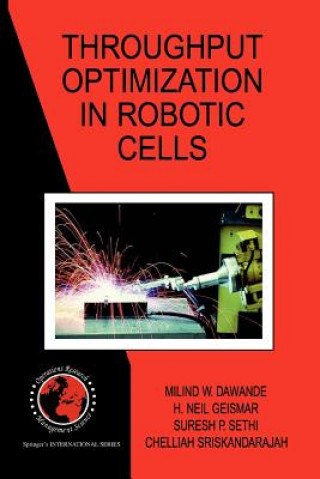
Throughput Optimization in Robotic Cells
Autor Milind W. Dawande, H. Neil Geismar, Suresh P. Sethi, Chelliah Sriskandarajah
Intense global competition in manufacturing has compelled manufacturers to incorporate repetitive processing and automation for improving productivity. Modern manufacturing systems use robotic cells a particular type of computer-c ... celý popis


- Jazyk:
 Angličtina
 - Väzba: Brožovaná
- Počet strán: 420
Nakladateľ: Springer-Verlag New York Inc., 2010
- Viac informácií o knihe

110.89 €
Bežne: 122.86 €
Ušetríte 11.97 €

Skladom u dodávateľa
Odosielame za 5 - 8 dní
Mohlo by sa vám tiež páčiť
-

Introduction to Quantum Mechanics
67.85 € -5 % -

Krautrock Eruption
17.01 € -19 % -

High Voltage Engineering: Theory and Practice
123.35 € -12 % -

Kissing The Sword
14.88 € -9 % -

Vers une didactique des ajustements dans l'action conjointe
32.20 € -

Cuando Los Dioses Eran Hombres
43.03 € -

UNTITLED 2 HA
19.84 € -30 % -

Daggers of Darkness
16.60 € -7 % -

My Life and Loves: Volume One
16.90 € -6 % -

Jenseits des Mythos' - Mathieu Kassovitz' Banlieue Epos La Haine
17.11 € -10 % -

Das Parlamentarische Wahlrecht (1901)
49.92 € -2 % -

Escape from the Zoo
29.67 € -

Nonlinear Psychoanalysis
65.93 € -

Big! Bad? Modern - Four Megabuildings in Vienna
39.49 € -

Choix de Po Sies Allemandes
25.72 € -24 % -

Advances in Artificial Life and Evolutionary Computation
51.75 € -7 % -

Bunkie
14.07 € -6 % -

Loving Zelda
9.81 € -6 % -

Experimentelle Untersuchungen an Der Euberstreomenden Fleussigkeitsschicht in Vollmantelschleudern Ohne eUberlaufrand
53.16 € -7 % -

Following the Heart of the Great Shepherd
13.97 € -1 % -

Faith of Elijah Cummings
13.46 € -24 %
Darujte túto knihu ešte dnes
- Objednajte knihu a vyberte Zaslať ako darček.
- Obratom obdržíte darovací poukaz na knihu, ktorý môžete ihneď odovzdať obdarovanému.
- Knihu zašleme na adresu obdarovaného, o nič sa nestaráte.
Viac informácií o knihe Throughput Optimization in Robotic Cells
Nákupom získate 268 bodov
 Anotácia knihy
Intense global competition in manufacturing has compelled manufacturers to incorporate repetitive processing and automation for improving productivity. Modern manufacturing systems use robotic cells a particular type of computer-controlled system in cellular manufacturing. THROUGHPUT OPTIMIZATION IN ROBOTIC CELLS provides practitioners, researchers, and students with up-to-date algorithmic results on sequencing of robot moves and scheduling of parts in robotic cells. It brings together the structural results developed over the last 25 years for the various realistic models of robotic cells. After describing industrial applications of robotic cells and presenting fundamental results about cyclic production, several advanced features, such as dual-grippers, parallel machines, multi-part-type production, and multiple robots, are treated. Important open problems in the area are also identified.§This book is an excellent text for use in a graduate course or a research seminar on robotic cells.Throughput Optimization In Robotic Cells provides practitioners, researchers, and students with up-to-date algorithmic results on sequencing of robot moves and scheduling of parts in robotic cells. It brings together the structural results developed over the last 25 years for the various realistic models of robotic cells. This book is ideally suited for use in a graduate course or a research seminar on robotic cells.Modern manufacturing processes have thoroughly incorporated automation and repetitive processing. The use of computer-controlled material handling systems to convey raw materials through the multiple processing stages required to produce a finished product is widely employed in industry world-wide. Central to these systems are robot-served manufacturing cells, or robotic cells. These cells perform a variety of functions including arc welding, material handling, electroplating, textiles creation, and machining. In addition, they are used in many different industries, including injection molding of battery components, glass manufacturing and processing, building products, cosmetics, lawn tractors, fiber-optics, and semi-conductor manufacturing. In the medical field, robotic cells are used to produce components for magnetic resonance imaging systems, for automated pharmacy compounding, to process nucleic acids, and to generate compounds for tests in relevant biological screens. Cells for grinding, polishing, and buffing handle many products, including rotors, stainless steel elbows for the chemical and the food industries, sink levers and faucets, propane tanks, flatware, automotive products, and more. All of this has resulted with the rapid growth of robotic cell scheduling. As manufacturers have employed them in greater numbers and greater varieties, analysts have developed new models and techniques to maximize these cells productivity. Competitive pressures will result in the development of more advanced cells and, hence, more sophisticated studies. Therefore, robotic cell scheduling should continue to attract the attention of a growing number of practitioners and researchers.§THROUGHPUT OPTIMIZATION IN ROBOTIC CELLS is a comprehensive introduction to the field of robotic scheduling. It discusses the basic properties of robotic cells and outlines in detail the tools most often used to analyze them. In doing so, the book will provide a thorough algorithmic analysis of optimal policies for a variety of implementations. The book provides a classification scheme for robot cell scheduling problems that is based on cell characteristics, and discusses the influence of these characteristics on the methods of analysis employed. Implementation issues are stressed. Specifically, these issues are explored in terms of implementing solutions and open problems.
Parametre knihy
Zaradenie knihy Knihy po anglicky Mathematics & science Mathematics Applied mathematics
110.89 €
- Celý názov: Throughput Optimization in Robotic Cells
- Autor: Milind W. Dawande, H. Neil Geismar, Suresh P. Sethi, Chelliah Sriskandarajah
- Jazyk: Angličtina
- Väzba: Brožovaná
- Počet strán: 420
- EAN: 9781441943699
- ISBN: 1441943692
- ID: 01422855
- Nakladateľ: Springer-Verlag New York Inc.
- Hmotnosť: 664 g
- Rozmery: 235 × 155 × 24 mm
- Dátum vydania: 22. November 2010
Obľúbené z iného súdka
-

Understanding Markov Chains
50.53 € -

Complexity: A Very Short Introduction
10.02 € -24 % -

Continuous Martingales and Brownian Motion
144.22 € -7 % -
Mathematical Physics
100.77 € -

Evidence-Based Technical Analysis - Applying the Scientific Method and Statistical Inference to Trading Signals
76.46 € -26 % -

Computational Science and Engineering
111.60 € -

Problems and Solutions in Mathematical Finance
62.58 € -2 % -
Mathematical Modeling
35.54 € -9 % -

Nonlinear Dispersive Waves
184.02 € -

Problems and Solutions in Mathematical Finance - Stochastic Calculus V1
53.67 € -9 % -

Chaos
13.26 € -28 % -

Mathematical Theory of Communication
24.30 € -9 % -

Chaos: A Very Short Introduction
9.31 € -30 % -

Mathematics for Finance
39.19 € -

Applied Mathematics: A Very Short Introduction
10.02 € -24 % -
Principles and Techniques of Applied Mathematics
14.78 € -25 % -

TRIZ For Dummies
24.50 € -24 % -

Brownian Motion and Stochastic Calculus
50.53 € -9 % -

Probability
58.63 € -

Monte Carlo Methods in Financial Engineering
57.62 € -9 % -

Introduction to the Theory of Complex Systems
96.72 € -
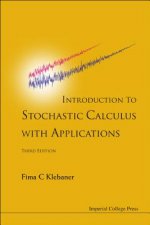
Introduction To Stochastic Calculus With Applications (3rd Edition)
59.04 € -

Virtual Barrels
65.62 € -9 % -
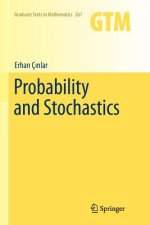
Probability and Stochastics
72.20 € -7 % -
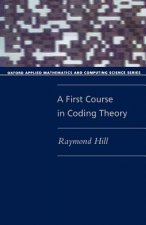
First Course in Coding Theory
86.79 € -

Understanding and Managing Model Risk - A Practical Guide for Quants, Traders and Validators
82.64 € -10 % -

Materials Modelling using Density Functional Theory
45.47 € -9 % -

Limit Theorems for Stochastic Processes
175.11 € -7 % -
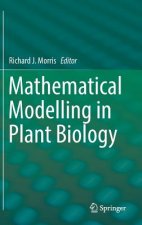
Mathematical Modelling in Plant Biology
154.55 € -7 % -

Optimization Algorithms on Matrix Manifolds
98.23 € -

Networks: A Very Short Introduction
10.02 € -24 % -
Differential Forms with Applications to the Physical Sciences
13.46 € -24 % -
Introduction to Deep Learning
55.59 € -9 % -

Student Solutions Manual for Nonlinear Dynamics and Chaos, 2nd edition
30.78 € -

Cellular Automaton Interpretation of Quantum Mechanics
51.75 € -7 % -
Building Information Modeling For Dummies
25.11 € -25 % -

Matrix Computations
78.89 € -
Essential PTC (R) Mathcad Prime (R) 3.0
73.62 € -

Cryptography: A Very Short Introduction
12.35 € -9 % -

Quantum Mechanics and Quantum Field Theory
92.56 € -

Handbook of Applied Cryptography
224.94 € -

Interest Rate Modeling. Volume 1
103.80 € -

Geometric Algebra for Computer Science (Revised Edition)
85.17 € -45 % -
Fundamentals of Computational Neuroscience
78.28 € -

Mathematics for Economics and Finance
61.67 € -

Lecture Notes On Mathematical Olympiad Courses: For Junior Section - Volume 2
26.32 € -
Introduction to Quantum Computing
64.10 € -

Advanced Calculus
81.42 € -

Concepts of Mathematical Modeling
19.64 € -24 %
Osobný odber Bratislava a 12840 dalších
Copyright ©2008-26 najlacnejsie-knihy.sk Všetky práva vyhradenéSúkromieCookies

 24 miliónov titulov
 Vrátenie do mesiaca
 02/210 210 99 (8-15.30h)