Kód: 01645514
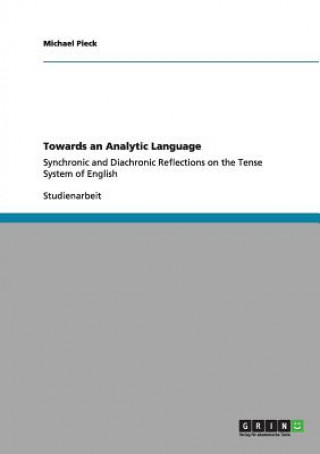
Towards an Analytic Language
Autor Michael Pieck
Studienarbeit aus dem Jahr 2010 im Fachbereich Englisch - Grammatik, Stil, Arbeitstechnik, einseitig bedruckt, Note: 1,3, Universität zu Köln, Veranstaltung: English Grammar: Synchronic and Diachronic Aspects, Sprache: Deutsch, Ab ... celý popis


- Jazyk:
 Nemčina
 - Väzba: Brožovaná
- Počet strán: 56
Nakladateľ: Grin Publishing, 2012
- Viac informácií o knihe

16.20 €
Bežne: 18.18 €
Ušetríte 1.99 €

Skladom u dodávateľa
Odosielame za 5 - 8 dní
Mohlo by sa vám tiež páčiť
-

Vše o čaji pro čajomily
0 € -100 %
Darujte túto knihu ešte dnes
- Objednajte knihu a vyberte Zaslať ako darček.
- Obratom obdržíte darovací poukaz na knihu, ktorý môžete ihneď odovzdať obdarovanému.
- Knihu zašleme na adresu obdarovaného, o nič sa nestaráte.
Viac informácií o knihe Towards an Analytic Language
Nákupom získate 39 bodov
 Anotácia knihy
Studienarbeit aus dem Jahr 2010 im Fachbereich Englisch - Grammatik, Stil, Arbeitstechnik, einseitig bedruckt, Note: 1,3, Universität zu Köln, Veranstaltung: English Grammar: Synchronic and Diachronic Aspects, Sprache: Deutsch, Abstract: The terms synthetic language and analytic language in connection with linguistic typo?logy have become commonplaces in contemporary lingusitics. They refer to morphological or rather morpho-syntactic characteristics of languages. Whereas analytic languages have very few affixes (for example, Modern English), synthetic languages have many (for example, Latin, Old English). (O Grady et al. 1997: 334) Using the quantifiers very few and many , this definition by O Grady et al. shows that it might be problematic to speak about synthetic and analytic languages as fixed or closed categories in a structuralist way. They rather denote prototypical categories or general tendencies, as there is hardly any language which entirely belongs to one or the other category. Even a prototypically analytic language like Present-Day English (PDE) has both grammaticalized synthetic elements and tendencies towards new syntheticity, as O Grady et al. or Danchev have shown. In a synthetic language, four lexiacal categories are usually concerned with inflectio?n: verbs, nouns, pronouns and adjectives. Since Old English, the earliest stage of the English language, the inflectional system has continuously been reduced, and in PDE most grammatical relations are expressed through analytic constructions. The tense system of Old English consisted of two morphologically marked tenses, the present and the preterite. Futurity could be expressed through futurate constructions employing present tense or, rarely, be supported by a certain set of lexical verbs functioning as auxiliaries without losing their lexical meaning, e.g. willan = to want, or sculan = must. These verbs were, unlike today, fully inflected. ( )This paper will show that the decline of the inflectional system made it quasi necessary to create and strengthen analytic verb forms and finally grammaticalize them. The outcome of this process is the great variety of ways to express temporal relationships and aspects, as we have them in Present-Day English. The fundament of the English language may remain synthetic, however, the construction above is clearly analytic.
Parametre knihy
16.20 €
- Celý názov: Towards an Analytic Language
- Podnázov: Synchronic and Diachronic Reflections on the Tense System of English
- Autor: Michael Pieck
- Jazyk: Nemčina
- Väzba: Brožovaná
- Počet strán: 56
- EAN: 9783640909254
- ISBN: 3640909259
- ID: 01645514
- Nakladateľ: Grin Publishing
- Hmotnosť: 86 g
- Rozmery: 210 × 148 × 3 mm
- Dátum vydania: 25. May 2012
Obľúbené z iného súdka
-
Grammatik aktiv - Deutsch als Fremdsprache - 2. aktualisierte Ausgabe - A1-B1
21.87 € -9 % -

Hitster - Rock
23.99 € -12 % -
Grammatik aktiv - Deutsch als Fremdsprache - B2/C1
36.35 € -
KLEINE PRINZ
4.45 € -
Hitster - Battle of the Generations
28.25 € -7 % -

Hitster - Urban & Hip-Hop
12.45 € -5 % -
Grammatik aktiv - Deutsch als Fremdsprache - 2. aktualisierte Ausgabe - B1+
14.68 € -9 % -

Trötsch Plüschpuppe Findus Kuscheltier
11.64 € -11 % -
Hitster - Guilty Pleasure
25.41 € -7 % -

3-Minuten-Vorlesegeschichten für gute Träume
7.38 € -8 % -

Schritte international Neu 1
19.74 € -15 % -

Erkundungen Deutsch als Fremdsprache C1: Integriertes Kurs- und Arbeitsbuch
25.31 € -9 % -
Wizard
8.30 € -8 % -

Harry Potter und der Stein der Weisen (Harry Potter 1)
10.12 € -
Zettelmagnet Metall Schutzengel
8.50 € -9 % -

FIFA WC 26 Sticker Starter-Set
14.68 € -13 % -

365 Gute-Nacht-Geschichten. Vorlesebuch für Kinder ab 3 Jahren
6.98 € -13 % -

Menschen - Deutsch als Fremdsprache. Menschen A2. Kursbuch
17.92 € -27 % -

Schritte international Neu 2. Kursbuch + Arbeitsbuch mit Audios online
17.71 € -23 % -
Amigurumis - cute and plushy!
15.28 € -16 % -
Amigurumis - small and sweet!
14.47 € -15 % -

Menschen im Beruf - Medizin
23.99 € -12 % -

Hitster - Soundtracks (Erweiterung)
12.45 € -5 % -

Lázár
23.49 € -9 % -
Pictures
33.21 € -18 % -

Der Zauberfüller - Leserabe ab 2. Klasse - Erstlesebuch für Kinder ab 7 Jahren
7.89 € -13 % -

Meine Reise durch Europa
10.83 € -10 % -

Im Westen nichts Neues
10.93 € -10 % -

Deutsch intensiv Wortschatz B2
17.11 € -3 % -

Disney Klassiker: Meine ersten Gutenacht-Geschichten
7.89 € -
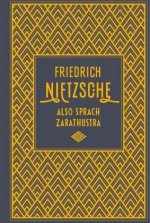
Also sprach Zarathustra
7.69 € -5 % -
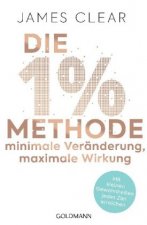
Die 1%-Methode - Minimale Veränderung, maximale Wirkung
15.39 € -10 % -
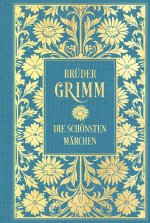
Brüder Grimm: Die schönsten Märchen: Mit Illustrationen
7.89 € -

The Elements of Brand Design
66.84 € -14 % -

Baumhausgeschichten - Leserabe ab 1. Klasse - Erstlesebuch für Kinder ab 6 Jahren (mit Mildenberger Silbenmethode)
6.98 € -
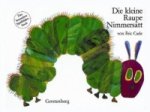
Die kleine Raupe Nimmersatt
5.66 € -
Pippi Langstrumpf
12.75 € -16 % -
Grimms Märchen - vollständig und illustriert.
14.57 € -4 % -
Das Land der kleinen Abenteuer
11.13 € -15 % -
Faust I und II
8.60 € -5 % -

Begegnungen - Kurs- und Arbeitsbuch A1+
25.21 € -9 % -

Mit Erfolg zum Goethe-Zertifikat C1
22.37 € -3 % -

Schritte international Neu 4
20.04 € -13 % -
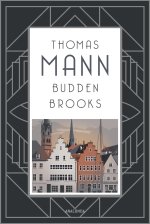
Buddenbrooks. Verfall einer Familie. Roman
10.52 € -8 % -
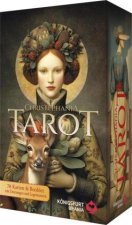
Christephania Tarot - 78 farbige Karten und ein 176-seitiges Booklet mit Deutungen und Legungen, m. 1 Buch, m. 1 Beilage
21.56 € -11 % -
Soulmirror Tarot - 78 Karten mit Buch - (Soul Path, sensitive Tarotkarten)
23.39 € -11 % -
Klask
55.19 € -9 % -

Die unendliche Geschichte
18.02 € -11 % -

Begegnungen - Kurs- und Arbeitsbuch A2+
28.45 €
Osobný odber Bratislava a 12762 dalších
Copyright ©2008-26 najlacnejsie-knihy.sk Všetky práva vyhradenéSúkromieCookies

 24 miliónov titulov
 Vrátenie do mesiaca
 02/210 210 99 (8-15.30h)