Kód: 08128028
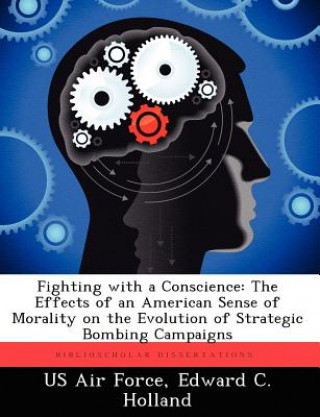
Fighting with a Conscience
Autor Edward C Holland
In the 1930s air leaders and theorists at the Air Corps Tactical School developed a new concept for strategic bombing that sought victory through attacks on an enemy's war-making potential instead of its deployed forces. School of ... celý popis


- Jazyk:
 Angličtina
 - Väzba: Brožovaná
- Počet strán: 48
Nakladateľ: Biblioscholar, 2012
- Viac informácií o knihe

62.82 €
Dostupnosť:
50 % šanca Máme informáciu, že by titul mohol byť dostupný. Na základe vašej objednávky sa ho pokúsime do 6 týždňov zabezpečiť.
Prehľadáme celý svet
Mohlo by sa vám tiež páčiť
-
L Állatos mondókák
2.92 € -32 % -
La metamorphose
4.44 € -

FURY BOUND (Wolves of Ruin, Band 2)
21.64 € -14 % -

Beginner's Guide to Japanese Haiku
18.30 € -
Kdo je ten chlap? Hledání Boba Dylana
14.46 € -21 % -
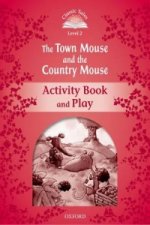
Classic Tales Second Edition: Level 2: The Town Mouse and the Country Mouse Activity Book & Play
9.91 € -
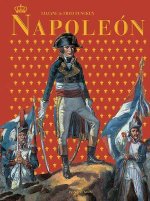
Napoleon Integral
39.04 € -
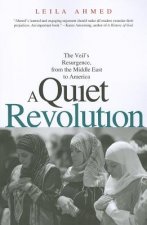
Quiet Revolution
25.28 € -5 % -

Cities and the Making of Modern Europe, 1750-1914
43.60 € -
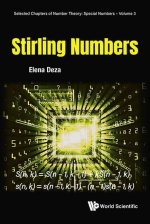
Stirling Numbers
158.23 € -
Programacion OO con Java usando BlueJ
80.53 € -

Spacemania
11.93 € -17 % -

West Country to World's End
29.84 € -

Global Flu and You
31.46 € -

Cómo alimentar a tu perro
36.31 € -
Java in Two Semesters
70.61 € -9 % -
Exercises Commemorating the Two-Hundredth Anniversary of the Birth of Jonathan Edwards
16.18 € -25 % -
Understanding Creativity in Early Childhood
33.58 € -9 % -
Blogging About Korean Diaspora Writers in America
22.55 € -2 % -

Telephone Ringing in the Labyrinth
13.95 € -17 % -

Call to Action
17.49 € -

Mathematical Models in Biology
51.69 € -7 % -

Approach to Privatization in the 21st Century
22.15 € -

Days on Fire
31.76 € -2 % -

Surah A'Raf (Urdu)
9.80 € -6 % -

Habitat
14.86 € -24 % -

Today Sharon Will Be a Princess
21.74 € -24 % -
Inaugural Dissertation on the Pertussis, or Hooping Cough. Submitted to the Examination of the Rev. Peter Studdiford, V.D.M. & P.T. Praes. and to the
11.83 € -25 % -

Das pflegerische Fachgespräch
26.80 € -11 % -

New Beginnings
9.91 € -

Sick Child in Early Modern England, 1580-1720
47.14 € -
Confronting the Other Woman
26.50 € -1 % -

Pennsylvania Railroad to the Columbian Exposition, with Descriptive Notes of ... New York, Philadelphia, Baltimore, Washington, Chicago, and a Complet
16.08 € -24 % -

Die UML-Kurzreferenz 2.5 für die Praxis
42.48 € -6 % -

Geological Explorations in Central Borneo (1893-94)
260.73 €
Darujte túto knihu ešte dnes
- Objednajte knihu a vyberte Zaslať ako darček.
- Obratom obdržíte darovací poukaz na knihu, ktorý môžete ihneď odovzdať obdarovanému.
- Knihu zašleme na adresu obdarovaného, o nič sa nestaráte.
Informovať o naskladnení knihy
Zadajte do formulára e-mailovú adresu a akonáhle knihu naskladníme, zašleme vám o tom správu. Postrážime všetko za vás.
Viac informácií o knihe Fighting with a Conscience
Nákupom získate 152 bodov
 Anotácia knihy
In the 1930s air leaders and theorists at the Air Corps Tactical School developed a new concept for strategic bombing that sought victory through attacks on an enemy's war-making potential instead of its deployed forces. School officials believed such attacks directed against a country's economic "vital centers" or "industrial web" would destroy not only the ability to wage war but the will to fight as well. The concept also reflected a uniquely American sense of morality, as it included the notion that capability and will could be destroyed without directly attacking civilians. Those ideas coalesced into the doctrine for the strategic bombing campaigns of World War II. That doctrine influenced both strategy and tactics and in the process made the American air effort predictable. The bombing campaigns against Germany and Japan were remarkably similar, although conducted in different areas of the world under unique circumstances. Air leaders in both theaters initially relied on high-altitude, daylight precision attacks directed at the enemy's industrial web. When faced with similar problems of poor weather, inaccurate bombing, deadly defenses, and surprisingly resilient enemies, they resorted to less precise bombing methods. Even then air commanders refused to abandon their humanitarian principles. The attacks continued against industrial web targets, but with more indiscriminate methods that were nonetheless motivated by the desire to shorten the war and save lives on both sides. The emphasis on morality remained part of America's strategic bombing doctrine after the war. Air leaders directing bombing campaigns against North Korea, North Vietnam, and Iraq faithfully ascribed to the industrial web theory, attacking similar tar-gets in each conflict in predictable fashion-with bombing methods designed to avoid civilian casualties. Each campaign appeared successful, employing increasingly accurate bombing methods that improved effectiveness while reducing civilian cas
Parametre knihy
Zaradenie knihy Knihy po anglicky Society & social sciences Education
62.82 €
- Celý názov: Fighting with a Conscience
- Podnázov: The Effects of an American Sense of Morality on the Evolution of Strategic Bombing Campaigns
- Autor: Edward C Holland
- Jazyk: Angličtina
- Väzba: Brožovaná
- Počet strán: 48
- EAN: 9781249328087
- ISBN: 9781249328087
- ID: 08128028
- Nakladateľ: Biblioscholar
- Hmotnosť: 104 g
- Rozmery: 246 × 189 × 3 mm
- Dátum vydania: 11. September 2012
Obľúbené z iného súdka
-
geog.2 Workbook
13.04 € -
Oxford International Primary Maths Second Edition: Student Book 5
31.66 € -
Cambridge IGCSE (R) & O Level Complete Physics: Student Book Fourth Edition
47.04 € -
Cambridge IGCSE (R) & O Level Complete Chemistry: Student Book Fourth Edition
41.98 € -4 % -

OET Preparation
9.30 € -
Maria Montessori's Erdkinder
40.46 € -4 % -
Speed and Accuracy: Multiplication
5.86 € -24 % -
Oxford International Primary Maths Second Edition: Practice Book 5
18.20 € -
Imagine If...
12.84 € -22 % -
My Book of Measurement: Length
6.57 € -24 % -
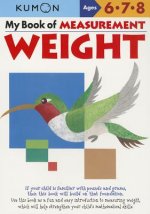
My Book of Measurement: Weight
6.57 € -24 % -

Deutsch Ferienhefte - 2. Klasse - Volksschule
10.51 € -10 % -

Teaching English for Medical Purposes
20.33 € -1 % -

Guerrilla Warfare Tactics in Urban Environments
17.29 € -2 % -

iPrimary Building Blocks: Spelling, Punctuation, Grammar and Handwriting Year 1
18.30 € -
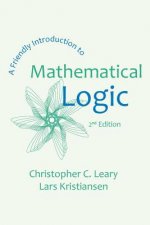
Friendly Introduction to Mathematical Logic
31.46 € -2 % -
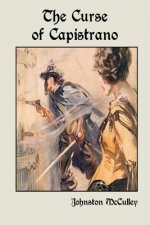
Curse of Capistrano
14.86 € -2 % -
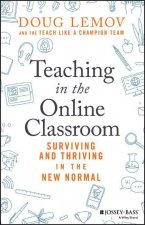
Teaching in the Online Classroom
14.76 € -25 % -
Educational Achievement in Japan
60.70 € -
Einkorn
18.30 € -24 % -
Powerful Teaching: Unleash the Science of Learning
24.68 € -26 % -

Business Partner B2 Workbook
18.91 € -3 % -

Deep Healing and Transformation
41.78 € -2 % -
Oxford International Primary Maths Second Edition: Practice Book 2
18.20 € -

MOWIE PO POLSKU DWICZENIA POZIOM B1 I B2
16.58 € -
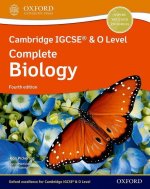
Cambridge IGCSE (R) & O Level Complete Biology: Student Book Fourth Edition
41.98 € -4 % -
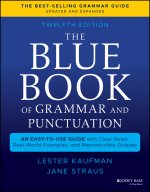
Blue Book of Grammar and Punctuation: An Easy- to-Use Guide with Clear Rules, Real-World Examples , and Reproducible Quizzes, Twelfth Edition
14.86 € -24 % -
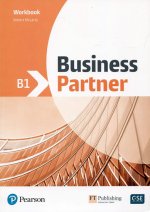
Business Partner B1 Workbook
18.91 € -
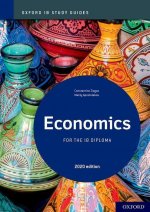
Oxford IB Study Guides: Economics for the IB Diploma
45.42 € -4 % -
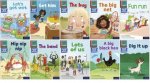
Read Write Inc. Phonics: Red Ditty Book Bag Books (Mixed Pack of 10)
64.54 € -
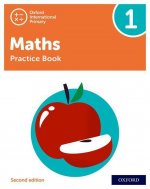
Oxford International Primary Maths Second Edition: Practice Book 1
13.04 € -4 % -
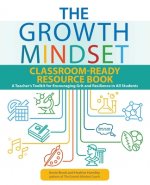
Growth Mindset Classroom-ready Resource Book
17.39 € -28 % -
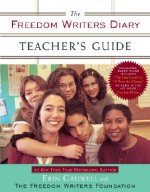
Freedom Writers Diary Teacher's Guide
17.90 € -26 % -
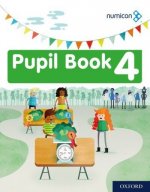
Numicon: Numicon Pupil Book 4
19.01 € -
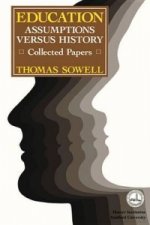
Education
10.82 € -18 % -
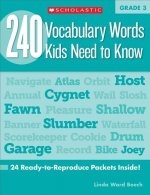
240 Vocabulary Words Kids Need to Know: Grade 3
10.01 € -24 % -
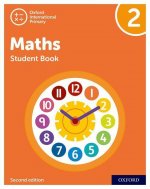
Oxford International Primary Maths Second Edition: Student Book 2
31.66 € -

VINES & VINIFICATION
48.05 € -
They Don't Teach This at School
21.24 € -25 % -
Euclidean Geometry
27.81 € -25 % -
Mindset Mathematics - Visualizing and Investigating Big Ideas, Grade 7
18.61 € -31 % -
KS3 Maths 10-Minute Weekly Workouts - Year 7
8.89 € -12 % -
Positive Discipline Tools for Teachers
16.08 € -24 % -
(ISC) SSCP SG & SSCP Practice Test Kit, 3e
67.37 € -25 % -
Power of Making Thinking Visible - Practices to Engage and Empower All Learners
24.98 € -18 % -
Teach Reading With Orton-gillingham
23.26 € -
Speed and Accuracy: Division
5.86 € -24 % -
ESL/ELL Teacher's Survival Guide: Ready-to-Use Strategies, Tools, and Activities for Teaching En glish Language Learners of All Levels, 2nd Edition
26.50 € -25 % -
Cambridge IGCSE (R) & O Level Complete Physics: Print and Enhanced Online Student Book Pack Fourth Edition
48.45 €
Osobný odber Bratislava a 12744 dalších
Copyright ©2008-26 najlacnejsie-knihy.sk Všetky práva vyhradenéSúkromieCookies

 24 miliónov titulov
 Vrátenie do mesiaca
 02/210 210 99 (8-15.30h)