Kód: 01291450
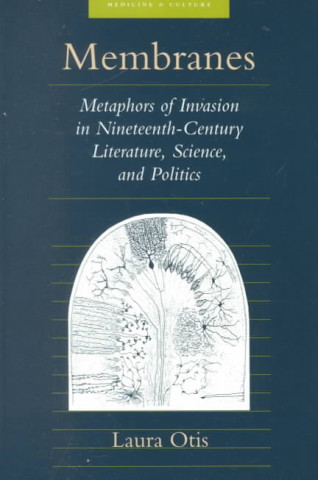
Membranes
Autor Laura Otis
In Membranes, Laura Otis examines how the image of the biological cell became one of the reigning metaphors of the nineteenth century. At the heart of her story is the rise of a fundamental assumption about human identity: the id ... celý popis


- Jazyk:
 Angličtina
 - Väzba: Brožovaná
- Počet strán: 224
Nakladateľ: Johns Hopkins University Press, 2000
- Viac informácií o knihe

38.27 €
Dostupnosť:
50 % šanca Máme informáciu, že by titul mohol byť dostupný. Na základe vašej objednávky sa ho pokúsime do 6 týždňov zabezpečiť.
Prehľadáme celý svet
Mohlo by sa vám tiež páčiť
-

The Iliad (The Norton Library)
10.73 € -4 % -

Myths and Legends of Japan
22.88 € -9 % -

Ancient Israel's History: An Introduction to Issues and Sources
42.33 € -7 % -

The Antidote
15.49 € -25 % -

Corporate Communication Crisis Leadership
16.20 € -25 % -

Galicyjskim szlakiem chasydow sadecko-bobowskich
10.73 € -17 % -

El silencio es un pez de colores
10.83 € -

Prehistory of the Silk Road
72.41 € -
Volentieri! A2. Libro dello studente + esercizi + multilibro
34.63 € -

The Picture Book of Flowers: A Gift Book for Alzheimer's Patients and Seniors with Dementia
10.62 € -6 % -

JARDINOLOGIA
24.60 € -2 % -

Asteroids
33.21 € -10 % -

Knock-Knock! Who's There?: A Load of Laughs and Jokes for Kids
8.40 € -

Biology of the Fungal Cell
298.47 € -
Romane, 3 Bde.
34.93 € -11 % -
Cardello
11.74 € -14 % -

(Rudin)
19.13 € -

Aniela
20.25 € -2 % -

Linear Regression With Python
23.69 € -18 % -

Ethics of Writing
148.37 € -15 % -

Kindesvernachlassigung (im Grundschulalter) und die Bedeutung des Resilienzkonzepts im Kontext aktueller Praventionsprogramme und kompensatorischer Ma
38.38 € -11 % -

Purity and Danger
176.73 € -

Picking the Low Hanging Fruit: And Other Stupid Stuff We Say in the Corporate World
12.35 € -7 % -

Grammatical Categories and Cognition
61.06 € -

cisnes salvajes - De vilde svaner (espanol - danes)
12.85 € -2 % -

Caribbean HIV/AIDS Readers The Night The Roof Blew Away
4.75 € -

Darstellung der Heilquellen und Cur- und Bade-Orte des Königreichs Sachsen
25.82 € -11 % -

Posmodernismo: La logica cultural del capitalismo avanzado. Vol. II
20.85 € -

La magia de la luna de sangre
19.03 € -

Die Schwerelosen
17.82 € -4 % -

Ingeborg Bachmann und Paul Celan
16.90 € -16 % -

Exposition of the Apostle's Creed, from the Holy Scriptures and Bishop Pearson. the Third Edition.
11.84 € -25 % -

Combustion of Pulverised Coal in a Mixture of Oxygen and Recycled Flue Gas
104.31 € -10 % -

Boo!
29.97 € -

Agaton Sax and the Scotland Yard Mystery
25.21 € -6 % -

Redesigning the Future of Education in the Light of New Theories, Teaching Methods, Learning, and Research
59.24 € -

Der Blick aus meinem Fenster
14.47 € -10 % -

Heart and Science of Teaching
36.25 € -5 % -
La Daniella, Vol. I.
22.37 € -6 % -

Dream Big, Little Scientists
13.16 € -26 % -

Cambridge Handbook of Group Interaction Analysis
260.08 € -
Bulletin des congrégations
19.23 €
Darujte túto knihu ešte dnes
- Objednajte knihu a vyberte Zaslať ako darček.
- Obratom obdržíte darovací poukaz na knihu, ktorý môžete ihneď odovzdať obdarovanému.
- Knihu zašleme na adresu obdarovaného, o nič sa nestaráte.
Informovať o naskladnení knihy
Zadajte do formulára e-mailovú adresu a akonáhle knihu naskladníme, zašleme vám o tom správu. Postrážime všetko za vás.
Viac informácií o knihe Membranes
Nákupom získate 92 bodov
 Anotácia knihy
In Membranes, Laura Otis examines how the image of the biological cell became one of the reigning metaphors of the nineteenth century. At the heart of her story is the rise of a fundamental assumption about human identity: the idea that selfhood requires boundaries showing where the individual ends and the rest of the world begins. Otis focuses on the scientific and creative writing of four physician-authors: American neurologist S. Weir Mitchell; Spanish neurobiologist Santiago Ramon y Cajal, who won the Nobel prize in 1906 for proving that neurons were intact, independent cells; British author Arthur Conan Doyle; and Austrian writer Arthur Schnitzler, a contemporary of Sigmund Freud in fin-de-siecle Vienna. Membranes also compares the scientific and political thinking of German scientists Rudolf Virchow, the founder of cellular pathology and an active liberal politician, and Robert Koch, who discovered the bacteria that cause cholera and tuberculosis and whose studies of foreign bacteria provided a scientific veneer for German colonialism. Finally, the book presents a unique reading of Thomas Mann's Death in Venice. Otis argues that belief in impermeable personal and national borders is increasingly dangerous. Defying the traditional boundary between science and the humanities, she concludes by proposing a notion of identity based on relations and connections.
Parametre knihy
Zaradenie knihy Knihy po anglicky Literature & literary studies Literature: history & criticism Literary studies: general
38.27 €
- Celý názov: Membranes
- Autor: Laura Otis
- Jazyk: Angličtina
- Väzba: Brožovaná
- Počet strán: 224
- EAN: 9780801865275
- ISBN: 0801865271
- ID: 01291450
- Nakladateľ: Johns Hopkins University Press
- Hmotnosť: 317 g
- Rozmery: 229 × 152 × 13 mm
- Dátum vydania: 26. December 2000
Obľúbené z iného súdka
-

How to Read a Book
14.68 € -7 % -
Art of Rhetoric
4.55 € -7 % -

Zofloya
10.12 € -29 % -

Weird and the Eerie
11.33 € -13 % -

Dubliners
9 € -29 % -

Karamazov Brothers
9.71 € -32 % -

The Picture of Dorian Gray
7.08 € -31 % -
Odyssey
9.41 € -34 % -

Moby-Dick
17.01 € -9 % -

Saga of Tanya the Evil, Vol. 3
10.02 € -24 % -

The Poetic Edda
29.26 € -10 % -

Persuasion
5.05 € -26 % -

Great Expectations
8.60 € -16 % -

Room With A View
9.31 € -25 % -

Germinal
7.18 € -25 % -

Selected Poems
9.92 € -25 % -

Life of Samuel Johnson
17.61 € -24 % -
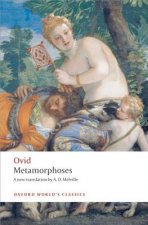
Metamorphoses
11.64 € -

Edda
7.89 € -24 % -
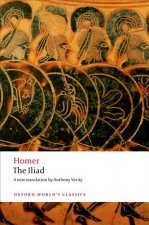
Iliad
10.83 € -25 % -
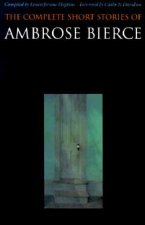
Complete Short Stories of Ambrose Bierce
21.66 € -25 % -
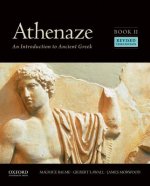
Athenaze, Book II
120.92 € -

Annotated Alice
11.13 € -25 % -

Wide Sargasso Sea
10.12 € -7 % -
SEOUL University Korean 1B Workbook (QR), m. 1 Audio
34.12 € -

SEOUL University Korean 1B Student's Book (QR), m. 1 Audio
50.12 € -

Sir Gawain and The Green Knight
10.32 € -9 % -

Complete Euripides Volume I Trojan Women and Other Plays
12.04 € -25 % -
Idiot
9.31 € -24 % -

Complete Euripides Volume II Electra and Other Plays
12.04 € -25 % -

Selected Poetry
9.71 € -25 % -
Fabliaux
29.77 € -9 % -

The Art of the Tale
19.23 € -26 % -

Fantastic in Literature
36.65 € -

Iliad
4.55 € -13 % -

Two Treatises of Government
7.89 € -24 % -

Twenty Years After
12.04 € -30 % -
Odyssey (Deckle Edge)
18.12 € -25 % -

Anna Karenina
7.38 € -29 % -

Memoirs of a Dutiful Daughter
13.06 € -29 % -

Great God Pan and Other Horror Stories
16.80 € -25 % -

Essential Writings of Ralph Waldo Emerson
18.32 € -24 % -

Education of a Wandering Man
7.28 € -24 % -
Three Theban Plays
11.43 € -34 % -

Consolation of Philosophy
11.94 € -24 % -
Poetics
10.32 € -16 % -

Tenant of Wildfell Hall
9.11 € -30 % -

Splintered Light
21.46 € -

Ivanhoe
8.60 € -24 %
Osobný odber Bratislava a 12840 dalších
Copyright ©2008-26 najlacnejsie-knihy.sk Všetky práva vyhradenéSúkromieCookies

 24 miliónov titulov
 Vrátenie do mesiaca
 02/210 210 99 (8-15.30h)